












You May Also Need


Pre-order shipping times may vary by product. Please refer to the estimated shipping timeframe shown at checkout. In-stock items are typically delivered within 3–7 business days.

With AFERIY‘s’30 day money back guarantee policy, please return products in a new condition(original condition), and you'll get your money back! if the AFERIY Product as delivered is originally defective or damaged during delivery, we offer to return the AFERIY Product within 30 days of the date of purchase, regardless of whether it has been opened or used.

All products include a 2–3 year standard warranty, with up to 7 years coverage available on selected models, supported by local warehouse repair service.


Reliable Portable Power for Camping, RV & Emergency Backup
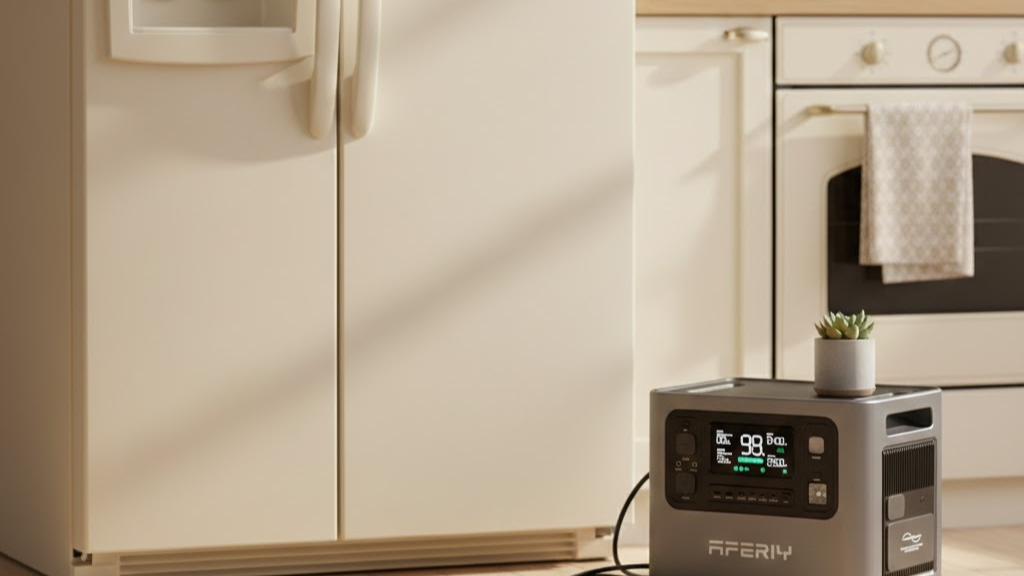
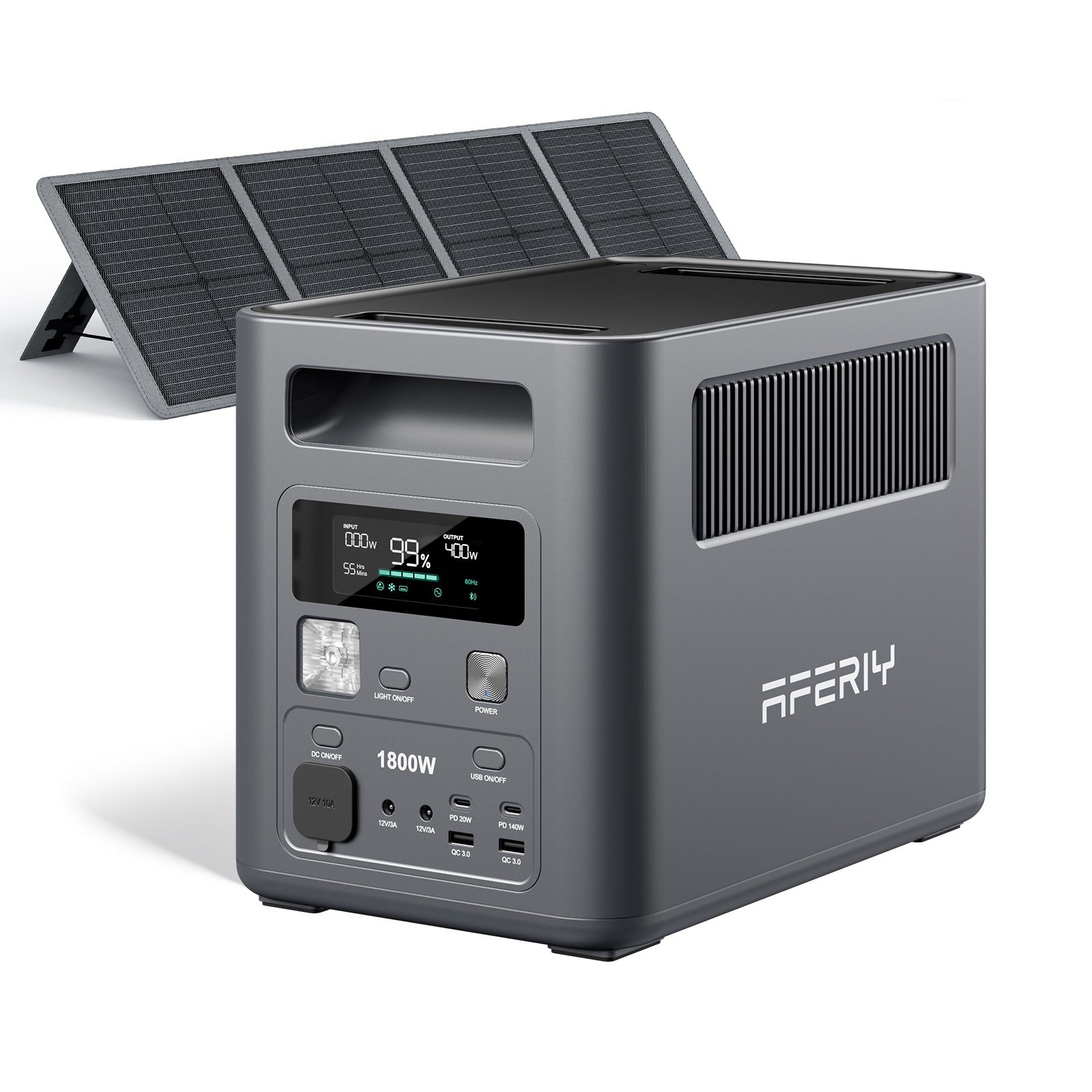
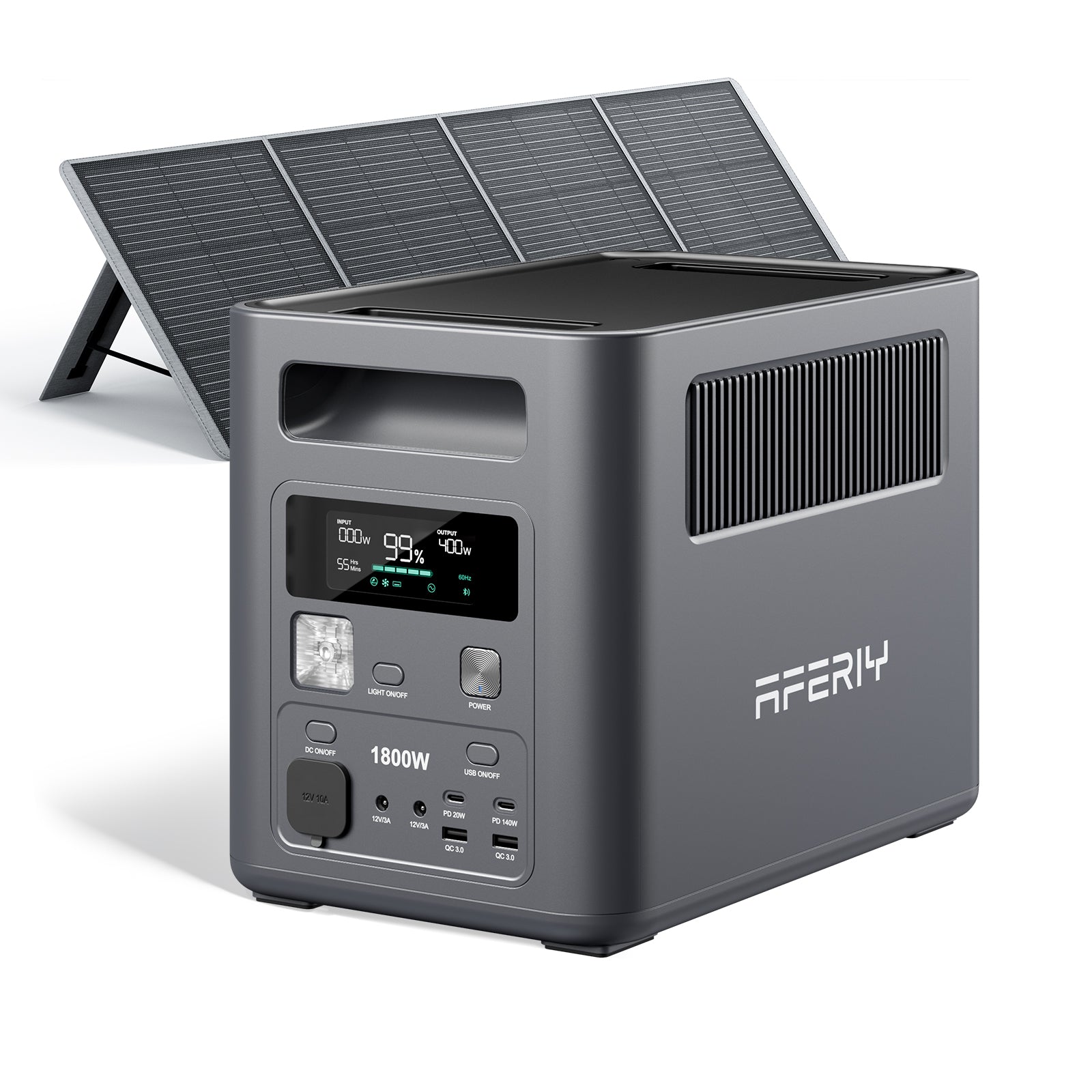
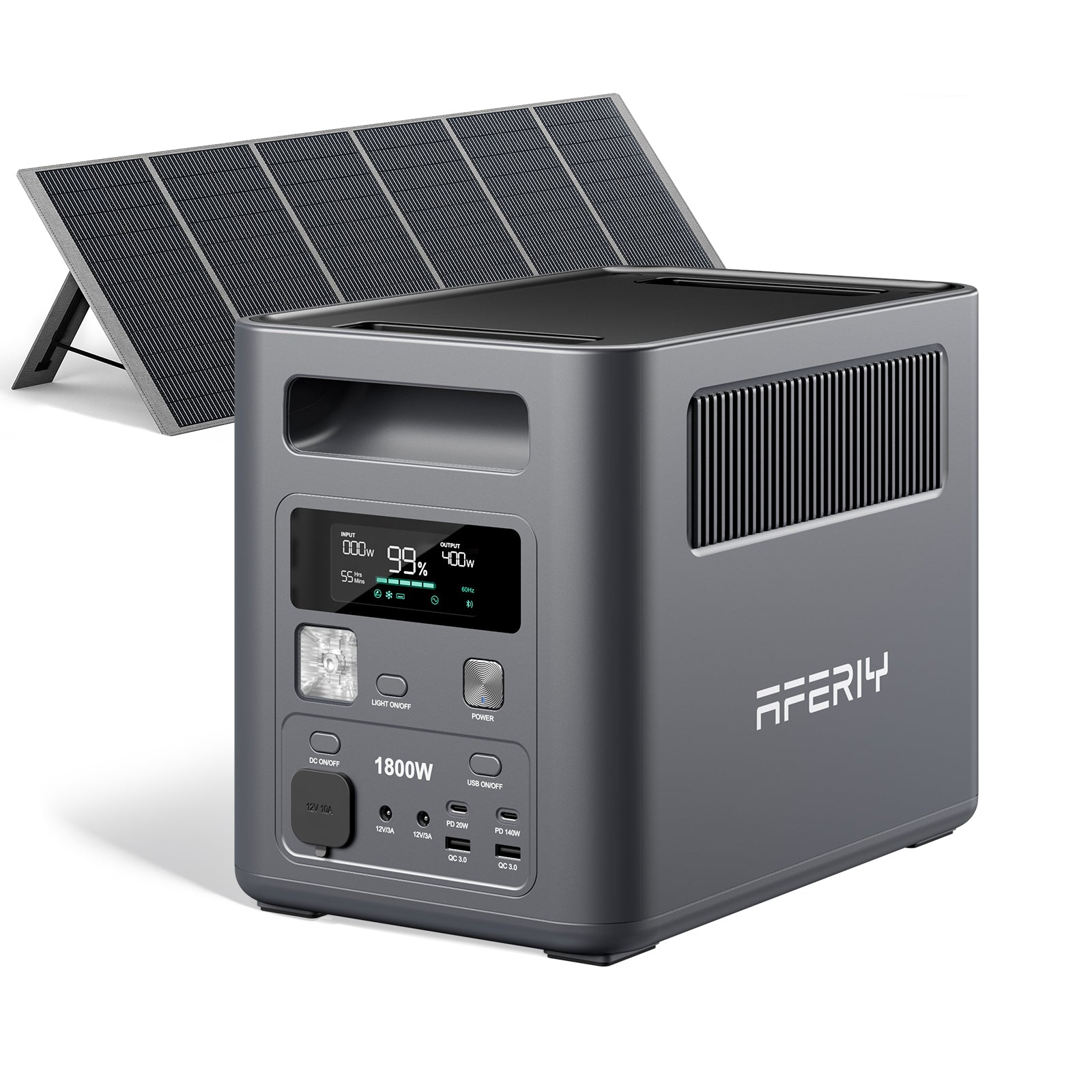
The AFERIY Nomad1800 P180 delivers reliable portable power for camping trips, RV travel, off-grid adventures and emergency backup. Power your fridge, lights, Starlink and essential devices anywhere — without gas, noise or fumes.


Real-World Power Tests You Can Trust

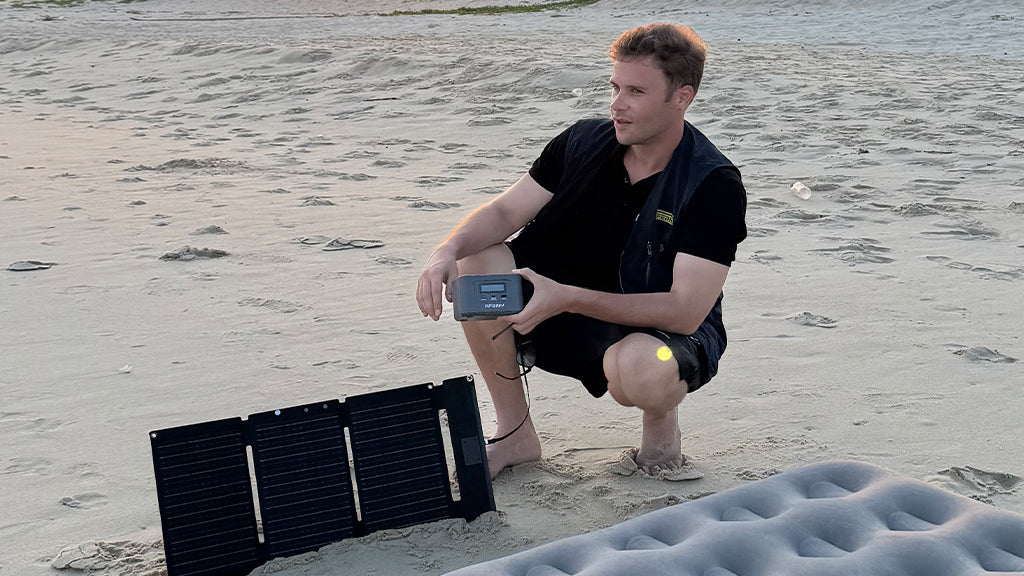
Built for Camping, RV & Off-Grid Adventures
Whether you're powering your RV at a campsite, staying connected with Starlink off-grid or preparing for emergencies at home, the Nomad1800 P180 delivers quiet, portable and dependable energy wherever life takes you.


Recharge Faster, Stay Powered Longer
Recharge the Nomad1800 P180 quickly with AC or solar power. Combined AC + solar charging can reach up to 80% in as fast as 36 minutes, helping you get back to power faster during trips, outages or emergencies.


Lightweight Portable Power for Travel & Outdoor Use
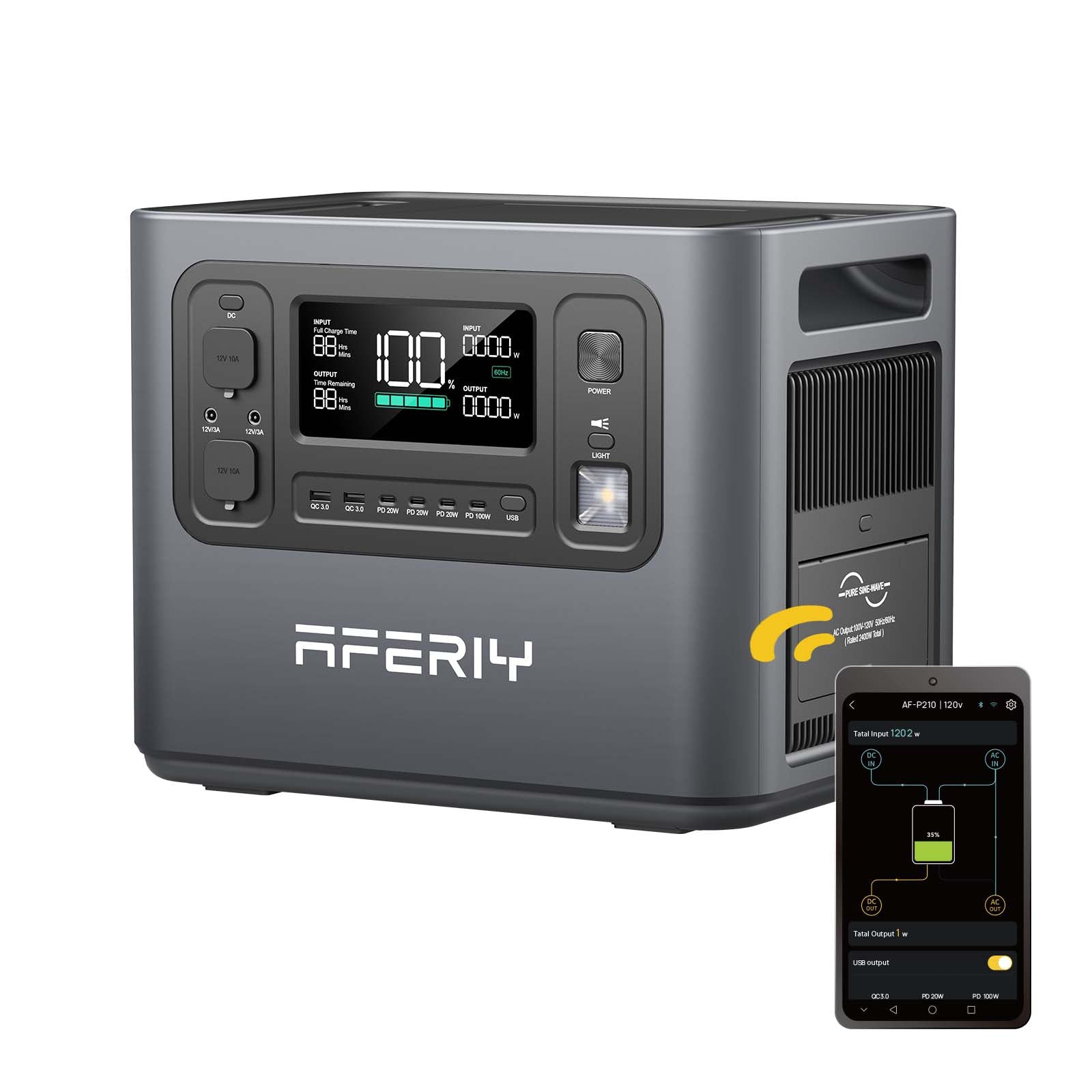
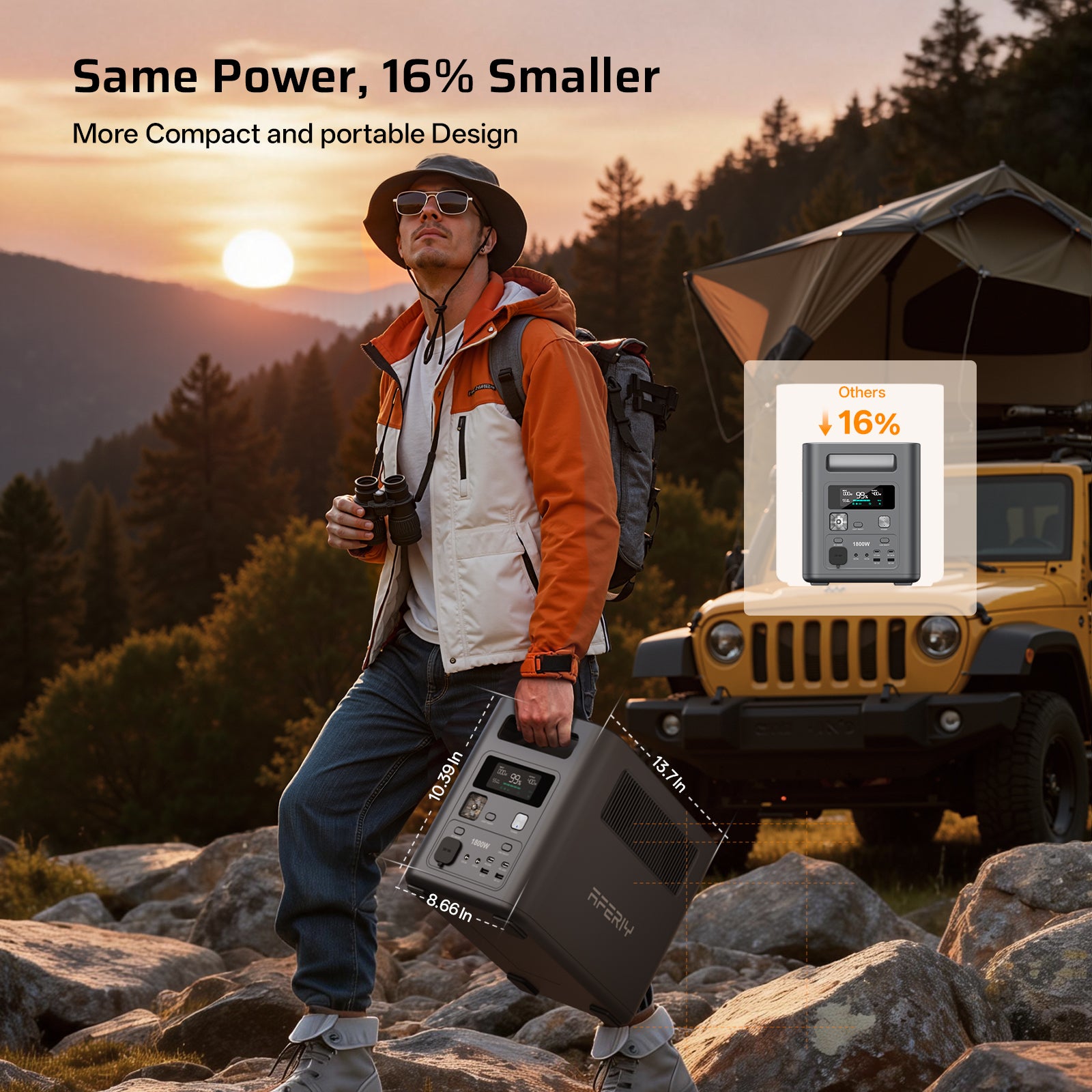
Weighing only 11.64 kg, the Nomad1800 P180 is easy to carry for camping, RV travel and emergency use. Monitor battery status, charging and output remotely with the AFERIY App for convenient power management anywhere.


Reliable Backup Power During Outages
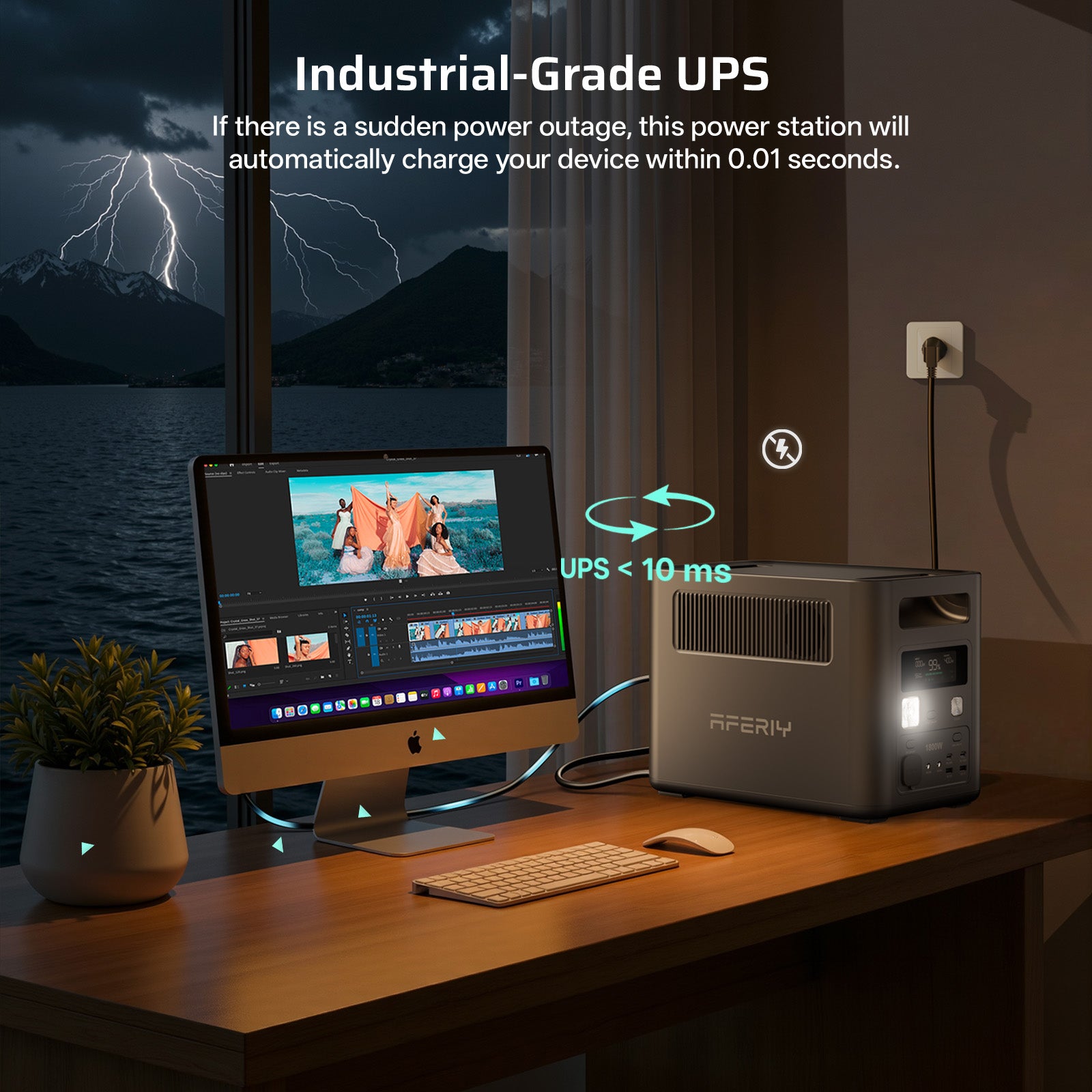
Built-in UPS protection helps keep your essential devices running during unexpected outages. Perfect for protecting routers, computers, lighting and other important electronics from sudden power interruptions.


Long-Lasting LiFePO4 Battery Technology
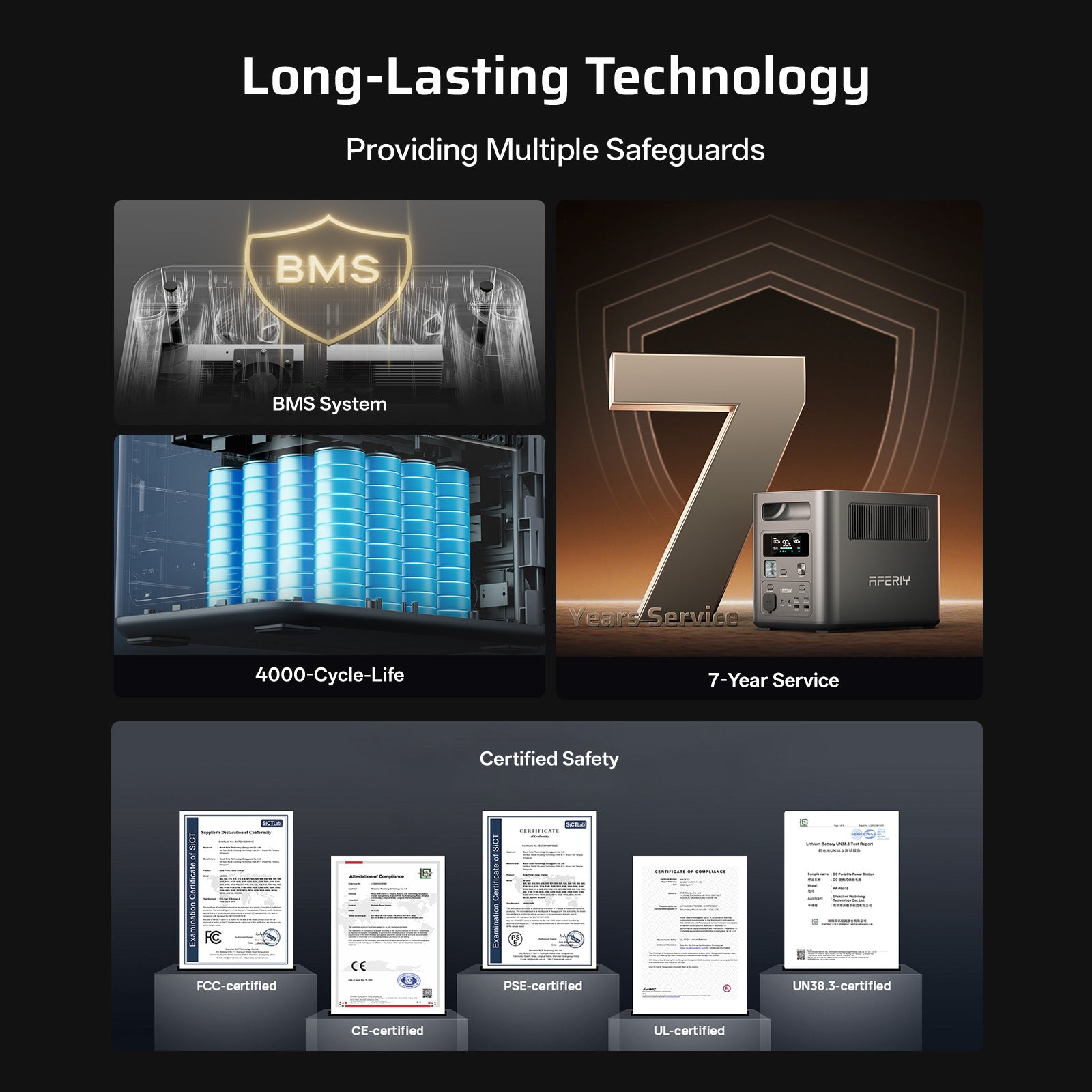
Built with durable LiFePO4 battery cells rated for 4000+ charge cycles, the AFERIY Nomad1800 P180 delivers safe, reliable power for years of outdoor adventures and emergency backup use.


Power Multiple Devices at the Same Time
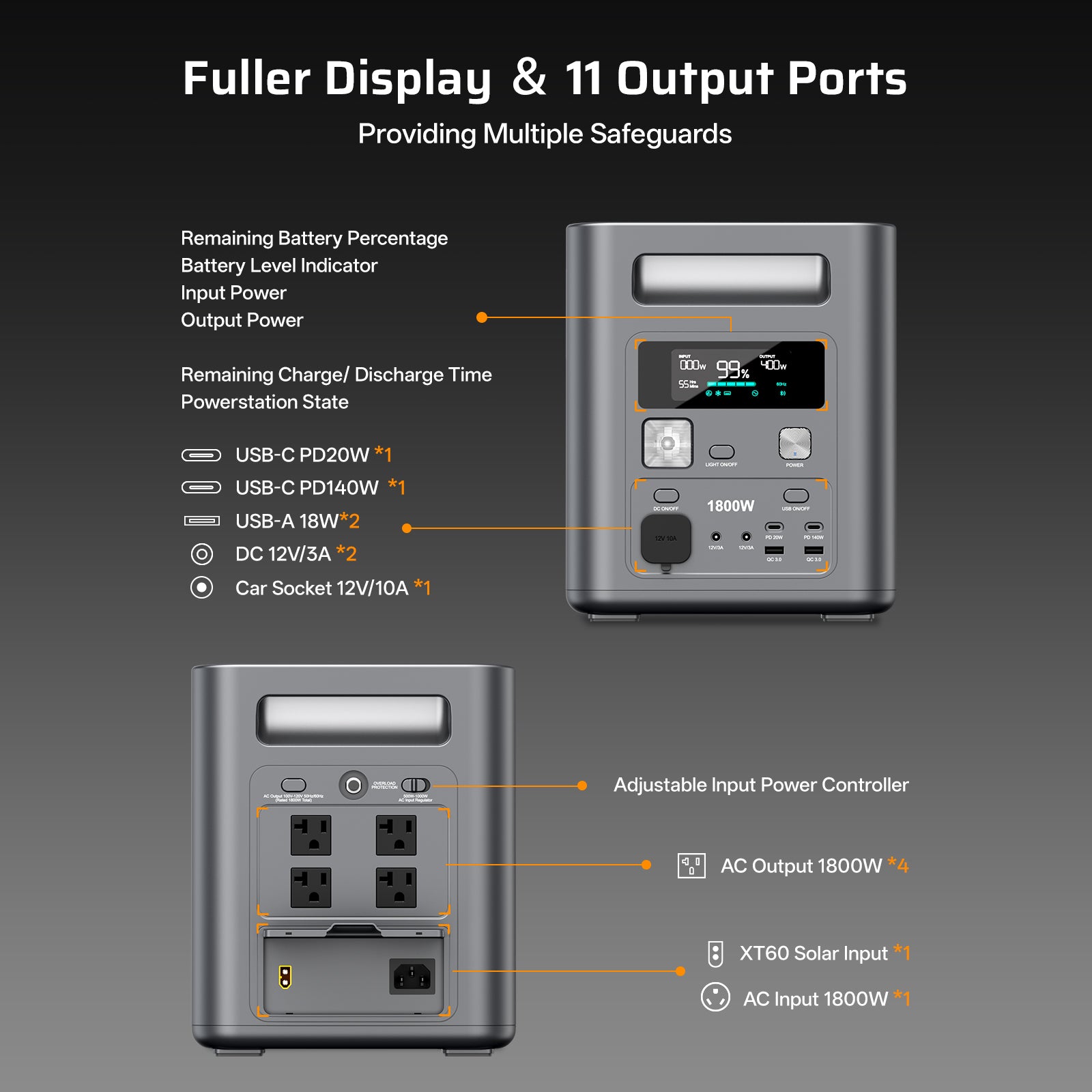
Run household appliances, laptops, phones, lights and outdoor devices simultaneously with multiple AC, USB and DC outputs designed for home, travel and outdoor use.


Backed by a 7-Year Warranty
Enjoy long-term peace of mind with a 7-year manufacturer warranty and lifetime technical support from AFERIY.


Everything You Need in One Box
The AFERIY Nomad1800 includes everything you need for AC and solar charging right out of the box — perfect for camping, RV travel and emergency preparedness.


1024Wh
Lithium Iron Phosphate Battery (LiFePO4)
> 4000 cycles
MPPT Charge Controller, BMS (OCP, OVP, OLP, OCP, ODP, SCP), etc.
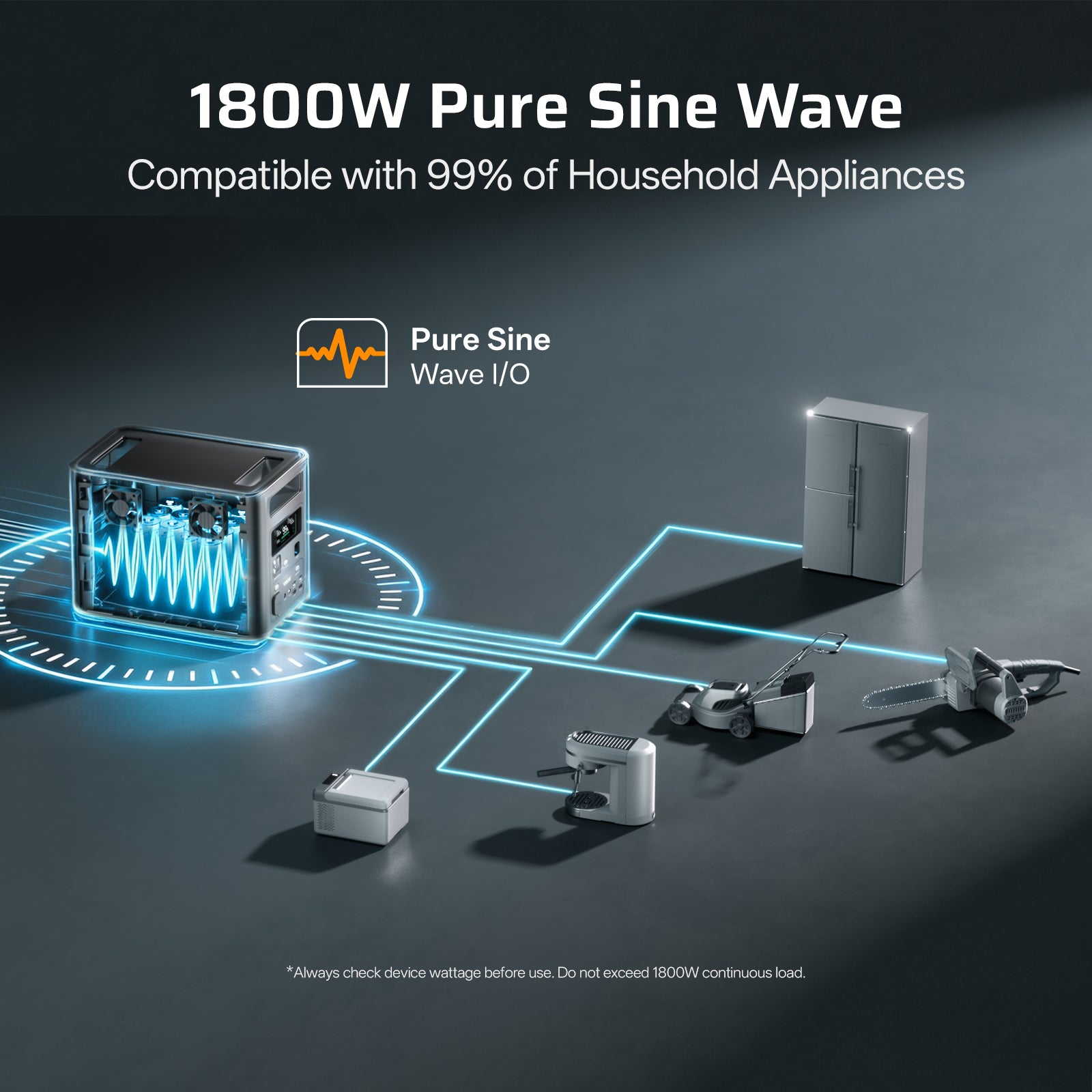
Pure Sine Wave
UPS Uninterruptible Power Supply within 10ms
7 Years
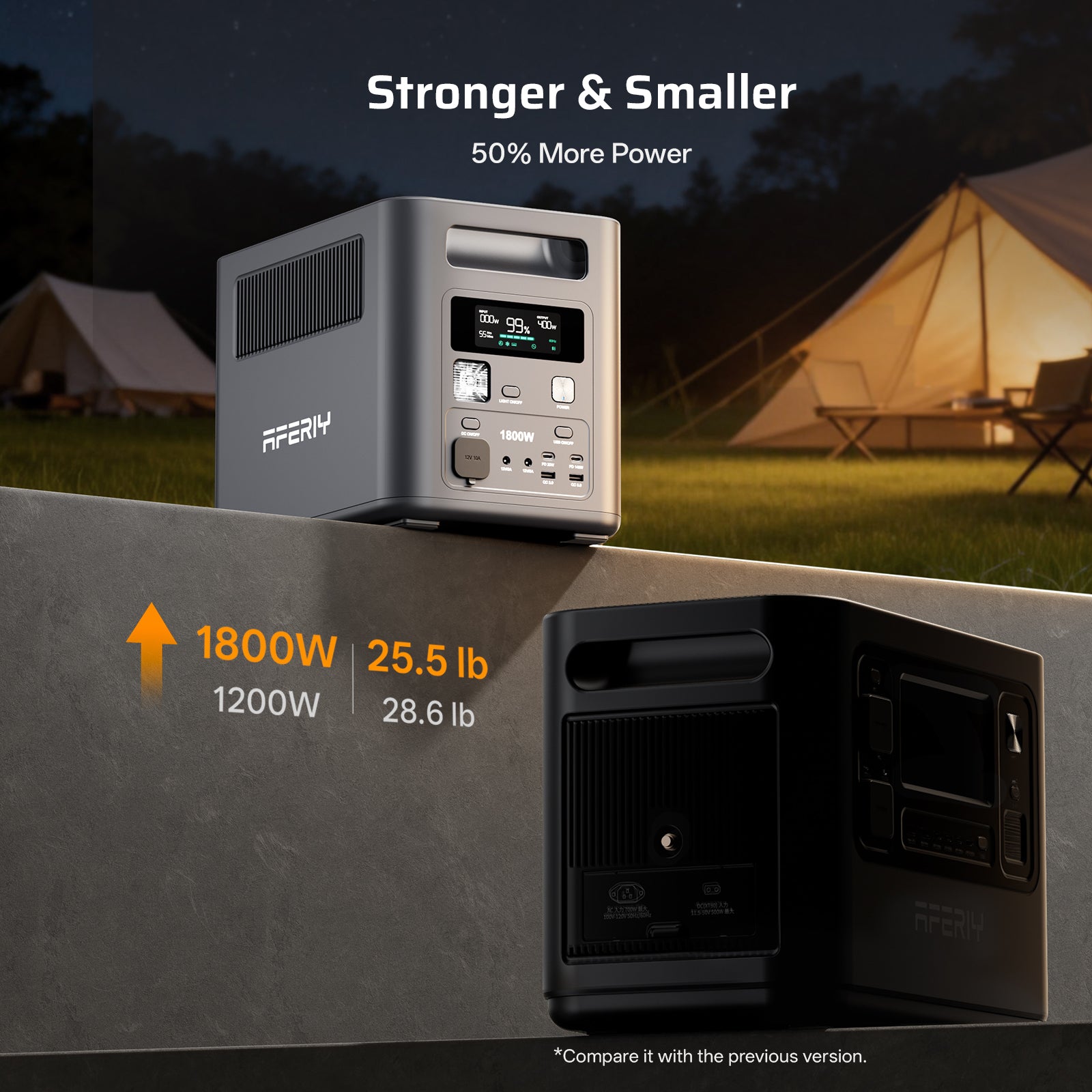
11.64kg
350*220*263mm
UL、CE、FCC、PSE、RoHS、TELEC Certification
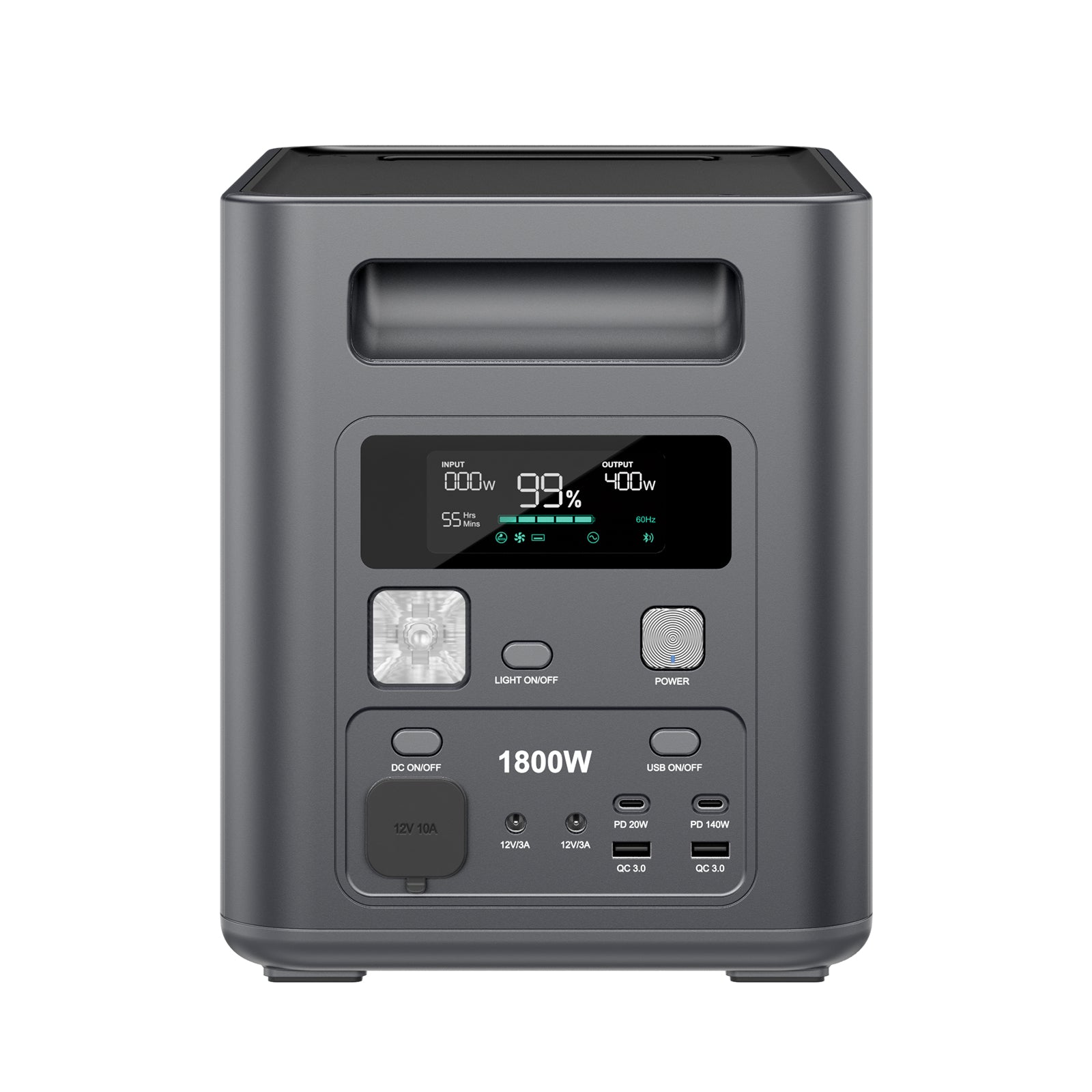
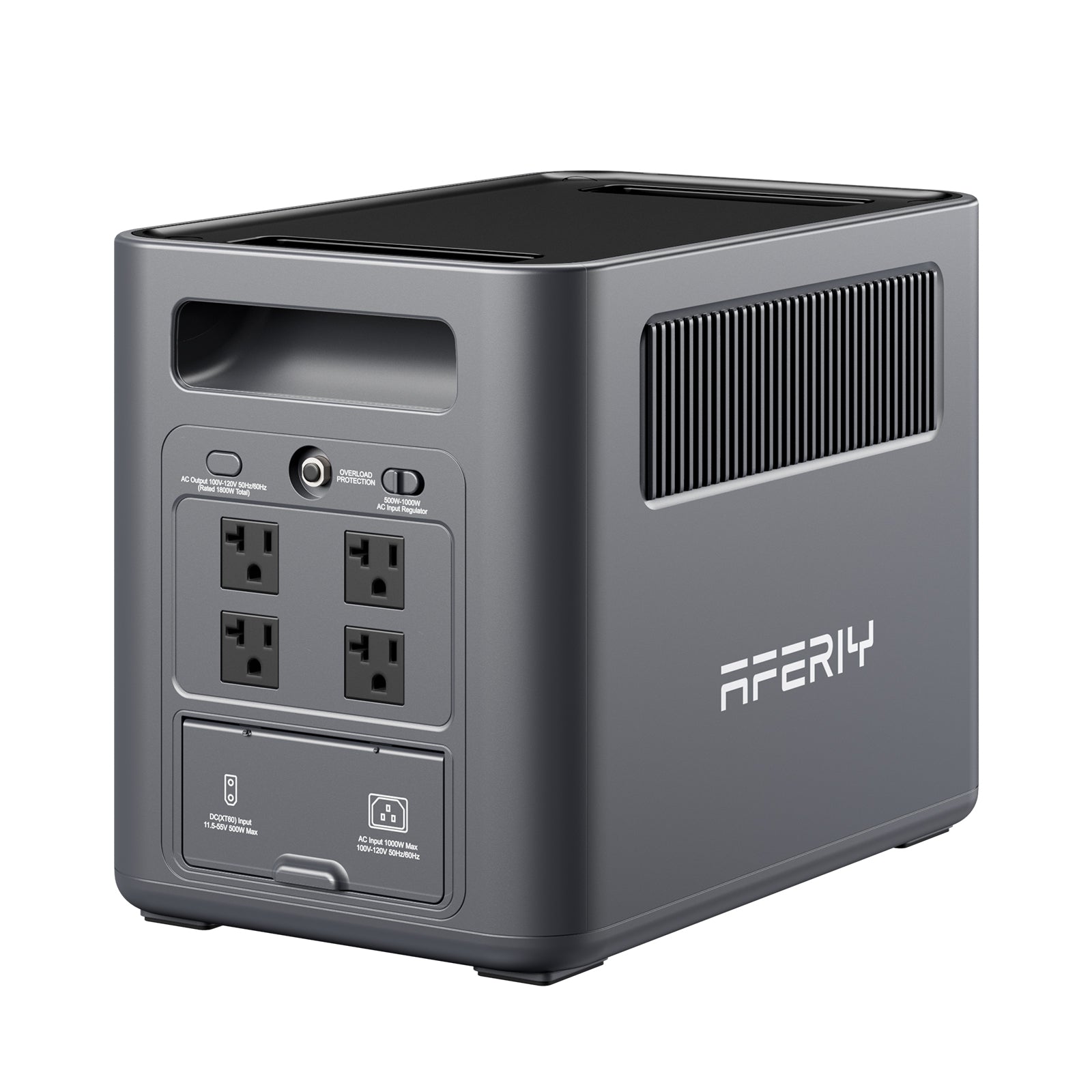
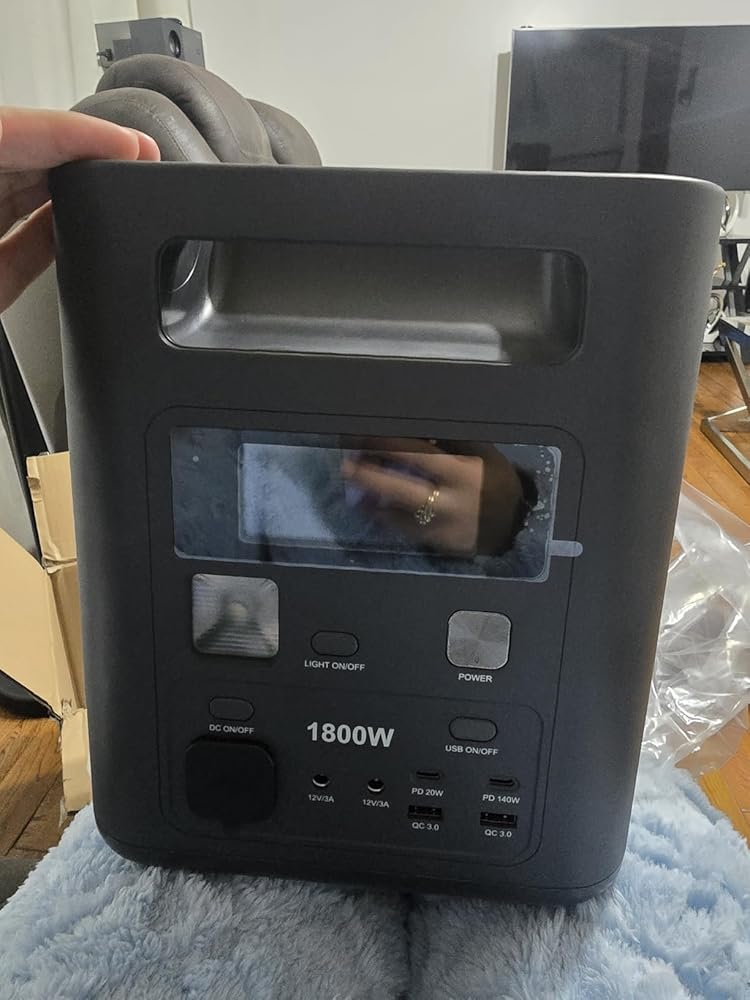
4 ports, 110V-120V, 50Hz/60Hz, 1800W
2 ports, QC 3.0 18W
1 ports, PD 20W
1 ports, PD 3.0 140W
1 port, 12V/10A
2 ports, 12V/3A
Max 1000W
Max 500W, 11.5-55V
12V/8A
1500W, with AC and Solar Input Simultaneously
User Manual
FAQ
A 1800-watt battery power station like the P180 portable power station is designed to handle most essential household and outdoor devices. In real-world use, it can comfortably run appliances such as a full-size refrigerator, microwave, coffee maker, electric kettle, TV, laptop, and lighting systems. For outdoor scenarios, it’s also suitable for powering camping equipment like portable fridges, induction cookers, drones, and camera gear. This makes it a versatile portable charging station for both home backup and mobile use.
However, what it can run simultaneously depends on the total combined wattage. For example, you could run a refrigerator and a few smaller electronics together, but running multiple high-power appliances at once may exceed limits. This type of system is ideal for users who want reliable power for daily essentials without relying on fuel-based generators. Whether used as a home backup or a solar generator for camping, it offers a balanced solution between power capacity and portability.
Yes, a 1800W system like the P180 portable power station can easily power most household refrigerators. In practical use, refrigerators typically consume between 100W and 800W during operation, though they may require a higher surge when the compressor starts. A well-designed battery power station can handle this temporary surge, allowing the fridge to start and run normally without interruption.
In real outage scenarios, this makes it a reliable option for keeping food fresh and preventing spoilage. The actual runtime will depend on the fridge’s efficiency and usage cycle, but many users can expect several hours to over a day of operation. This is especially useful during emergencies or when using it as a portable charging station in off-grid cabins or RV setups. For most users, powering a refrigerator is one of the most important and realistic applications of this type of system.
The runtime of a P180 portable power station depends heavily on what you are powering. Instead of a fixed number, real-world usage varies: for example, a laptop might run for many hours, while a refrigerator or microwave will consume power more quickly. A battery power station is best understood in terms of energy distribution — lower-wattage devices last longer, while high-power appliances reduce total runtime.
In practical scenarios, users often combine essential devices rather than running everything at once. For instance, during an outage, you might prioritize a fridge, router, and lights, which can extend usable time significantly. As a portable charging station, it is designed to support essential needs rather than continuous heavy loads. For outdoor use or as a solar generator for camping, pairing it with solar panels can effectively extend runtime indefinitely under good sunlight conditions.
The runtime of the P180 portable power station depends on what you are powering in real-world use. Smaller devices like phones, laptops, and routers can run for extended hours, while higher-wattage appliances such as refrigerators or cooking devices will consume power faster. In practical scenarios, users typically prioritize essential loads—like keeping a fridge, lights, and internet running during outages—which helps maximize usable time. As a battery power station, it is built to provide stable and efficient energy for everyday needs, outdoor use, or emergency backup situations.
What makes the P180 stand out from many traditional portable charging stations is its long-term durability. It features a battery designed for 4000+ charge cycles, which is significantly higher than the 500–1000 cycles commonly found in standard portable power stations. This means the unit can be used regularly for years without major performance loss. Whether used daily, as a backup system, or as a solar generator for camping, the P180 is not just built to last per use—but to remain reliable over a much longer lifespan compared to typical alternatives.
Yes, a portable charging station like the P180 is designed to power multiple devices simultaneously. In everyday use, you can run a combination of appliances such as a laptop, phone chargers, lights, and even a refrigerator at the same time, as long as the total power demand stays within the system’s capacity. This makes it highly practical for both home and outdoor scenarios.
In real applications, users often distribute power across different outputs, such as AC outlets, USB ports, and DC ports. This flexibility allows the battery power station to support a wide range of devices efficiently. Whether you're using it as a solar generator for camping or as a home backup, the ability to run multiple devices at once is one of its key advantages. Proper load management ensures stable performance and maximizes overall efficiency.
Frequent charging does not significantly harm modern systems like the P180 portable power station, especially when they are designed for long-term durability. Unlike older battery technologies, today’s battery power station systems are built to handle regular charge and discharge cycles, making them suitable for both daily use and emergency backup.
In practical terms, users can safely recharge the unit whenever needed without worrying about rapid degradation. This is particularly useful for those using it as a portable charging station for daily tasks or as a solar generator for camping, where charging may happen frequently. Over time, maintaining moderate usage habits—such as avoiding extreme temperatures—can help preserve battery performance, but overall, the system is built for consistent and reliable use.
Yes, a battery power station like the P180 can be safely used in enclosed spaces because it produces no fumes or emissions. Unlike gas generators, it does not rely on combustion, making it suitable for indoor environments such as apartments, offices, or tents. This is a major advantage for users who need a safe and quiet power solution.
In real-world usage, this means you can confidently run it overnight or during emergencies without ventilation concerns. As a portable charging station, it is especially useful in situations where noise and air quality matter, such as indoor backup or RV living. Whether used at home or as a solar generator for camping, its clean operation allows for flexible placement and safe continuous use in enclosed areas.
You may need a larger system if your power demands go beyond essential devices. For example, if you plan to run high-energy appliances like air conditioners, electric heaters, or multiple large kitchen devices simultaneously, a higher-capacity battery power station would be more suitable. The P180 portable power station is optimized for essential and moderate loads rather than full-home coverage.
In practical scenarios, users who require whole-house backup or long-duration heavy usage often choose larger systems with higher capacity and output. However, for most users, a portable charging station like the P180 strikes a balance between portability and functionality. It is ideal for emergency preparedness, outdoor use, and everyday convenience, while larger systems are better suited for more demanding or continuous power needs.




 Free shipping from US local warehouse