











5 Best Portable Solar Panels in 2026: Top Picks for Camping & Off-Grid Living
Whether you are boondocking in an RV, setting up a remote campsite, or preparing for unexpected power outages at home, reliable energy is non-negotiable. As technology advances in 2026, harnessing the sun’s power has never been easier, lighter, or more efficient. If you are on the hunt for the best portable solar panels, you have come to the right place.
Your phone battery is dying, and the portable fridge needs juice. You need reliable energy. The tech behind capturing sunlight has evolved massively by 2026. Solar setups weigh less and pack a much harder punch. Are you hunting for the best portable solar panels? You just hit the jackpot. Let’s break down exactly what you should buy to lock down your off-grid power supply.
Types of Portable Solar Panels
You need to know your options before spending a dime. Different trips demand different gear.
Foldable solar panels
Foldable solar panels are the top choice for many campers and RV enthusiasts. Made from rigid or semi-rigid materials, they are typically covered with fabric or a polymer shell and often come with a built-in stand, making them extremely convenient to set up, adjust, and store.

Flexible solar panels
Need something that wraps around a curved surface? Flexible panels do exactly that. Factories deposit incredibly thin photovoltaic materials onto plastic backings to create ultra-lightweight power sources. You can slap them on boat decks or teardrop trailers. Just keep in mind they won't outlast their rigid cousins.
Rigid solar panels
Enter the heavyweights. Brands slap tempered glass inside thick aluminum frames to build panels that brush off brutal weather year after year. Yes, you can technically haul them around. But honestly? They weigh a ton. Save these beasts for permanent cabin roofs or flat RV mounts where lifespan beats easy transport.
Benefits of Portable Solar Panels
Investing in portable solar energy offers a multitude of benefits that extend far beyond just keeping your phone charged.
-
Free, Renewable Energy: You pay for the gear once. After that, the sun covers the bill.
-
Quiet Operation: Gas engines roar and ruin the campsite vibe. Solar setups just sit there. You actually get to hear the wind in the trees.
-
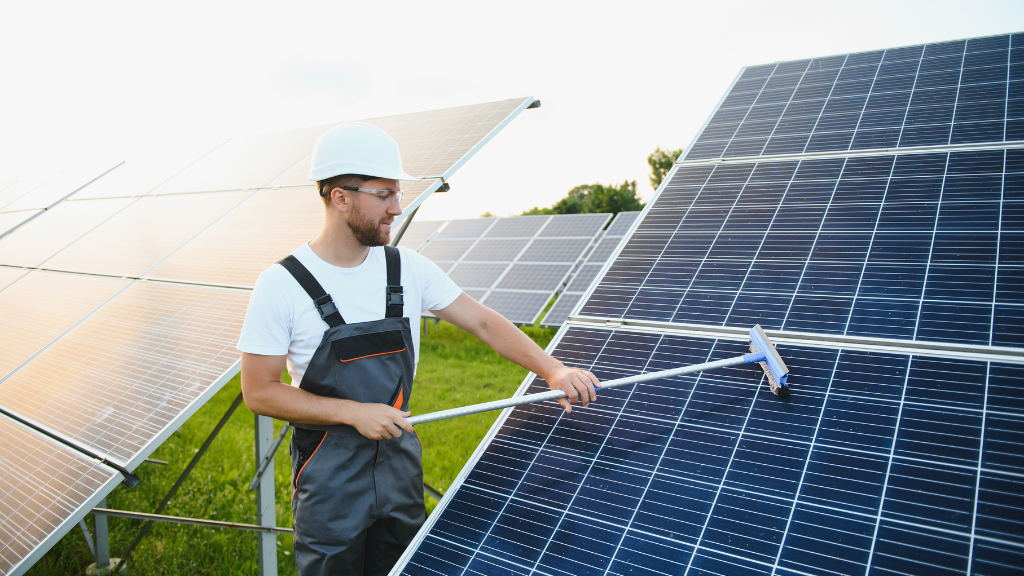
Low Maintenance: Zero moving parts means nothing breaks. Just wipe the dust off the glass every few days, and you're golden.
-
True Independence: You can stay off the grid for weeks on end. No more stressing about finding an RV park with an open electrical hookup.
Best Use Cases for Portable Solar Panels
-
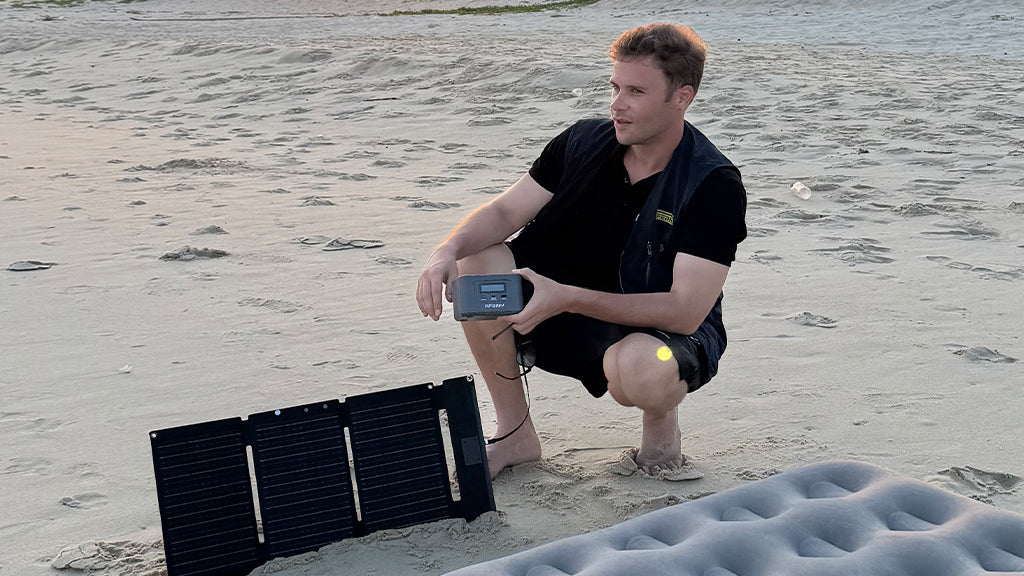
Tent Camping: Top off power banks, headlamps, and Bluetooth speakers.
-
RV & Van Life: Park your rig in the shade to stay cool while stringing your portable panels out into direct sunlight.
-
Emergency Preparedness: Run your CPAP machine or keep the chest freezer cold when the neighborhood grid fails.
-
Outdoor Workspaces: Keep laptops and drones flying high while you work from a desert canyon.
-
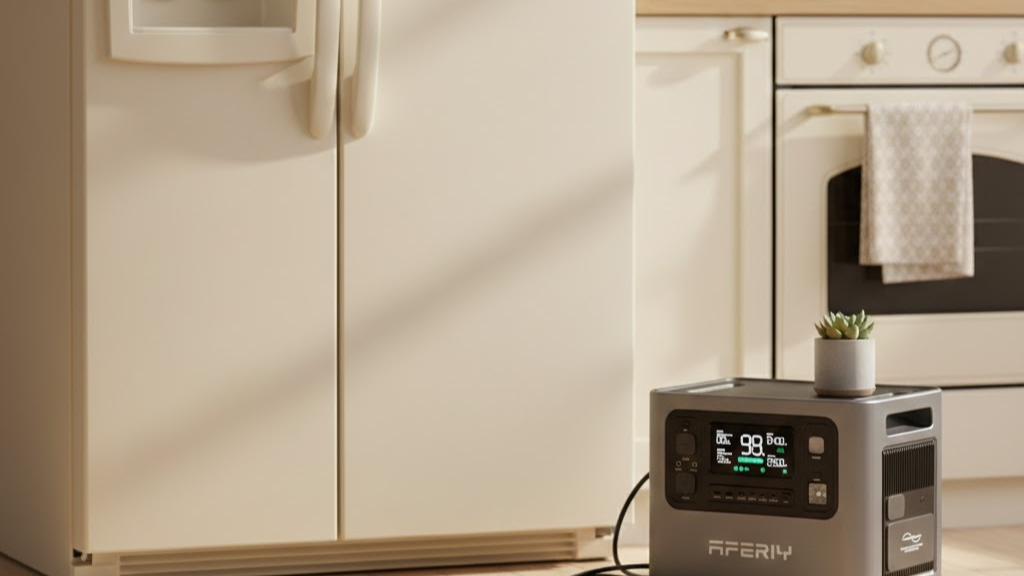
Emergency Preparedness: Run your CPAP machine or keep the chest freezer cold when the neighborhood grid fails by pairing your panels with a solar generator. A well-matched setup can run a refrigerator for hours or even a full day. Understanding how long a solar generator can power a refrigerator is key to outage planning.
Best Portable Solar Panels 2026
If you are looking for the absolute best portable solar panels for camping and off-grid adventures, here are our top picks for 2026.

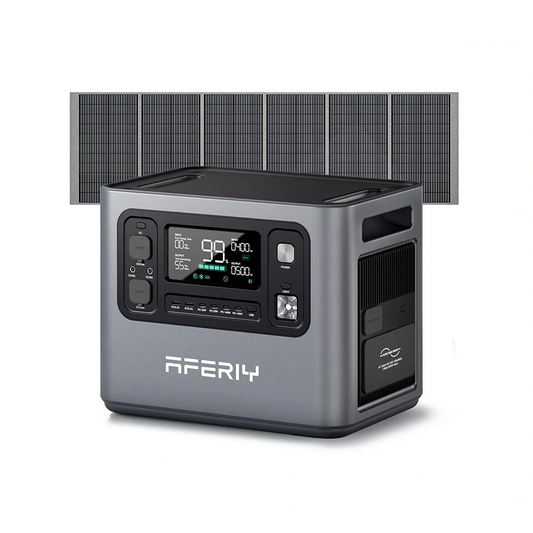
AFERIY AF-S400A1 400W Portable Solar Panel
The AFERIY AF-S400A1 is a powerhouse designed for serious off-grid enthusiasts. Boasting an impressive 400 watts of output, it is built to recharge large-capacity power stations rapidly. Its high conversion efficiency and robust build make it a top-tier choice for heavy power users.
Key Specs
-
Wattage: 400W
-
Efficiency: 23%
-
Weight: 31.5 lbs (14.3 kg)
-
Waterproof Rating: IP67
Pros & Cons
-
Pros: Massive power output; highly efficient monocrystalline cells; durable ETFE coating.
-
Cons: Quite heavy and bulky to carry over long distances.
Best for: RV owners, off-grid cabin setups, and families who need to run heavy-draw appliances like portable fridges and microwaves.
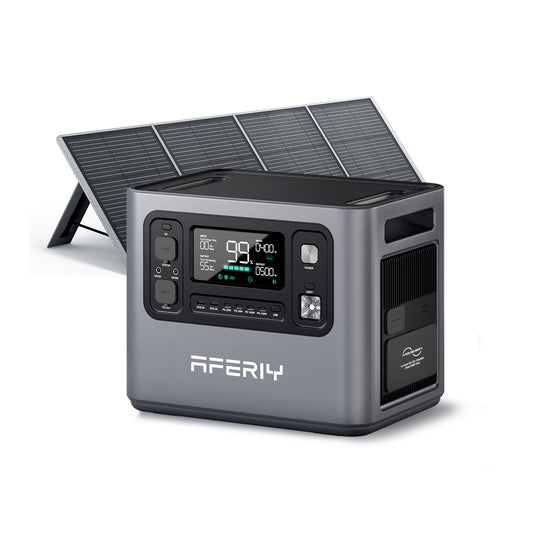
AFERIY AF-S200A1 200W Portable Solar Panel
For those who want AFERIY's premium build quality in a more manageable size, the AF-S200A1 is an outstanding middle-ground. It offers enough juice to keep mid-sized power stations topped up while remaining incredibly easy to transport and deploy.
Key Specs
-
Wattage: 200W
-
Efficiency: 23%
-
Weight: 16.5 lbs (7.5 kg)
-
Waterproof Rating: IP67
Pros & Cons
-
Pros: Perfect balance of power and portability; easy to set up with sturdy kickstands; great value for money.
-
Cons: Not enough wattage to quickly charge massive (2000Wh+) power stations on its own.
Best for: Weekend warriors, car campers, and digital nomads needing to keep laptops and drones charged.
Jackery SolarSaga 200W
Jackery is a household name in the portable power industry, and the SolarSaga 200W lives up to the reputation. It features a magnetic folding mechanism, an incredibly sleek profile, and carrying handles integrated directly into the design.
Key Specs
-
Wattage: 200W
-
Efficiency: 24.3%
-
Weight: 17.5 lbs (8 kg)
-
Waterproof Rating: IP67
Pros & Cons
-
Pros: Industry-leading efficiency; beautiful and practical folding design; excellent customer support.
-
Cons: Premium price tag; proprietary connectors may require adapters for non-Jackery power stations.
Best for: Users already invested in the Jackery ecosystem and those who prioritize sleek, user-friendly design.
EcoFlow 220W Portable Solar Panel
EcoFlow brings innovation to the table with its bifacial design. This unique panel captures sunlight from the primary front face (220W) and ambient/reflected light from the rear face (155W), boosting overall energy generation by up to 25% depending on the surface it sits on.
Key Specs
-
Wattage: 220W (Front) / 155W (Rear)
-
Efficiency: 22-23%
-
Weight: 21 lbs (9.5 kg)
-
Waterproof Rating: IP68
Pros & Cons
-
Pros: Bifacial design yields more power in the same footprint; ultra-durable IP68 waterproof rating; tempered glass construction.
-
Cons: Heavier than standard 200W foldable panels; the included carrying case doubles as the kickstand, which can be tricky to adjust.
Best for: Tech-savvy campers and those who set up camp on reflective surfaces like sand, snow, or white concrete.
Anker SOLIX PS400 Portable Solar Panel
The Anker SOLIX PS400 is an absolute beast. Not only does it deliver 400 watts of power, but it also features a smart sun-alignment tool built directly into the panel to ensure you are catching the rays at the perfect angle, maximizing your yield throughout the day.
Key Specs
-
Wattage: 400W
-
Efficiency: 23%
-
Weight: 35 lbs (15.9 kg)
-
Waterproof Rating: IP67
Pros & Cons
-
Pros: Built-in sun angle guide; highly durable; immense power output suitable for total off-grid living.
-
Cons: Very heavy; premium price point.
Best for: Serious off-gridders and RVers looking for the ultimate plug-and-play high-capacity solar generator setup.
Comparison Table of Best Portable Solar Panels
|
Model |
Wattage |
Efficiency |
Weight |
Waterproof |
Best Feature |
|
AFERIY AF-S400A1 |
400W |
23% |
31.5 lbs |
IP67 |
High power-to-value ratio |
|
AFERIY AF-S200A1 |
200W |
23% |
16.5 lbs |
IP67 |
Perfect portability |
|
Jackery SolarSaga |
200W |
24.3% |
17.5 lbs |
IP67 |
Premium folding design |
|
EcoFlow 220W |
220W |
22-23% |
21 lbs |
IP68 |
Bifacial energy capture |
|
Anker SOLIX PS400 |
400W |
23% |
35 lbs |
IP67 |
Built-in sun angle guide |
Key Factors to Consider When Buying Portable Solar Panels
Choosing the best portable solar panel for camping requires looking past the marketing hype and focusing on the specifications that actually impact your off-grid experience.
Wattage (Power Output)
This is the most crucial metric. A 100W panel is great for phones and laptops, a 200W panel is the sweet spot for weekend camping and running small DC fridges, and a 400W+ setup is necessary if you are running major appliances via a high-capacity power station. Match the wattage to your daily power consumption. Actual output varies with sunlight and conditions, so panels rarely hit their rated wattage. Knowing how much energy a solar panel can generate helps you plan your daily power needs.
Efficiency
Solar panel efficiency refers to the percentage of sunlight hitting the panel that is converted into usable electricity. Most high-quality portable panels in 2026 feature monocrystalline cells with efficiency ratings between 21% and 24%. Higher efficiency means you get more power from a smaller physical footprint.
Portability
Consider the packed dimensions and the weight. If you are car camping, a 30 lb panel might be fine. If you have a small sedan or are overlanding in a tight Jeep, space is at a premium, making compact 200W foldable panels a much better choice.
Durability & Weather Resistance
Look for an Ingress Protection (IP) rating. An IP67 rating means the panel is dust-tight and can survive temporary submersion in water, while IP68 is even more robust. Also, look for ETFE coatings, which offer better UV resistance and longevity compared to older PET plastics.
Compatibility
Check the connectors. Standard MC4 connectors are universally adaptable, meaning you can hook the panel up to almost any brand of power station using cheap adapter cables. Some brands use proprietary connectors (like Anderson or XT60 variants), which might require you to stay within their ecosystem or buy specific adapters.
Price & Value
Solar panels are an investment. While you can find cheap, off-brand panels online, they often degrade quickly and fail to deliver their advertised wattage. Investing in reputable brands ensures better cell quality, realistic power yields, and reliable warranties.
Precautions When Using Portable Solar Panels
Want your panels to last a decade? Follow these basic rules in the field:
-
Avoid Partial Shading: A single tree branch throwing a shadow across 10% of your panel can slash your power output by half. Keep them directly in the sun.
-
Do Not Walk on Them: Manufacturers claim some flexible panels handle foot traffic. Do not test that theory. Your weight creates micro-cracks in the solar cells, permanently killing their efficiency.
-
Manage Heat: Solar panels lose efficiency as they heat up. Prop them up to let air flow behind the canvas when camping in the desert.
-
Secure Them in Wind: Foldable panels act exactly like giant kites. Stake the kickstands into the dirt. If you don't, a strong gust will throw your expensive gear across the campsite.
Conclusion
Picking the best portable solar panels comes down to matching your energy needs with your travel style. Prioritize the right balance of wattage, portability, and durability. Build a setup that fits your life, whether for outdoor adventures or as a dependable home battery backup—and you secure reliable, quiet power for years to come.
FAQ
What is the 120 rule for solar panels?
Electricians use the "120% rule" (NEC 705.12) for home solar installations, not camping gear. It dictates that the main breaker rating plus the solar backfeed breaker cannot exceed 120% of the main electrical panel's busbar rating. This stops the busbar from catching fire.
Does a 400W solar panel produce 400W?
Almost never. Laboratories test panels under perfect conditions to get that 400W rating. Out in the real world, dust, heat, and imperfect sun angles drop your yield. Expect a great 400W panel to push 300W to 340W during peak afternoon sun.
How many batteries do I need for 400 watts of solar?
A 400W array produces roughly 1,600 to 2,000 Watt-hours (Wh) on a clear day. You need a 100Ah to 200Ah 12V LiFePO4 battery to store that energy safely. A portable power station packing 1,500Wh to 2,000Wh does the same job.
What appliances cannot be used with solar power?
Technically, with a large enough solar array and battery bank, you can run anything. However, with portable solar panels and standard portable power stations, you should avoid heavy resistive-heating appliances. Items like space heaters, electric ovens, clothes dryers, and large air conditioning units draw massive amounts of continuous power (often 1,500W to 3,000W+) that will drain a standard portable solar setup in minutes.
Can I use portable solar panels in the rain?
Yes, you can use most portable solar panels in the rain, as they are typically water-resistant or waterproof (often IP65 or higher). While they will continue to work, their efficiency will be significantly reduced, producing only about 10–20% of their peak power due to reduced sunlight.
Can I connect two 200W solar panels in series?
Yes, you can connect two 200W solar panels in series, which doubles the voltage while keeping the amperage the same. This configuration is ideal for higher-voltage systems (e.g., 24V or 48V) or long cable runs, as it reduces voltage drop but requires an MPPT charge controller to manage the higher voltage.
 Free shipping from US local warehouse