












How Many Watts Does a Fan Actually Use? A Guide to Wattage and Running Costs
How much power does a fan actually pull? It really comes down to the size and style of the unit you plug in. Most standard household fans draw anywhere from 10 to 100 watts. You will see beefy ceiling or box models pulling closer to the top of that range, while tiny desk fans sip almost nothing. Grasping exactly how much power your cooling setup needs helps you forecast your electric bill. It also lets you pick a setup that keeps you from throwing money out the window.
In comparison, many homeowners also wonder how many watts a house uses in total. The average U.S. household typically consumes between 500 and 2000 watts at any given moment, depending on the appliances running, which shows just how small a fan’s power demand really is.
Typical Wattage of Common Household Fans
Different designs pull different amounts of juice. Here is a quick breakdown of what you can expect from standard models.
|
Fan Type |
Average Wattage |
Wattage Range |
Best Use Case |
|
Ceiling Fan |
~70 watts |
60–75 watts |
Cooling living rooms and bedrooms with steady airflow |
|
Box Fan |
~75 watts |
50–100 watts |
Improving room ventilation or placing near windows |
|
Tower Fan |
~60 watts |
40–100 watts |
Quiet cooling for bedrooms and offices |
|
Pedestal / Stand Fan |
~70 watts |
50–90 watts |
Circulating air in medium to large rooms |
|
Desk / Table Fan |
~10 watts |
4–20 watts |
Personal cooling for desks, bedside tables, or small spaces |
|
Whole House Fan |
~450 watts |
200–700 watts |
Ventilating and cooling an entire house |
Because most of these fans peak well under 100 watts, they absolutely crush air conditioners in energy efficiency. A standard AC unit easily demands 500 to 2,000+ watts to do its job.
What Factors Affect a Fan’s Power Consumption
Even if two fans share the same baseline specs, your real-world energy footprint shifts based on how you run them.
-
Dialing in the Speed: Speed dictates everything. Crank a fan too high, and the motor works harder to spin those blades faster. That takes extra electricity. Drop a 75-watt fan down to low, and watch the power demand plummet.
-
Motor Hardware: The hardware itself matters immensely. Older fans almost always pack AC motors. Look at newer designs, though. Many manufacturers now install highly efficient DC motors. These modern units push the exact same amount of air while burning a fraction of the electricity.
-
Size and Blades: Big blades move big air. That requires a strong motor. But blade shape plays a massive role, too. Aerodynamic, smartly pitched blades slice through the air effortlessly. Clunky, flat blades force the motor to fight resistance, wasting energy just to hit normal speeds.
-
Hours on the Clock: Run time adds up. A 70-watt stand fan left running 24/7 will eventually sting your wallet. Turn it off when you leave the room, and the math changes completely.
-
Room Environment: Room size and airflow change the game. Stuff a fan into a cramped, stuffy room, and you might need the maximum setting just to feel a breeze. Open a window to catch a cross-breeze, and the lowest setting suddenly feels perfectly fine.
-
Extra Gadgets: Built-in lights, oscillation motors, and digital screens all sneak a tiny bit of power. It rarely breaks the bank, but those features definitely add a few watts to your baseline.

How to Calculate the Electricity Cost of Running a Fan
Want to figure out what you are actually paying? Grab a calculator. You just need a basic formula.
Electricity Cost = (Fan Wattage ÷ 1000) × Hours Used × Electricity Rate
Let's break that down. Power companies bill you in kilowatt-hours (kWh). Divide your fan’s wattage by 1,000 to find its kilowatt rating. A 70-watt unit hits 0.07 kW. Multiply that by the hours you leave it running. Let's say you sleep for 8 hours. Finally, multiply that number by your local electricity rate. The US average hovers right around $0.12 to $0.15 per kWh.
So, the math looks like this:
(70 ÷ 1000) × 8 hours × $0.15.
That equals roughly $0.084. You pay less than nine cents to sleep all night comfortably. Not a bad deal, right?
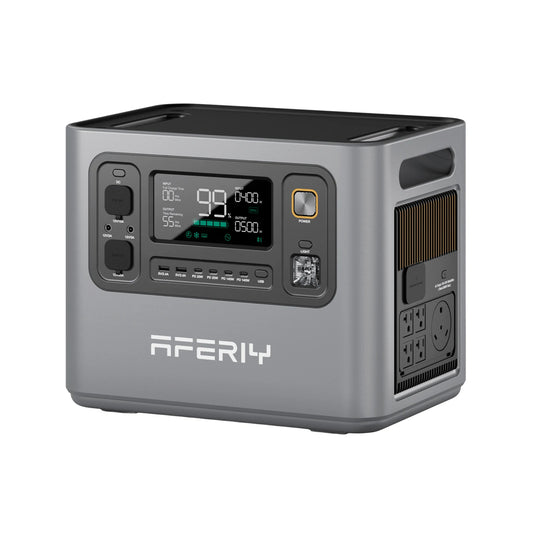
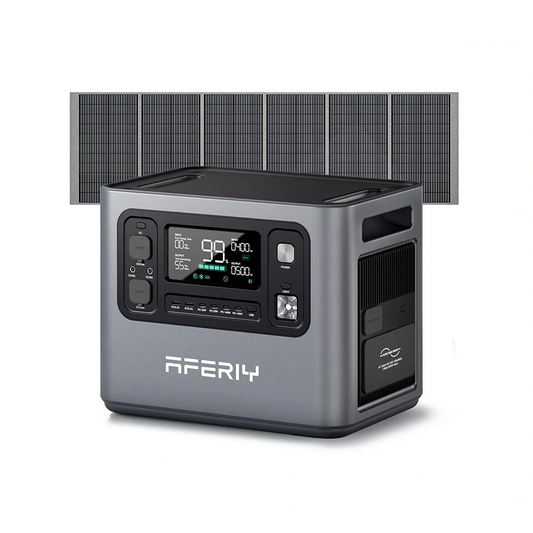
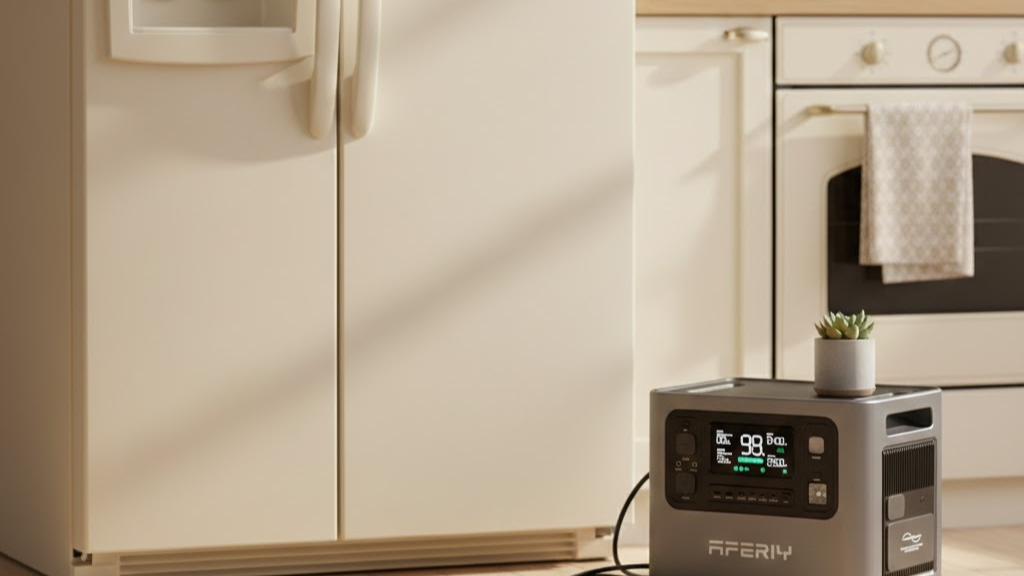
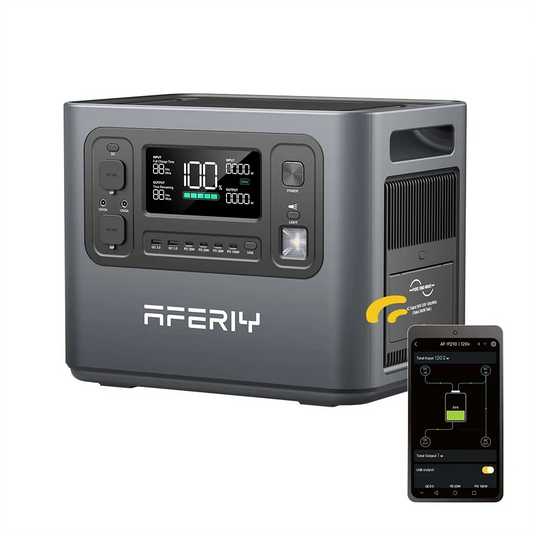
Because most household fans only use 20–70 watts, they are extremely easy to power using portable battery systems during outages or outdoor activities. For example, a portable power station like the Aferiy P180 portable power station can run a typical fan for many hours, making it useful for camping, RV travel, or emergency backup cooling.
Fan vs. Air Conditioner Energy Usage
Put a fan next to an air conditioner, and the math looks entirely different. A basic window AC unit devours 500 to 1,500 watts. Even smaller models still use far more electricity than a fan. For example, a 5000 BTU air conditioner typically uses around 400 to 600 watts, depending on efficiency and operating conditions. Expect them to pull an unbelievable 3,000 to 5,000 watts every single hour. Run your central AC for 60 minutes, and you just burned through the same amount of power it takes to run a 50W fan for four straight days.
Keep in mind that fans cool people, not empty spaces. They evaporate sweat off your skin to create a wind-chill effect. Pair a good fan with your AC, bump the thermostat up four degrees, and you stay perfectly comfortable while slashing your utility bill.
Tips to Reduce Electricity Usage When Using a Fan
You already know fans run cheap. Use a little strategy, and you can drop those numbers even lower.
-
Buy Smart: Pick up a model with a DC motor. They cost a little more upfront but pay for themselves fast over a long, hot summer.
-
Dial it Back: Stop running everything on maximum. Medium or low usually gets the job done just fine.
-
Respect the Empty Room: Turn it off when you walk out. Fans don't lower the room temperature, so leaving one spinning in an empty bedroom just burns cash.
-
Work with Windows: Leverage natural drafts. Set up your fan near an open window during the cool evening hours to pull fresh air inside.
-
Team Up With the AC: Let the fan push the heavy, cold AC air around the room.
-
Wipe the Blades Down: Dust creates drag. Clean blades spin more easily and save the motor from overworking.
-
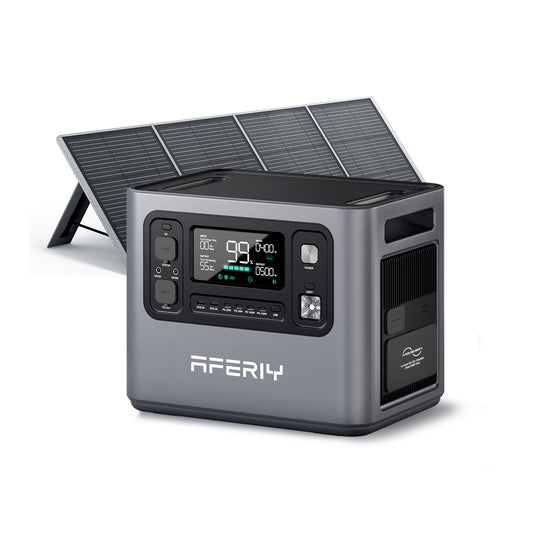
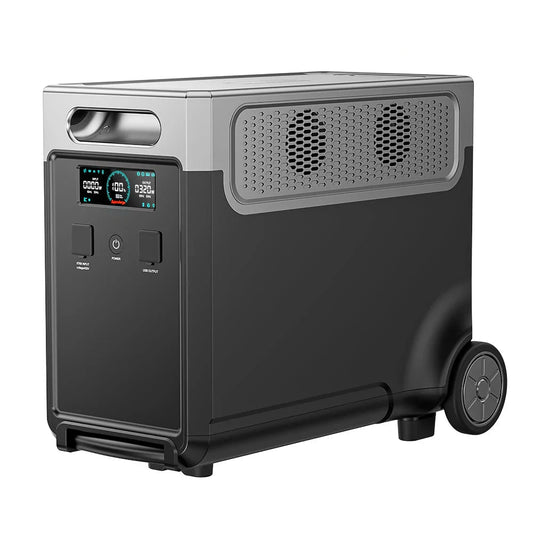
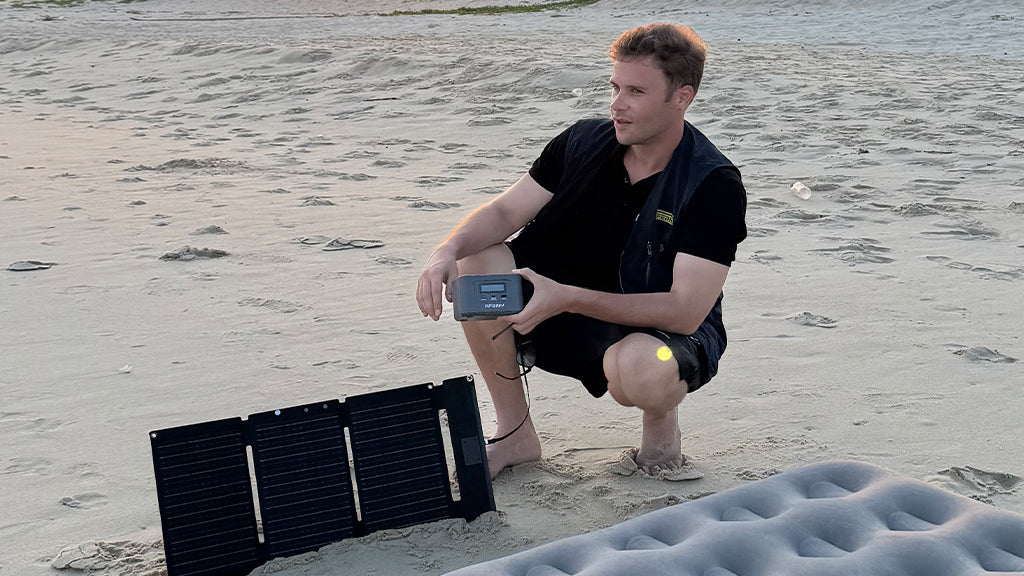
Go Off-Grid: Dealing with a power outage or heading to a campsite? Because most standard fans only need 30 to 70 watts, you can easily plug them into a battery power station. Something compact like the AFERIY P280 Portable Power Station handles this perfectly. Pushing 100W, it easily runs a box fan, charges your phones, and keeps LED lights glowing for hours when grid power vanishes. Need more juice? You can stack up to four extra batteries to boost its 2048Wh base capacity to a massive 10,240Wh for multi-day outages. It makes an excellent emergency backup or camping companion.

Conclusion
Fans are a low-wattage, high-efficiency alternative to air conditioning, typically costing only pennies a day to run. By matching the fan to your space and turning it off when you leave, you can stay cool without the high energy bills.
FAQ
How much does it cost to run a ceiling fan on high for 24 hours?
A standard ceiling fan on high pulls about 60 to 75 watts. Leave it on for 24 hours, and you use around 1.44 to 1.8 kWh. Assuming your electricity rate sits at 15 cents a kWh, you spend roughly 22 to 27 cents for the whole day.
How many watts does it take to run a portable fan?
It depends entirely on the design. Tiny desk models sip anywhere from 4 to 20 watts. Heavy-duty portable tower or box fans demand 40 to 100 watts.
How much power does a 20-inch box fan use?
Most 20-inch box fans need 50 to 100 watts to spin at full speed. The average model sits right around 70 to 90 watts.
Is it safe to leave a fan on all night?
Absolutely. If you need the airflow to sleep, let it spin. They use incredibly little electricity, so the cost stays low. Just remember to shut it off when you wake up and leave the room.
Does putting ice water in front of a fan actually work?
It does help a little bit. Setting a bowl of ice right in front of the blades puts out a quick, focused chill. It won't actually bring down the room temperature like an air conditioner, though. It mostly just cools off your immediate area with a temporary, refreshing breeze
 Free shipping from US local warehouse