











Is House Power AC or DC? Understanding the Electricity Used in Homes
So, what kind of electricity actually comes out of your wall? Homes run on alternating current (AC). Power companies pump this AC electricity directly from the grid straight into your wall sockets. We rely on it to run our heavy-duty appliances and flip on the lights. Catch is, the devices you use most—think laptops, smartphones, and that flat-screen TV—do not actually run on AC. They hide tiny internal converters that flip the incoming AC wall power into direct current (DC) before doing any real work.
What Is AC Power and How Does It Work?
What Does Alternating Current Mean?
Alternating current never sits still. The electrical charge literally changes direction back and forth in a relentless rhythm. Power plants spin massive wire coils inside magnetic fields to create this effect. As those coils rotate, they generate a wave of voltage that rises, falls, and reverses. We call this a sine wave. It pulses.
How AC Electricity Flows in a Power System
Electricity takes a massive road trip before it ever hits your toaster. Giant generators at the power plant create the initial surge. High-voltage transmission lines shoot that energy across the state. Substation transformers catch the current and drop the voltage down for regional distribution. Finally, those local transformers sitting on street poles reduce the voltage to a safe level and push it right into your home's electrical panel.
In most U.S. homes, a standard wall outlet is connected to a 15-amp circuit, which means it can safely handle about 1,800 watts of power under normal conditions. Understanding how many watts an outlet can handle helps prevent overload when multiple appliances run on the same circuit.
AC Frequency in Household Electricity
AC vibrates at a very specific speed depending on where you live. Engineers measure this in Hertz (Hz), tracking how many times the current cycles every single second. Plug something in within the United States or Canada, and you get 60 Hz. Travel to Europe or most of Asia, and the standard shifts to 50 Hz. Japan does things a bit differently. They split the country right down the middle, running 50 Hz in the east and 60 Hz in the west.

What Is DC Power and Where Is It Commonly Used
What Direct Current Means
Direct current keeps things simple. Electrons march in a single, straight line from the negative terminal to the positive one. They never reverse course. Solar panels generate it naturally. Batteries store it. Because it provides such a steady, unwavering supply of energy, DC powers almost all sensitive electronic circuits.
Common Devices That Use DC Power
Most of your daily gadgets demand DC to survive. They either draw it from built-in batteries or use a charging brick to convert your wall's AC into usable DC. Smartphones sip about 3.7 to 5 volts to keep the screen on. Your laptop needs a bit more juice, usually pulling 12 to 20 volts. LED lighting arrays run highly efficiently on 12 to 24 volts, and electric vehicles require massive 300 to 800-volt battery packs just to turn the wheels.
|
Device Type |
Typical DC Voltage |
Common Application |
|
Smartphones |
3.7–5V |
Charging and operating mobile devices |
|
Laptops |
12–20V |
Powering computer components and batteries |
|
LED Lighting |
12–24V |
Energy-efficient lighting systems |
|
Portable Electronics |
5–12V |
Cameras, tablets, and small gadgets |
|
Solar Energy Systems |
12–48V |
Storing and distributing solar-generated electricity |
|
Electric Vehicles |
300–800V |
Supplying power to electric motors |
Examples of DC Power in Everyday Life
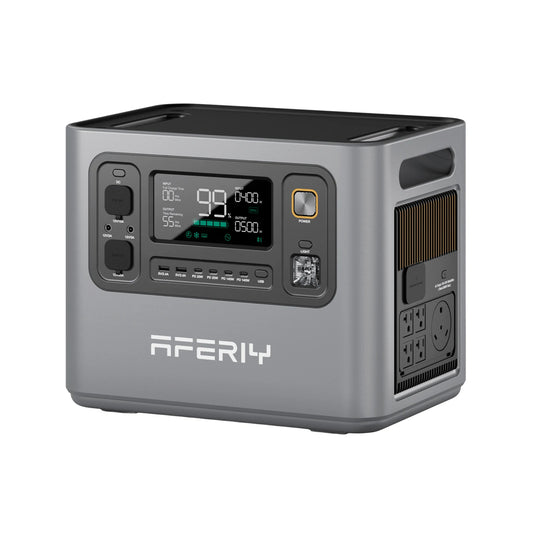
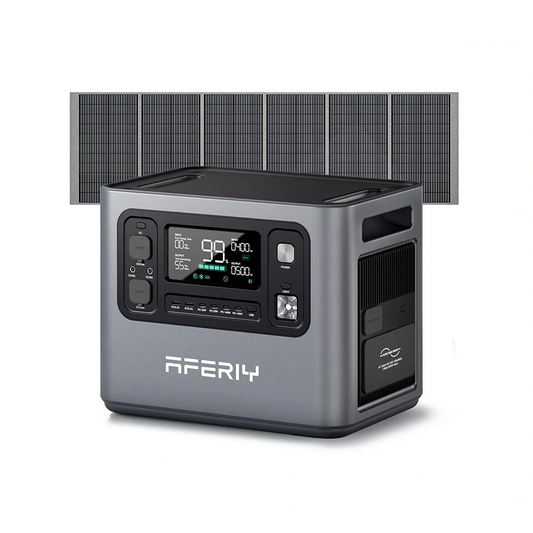
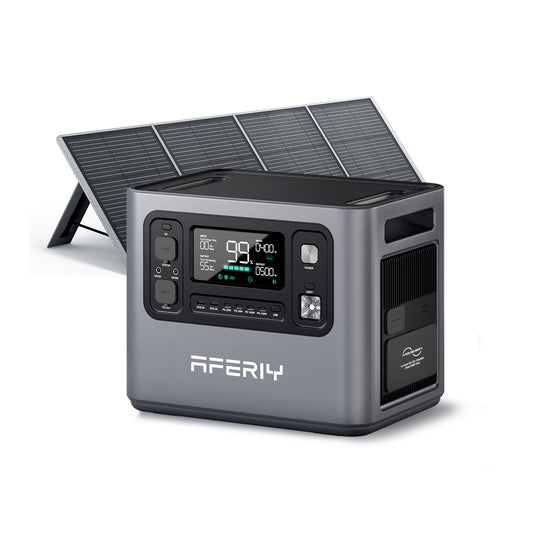
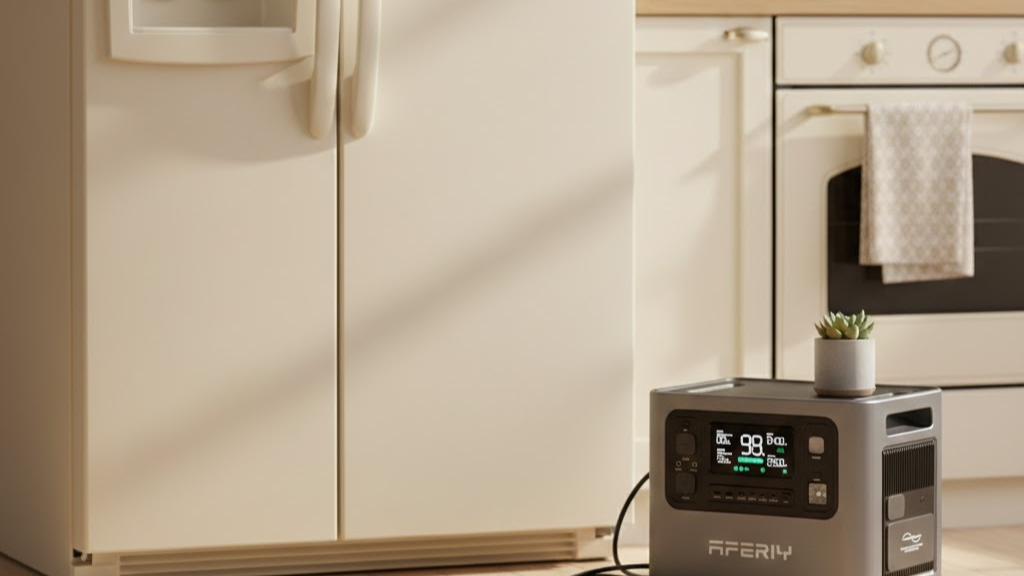
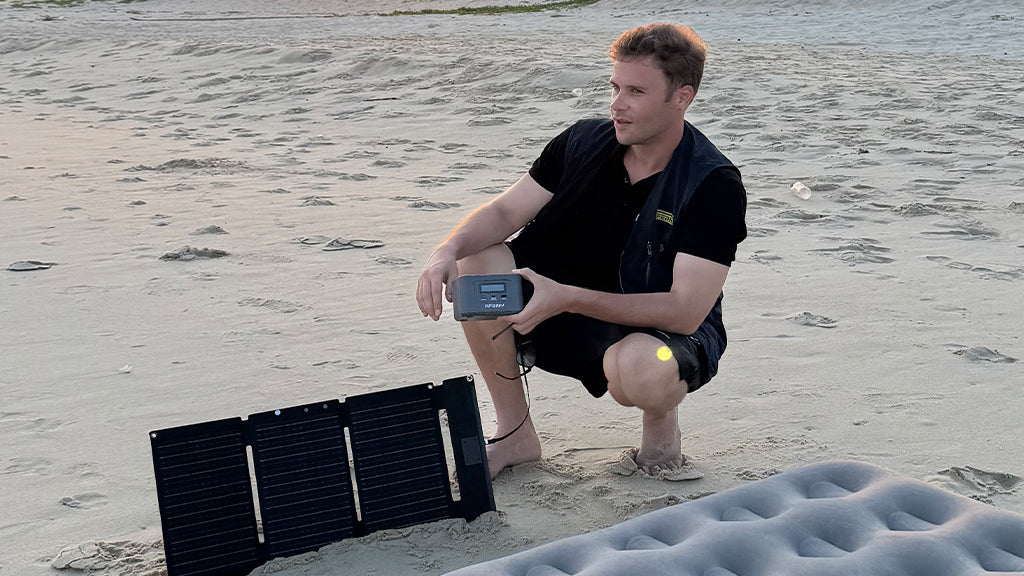
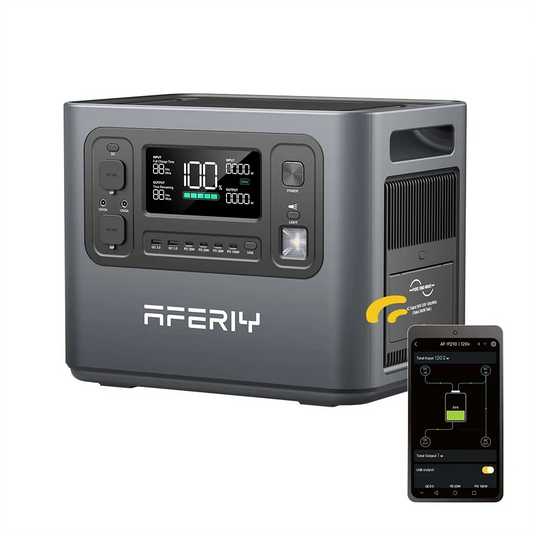
Many modern battery-powered systems rely entirely on direct current. Portable power stations, for example, stockpile electricity inside massive lithium batteries as DC. A unit like the AFERIY P280 Portable Power Station stores all its energy in DC format. It then uses a built-in internal inverter to flip that stored energy back into AC electricity. This lets you power standard household gear—laptops, lights, or box fans—while you camp off-grid or wait out a neighborhood blackout.

Why AC Power Is Better for Household Electricity Systems
AC vs DC Power Comparison
|
Feature |
AC Power |
DC Power |
|
Current direction |
Alternates back and forth |
Flows in one direction |
|
Typical source |
Power grid |
Batteries, solar panels |
|
Common usage |
Homes and buildings |
Electronics and portable devices |
Understanding this difference helps explain why homes receive AC power, but many appliances still rely on DC internally.
In practice, the total electricity used in a home can vary widely depending on appliances and heating systems. At any given moment, a typical household may use between 500 and 2000 watts of power, though peak usage can climb much higher when major appliances are running.
Efficient Long-Distance Power Transmission
Why not just run DC everywhere? Pushing electricity across hundreds of miles burns up a lot of energy as heat. AC solves this problem. Power companies can crank the voltage incredibly high to shoot the electricity across the map with almost zero loss. You simply cannot do that efficiently with direct current.
Voltage Conversion with Transformers
Transformers absolutely love alternating current. These simple devices can instantly step up the AC voltage for a long journey or step it down before it enters your living room. Try doing that with DC, and you end up needing massive, expensive, and complex conversion equipment.
Historical Reasons Behind AC Power Grids
We built the modern grid around AC over a century ago. George Westinghouse and Nikola Tesla proved they could light up entire cities from a single distant waterfall using alternating current. Thomas Edison fought hard for a DC grid, but his system required a thick-cabled power plant on almost every street corner to work. AC won the War of the Currents simply because it scaled better.
FAQ
Can portable power stations supply AC power to household devices?
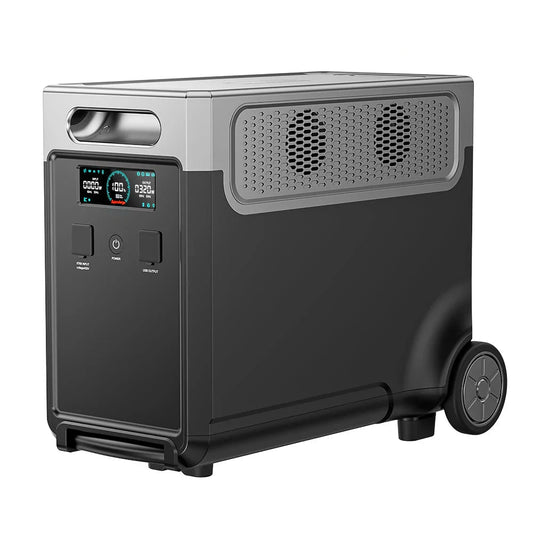
Beyond your phone, DC acts as the absolute backbone of renewable energy and portable storage. Solar panels naturally produce DC, and all batteries store energy as DC. Modern battery systems, such as the AFERIY P310 Portable Power Station, operate basically as giant DC reservoirs. They pack electricity into lithium cells as DC. When you desperately need to plug in a standard household fan or laptop during a blackout, the unit activates an internal inverter to convert that stored DC back into AC electricity on the fly.
How do I know if the power is AC or DC?
Read the label on your device's power brick. If you spot a tilde symbol (~) next to the input voltage (like "100-240V ~"), that means it takes AC from the wall. Notice a solid line sitting just above three dashed lines (⎓)? That marks the output side where the brick has successfully converted the power to DC.
What happens if I plug an AC into a DC?
Never do this. If you tear off a required AC-to-DC adapter and wire a delicate DC-only circuit straight into your wall outlet, the massive alternating voltage instantly obliterates the internal components. You will likely start a fire. The microchips just pop.
Why is DC not used in homes?
Direct current works beautifully for electronics, but running a pure DC grid throughout a house requires ridiculously thick, heavy copper wiring just to carry the load safely. Our infrastructure already delivers AC right to your wall. We find it much cheaper and easier to let those small individual device adapters handle the final conversion to DC right at the plug.
 Free shipping from US local warehouse