













How Many Watts Can an Outlet Handle?
Having an idea of how many watts an outlet handles is essential to all people who use daily appliances, home office devices, or high-performance power tools of high performance. Exceeding the specification of an outlet may cause tripping of an outlet, destruction of electronics, or even fire hazards
This guide talks about the outlet wattage limits, the factors that influence the wattage limit, and safer options in the event that your power requirements are beyond what a typical wall outlet is able to sustain.
Why Outlet Wattage Limits Matter
Each power outlet has its maximum allowed power capacity to enable safe operation. Exceeding the suggested wattage can cause overheating in the wiring and overloading the circuit breaker, eventually causing your electrical system to deteriorate or fail over time. Be aware of the number of watts the outlet can handle. It can save you from all these dangers, besides properly protecting your equipment and your home.
Wattage limits are particularly relevant in the present times, as homes today can be loaded with several high-wattage devices such as space heaters, coffee makers, PCs, and power tools, all running at the same time. The knowledge of these limits enables you to pre-plan the usage of power in a safer and more efficient manner.

How Many Watts Can a Standard Outlet Handle
In most U.S. homes, a standard wall outlet runs on 120 volts and is rated at either 15 amps or 20 amps. Using the basic formula (Watts = Volts × Amps), a 15-amp outlet can technically handle up to 1,800 watts, while a 20-amp outlet can handle up to 2,400 watts.
However, for continuous use, electricians recommend staying below 80% of the maximum rating. That means about 1,440 watts for a 15-amp outlet and 1,920 watts for a 20-amp outlet. This safety margin reduces heat buildup and extends the lifespan of your wiring and devices.
Outlet Wattage Limits by Type
Not every outlet is the same. Different ratings or additional inspections, such as GFCI, are commonly used in kitchen outlets, bathroom outlets, garage outlets, as well as special-use circuits with dedicated appliance outlets. Very heavy appliances such as ovens, dryers, or EV chargers have distinct outlets with much higher wattage, but ordinary outlets are meant for the living room to accommodate the less heavy loads.
The type of outlet provides details of the kinds of device which can be safely connected and which ones must be connected to dedicated circuits.
Factors That Affect How Much Power an Outlet Can Handle
Multiple variables affect the maximum watts that an outlet can manage, and not only the outlet.
1. Outlet Amperage Rating
The baseline is determined by the amperage of the outlet and circuit breaker. In bedrooms and in living rooms, there are 15-amp circuits, whereas kitchens and workshops have 20-amp circuits. Overloading may occur when high-wattage appliances are connected to a low-wattage outlet.
2. Circuit Load and Shared Devices
The majority of household outlets are connected to other outlets of the same room or area, and so the total wattage of everything on the same circuit is important, not only what is on a single socket. The use of multiple high-wattage devices at once raises the chances of tripping breakers and overheating of wiring. A portable power station that has an independent output is safer and more reliable than placing heavy loads on one circuit.
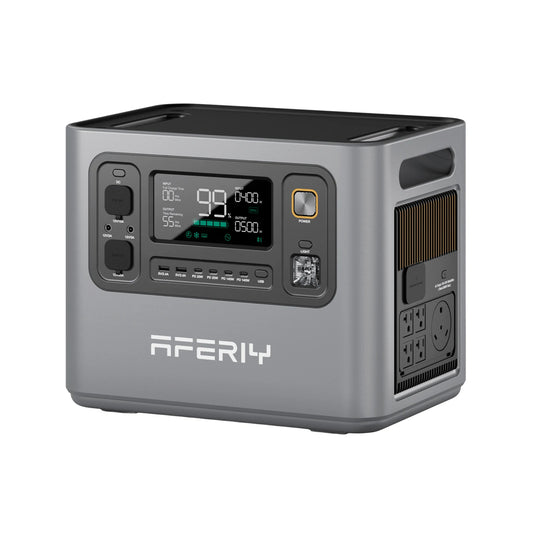
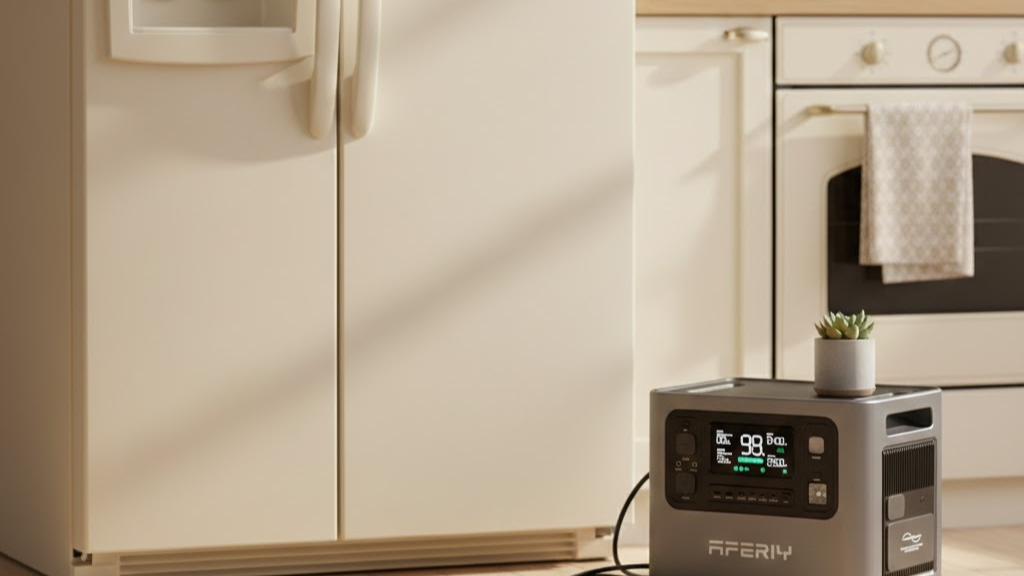
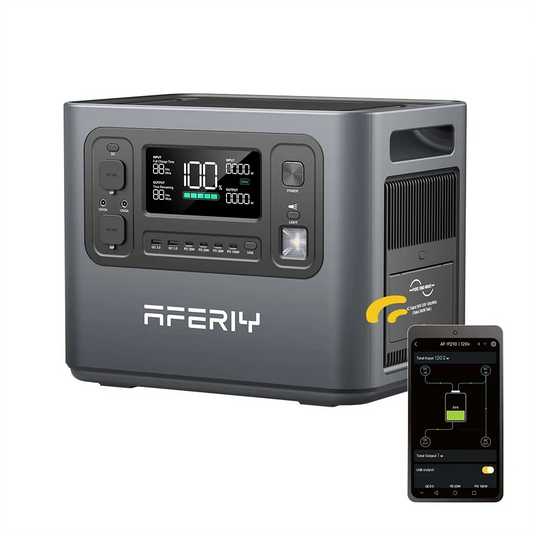
The AFERIY P210 Portable Power Station (2400W, 2048Wh) is a large power supply that can be used to power large appliances such as refrigerators, power tools, and office equipment. It has a pure sine wave output, a series of AC outlets, and an internal LiFePO4 battery, a stable source of power without causing any harm to the electrical system of your house.
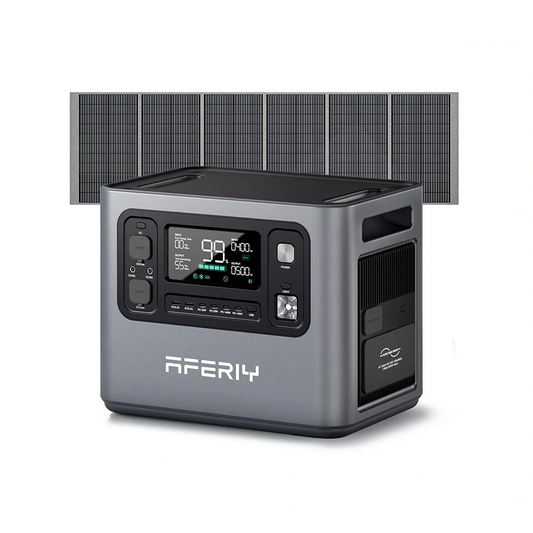
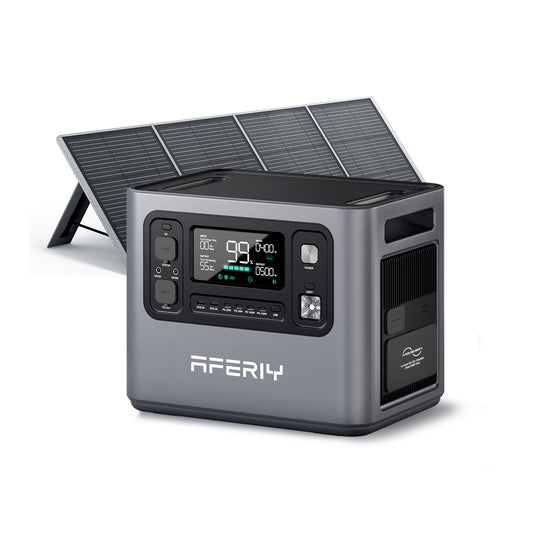
The AFERIY P280 Portable Power Station (2800W, 2048Wh Expandable Battery) goes further with more flexibility required by those who need it. Its increased power and upgradeable battery size allow it to be used in longer-lasting applications, workshops, RV applications, or as a backup power source, all without putting household mains at a serious risk of overloading.
You reduce circuit load, enhance safety, and obtain a more reliable source of power to meet the modern energy needs by shifting high-wattage electronics to a dedicated power station.

3. Wiring Gauge and Electrical Age
In older houses, there might be out-of-date wiring that cannot be relied on due to not meeting the power requirements of modern-day, or having thin wire gaugesthat heat up more quickly under load, and lower the safe limit of wattage.
Although an outlet may seem ordinary, the wiring behind it could have a limit to the amount of power the wiring can deliver safely.
4. Continuous vs Intermittent Power Use
Outlets are put under more pressure by devices that need to run all day long, such as space heaters or air conditioners, than by devices used more occasionally, such as blenders or hair dryers. The continuous loads must never exceed optimum wattage values to prevent fire.
5. Extension Cords and Power Strips
The safe wattage limits can also be reduced by using extension cords or power strips. Many extension cords are not rated for high loads and might overheat in a short time. Power strips do not add capacity, but merely share it, which may create a false sense of safety.
6. Outlet Condition and Installation Quality
Loose connections, damaged outlets, or improperly installed outlets can cause a significant decrease in the maximum power that an outlet can safely take.
When an outlet gets warm or sparks or always trips a breaker, this is a pointer that there is a problem that should be addressed without wasting any more time.
Tips to Use Outlets Safely and Efficiently
In order to keep within safe limits, it is always advisable to distribute the high-wattage devices to other circuits whenever feasible. It is advisable not use several appliances such as heating, in the same outlet. Look at the warning of the trip of the breaker as not a nuisance but a warning.
In cases where your power demands are too high to be accommodated in household outlets, e.g., workshops, RVS, outdoor activities, or emergency backup, portable power stations provide a safer option. They produce high output without using home wiring and provide any built-in protection against overloads.
Conclusion
Knowledge of how many watts an outlet handles is key to preventing electrical hazards and protecting your equipment. Although regular outlets can be used with ordinary electronics, they cannot withstand long, excessive-wattage loads.
As your power demands increase, you can consider the AFERIY P210 Portable Power Station or the expandable AFERIY P280 Portable Power Station, which deliver the high output of a power source without adding overloading of your home power circuits.
Selecting the appropriate power source will guarantee safety, efficiency, and comfort as well.
FAQ
1. Can my outlet handle 1,000 watts?
Yes, most standard outlets can safely handle 1,000 watts, especially if it’s not a continuous load and the circuit isn’t shared with other high-draw devices.
2. Is 3,000 watts too much for an outlet?
Yes, 3,000 watts exceeds the capacity of standard household outlets.
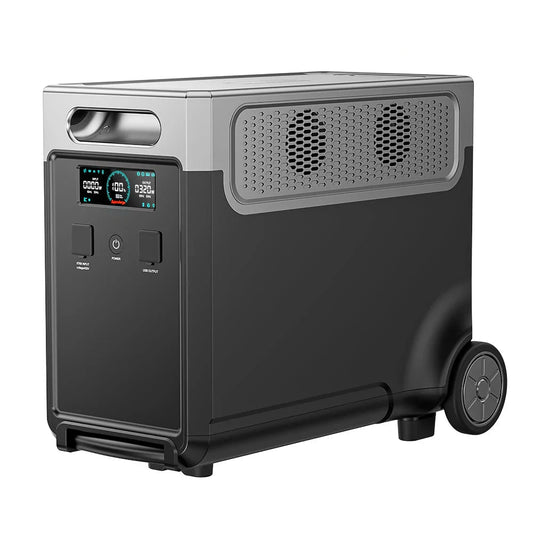
If you need to run equipment that draws close to or exceeds 2,000W for extended periods, consider using a dedicated circuit or opting for a high-power portable power station as an alternative solution, such as the AFERIY P310 Portable Power Station.
3. How do I know if I'm overloading an outlet?
Signs include frequently tripped breakers, warm outlets, flickering lights, or burning smells. These indicate the outlet or circuit is under too much load.
4. How to check how much power is coming from an outlet?
You can use a watt meter or power monitor plugged into the outlet to measure real-time wattage usage and ensure you stay within safe limits.
 Free shipping from US local warehouse