











Best Portable Power Station for Outdoor Use 2026
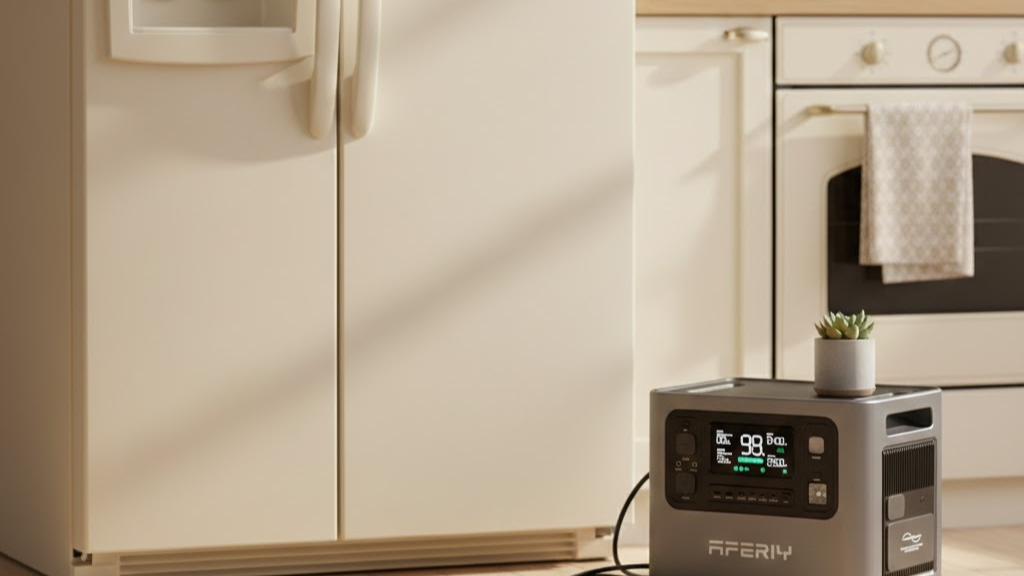
Portable power stations provide silent, emission-free electricity for outdoor use. A modern Portable Power Station for Outdoor Use changes everything. You press a button, and you instantly have silent, clean electricity. Whether you plan a weekend camping trip, live full-time in an RV, tackle remote hiking trails, or just want backup power for storm season, these battery banks keep your gear running.
The technology hit a high-capacity leap in 2026. We now see widespread adoption of LiFePO4 (lithium iron phosphate) battery cells, meaning these units last for over a decade of daily use. Fast charging tech lets you fill a high-capacity battery in under two hours from a wall outlet. Combine that with highly efficient solar compatibility, and building a reliable off-grid setup has never been easier.
Benefits of Using a Portable Power Station Outdoors
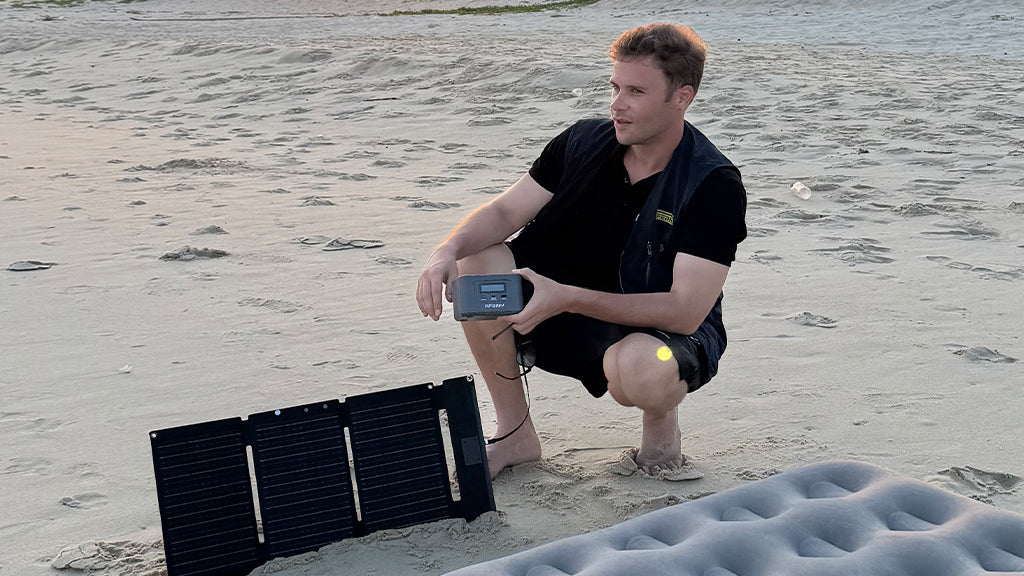
Ditching fossil fuels brings massive advantages to your campsite. A portable power station for camping operates in total silence. You won't annoy your neighbors, and you won't scare off the local wildlife. They produce zero emissions, so you can safely run them inside a tent or camper van.
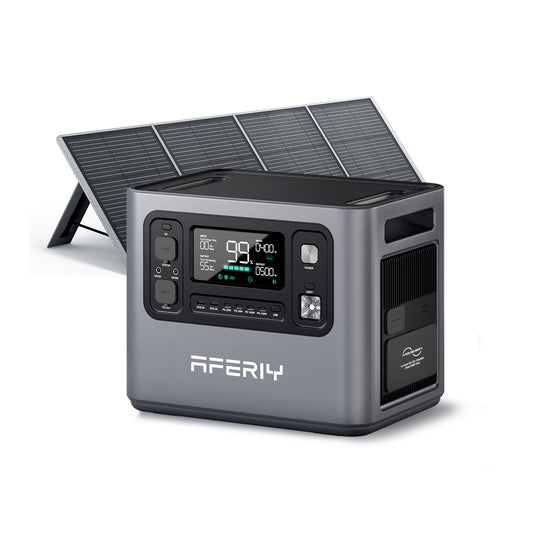
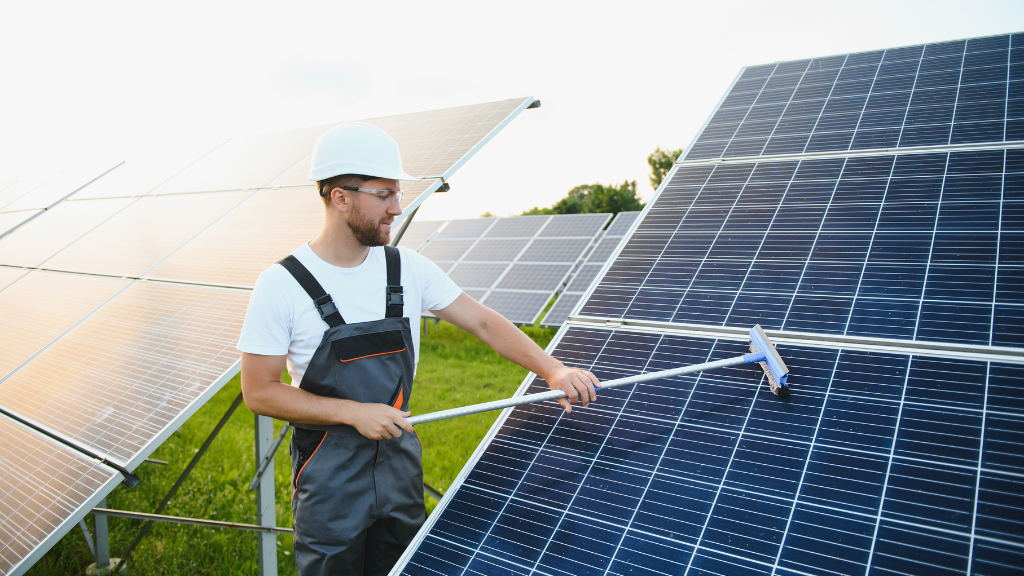
You also skip the messy maintenance. No oil changes, no spark plugs, and no hauling heavy jerrycans of fuel. Pair your battery with a few folding panels, and you create a complete solar generator for camping that refills itself every time the sun shines. Portable solar panels for camping and off-grid living provide a flexible way to generate power in remote environments and support long-term energy independence.

What to Consider Before Choosing a Portable Power Station
Buying the right unit requires matching the hardware to your specific adventure style. Pay attention to these core specs.
Battery Capacity (Wh)
Capacity dictates how long your devices stay powered. Think of Watt-hours (Wh) as the size of your gas tank. A 300Wh unit charges a phone dozens of times but might only run a small 12V fridge for a day. A high-capacity 2000Wh unit can keep that same fridge running all weekend while also powering laptops, lights, and a coffee maker.
Output Power (Wattage)
Output dictates what you can plug in at the same time. The running wattage indicates the continuous power the inverter handles, while the surge (or peak) wattage reflects the momentary spike that occurs when compressors or motors start up. Want to run a microwave? You need an inverter pushing at least 1500W.
Portability & Weight
Heavy power means heavy gear. High capacity comes with a weight penalty. A 300Wh station might weigh just 8 pounds, making it easy to carry down a trail. A 3000Wh behemoth can easily tip the scales at 80 pounds. If you plan to move the unit frequently, check the handle design or look for models with built-in wheels.
Charging Options
Versatility matters when you stray far from the grid. Look for units that accept multiple charging inputs. Standard options include AC wall outlets, 12V car ports, and solar panel inputs. The best models in 2026 allow dual-charging—combining AC and solar simultaneously—to cut your recharge time in half. This dual-charging trick slashes your wait time.
Number & Type of Ports
Take a quick inventory of your electronics. You want a healthy mix of AC wall outlets, fast-charging USB-C ports (look for 100W PD to charge laptops directly), standard USB-A ports, and a regulated 12V car socket for camping appliances.
Durability & Outdoor Design
Mother Nature doesn't care about your electronics. If you camp hard, look for reinforced corners, dust covers over the ports, and weather-resistant casings.

Best Portable Power Stations for Outdoor Use 2026
We put the industry heavyweights through the wringer. Here is exactly what deserves a spot in your trunk this year.
AFERIY P310 Portable Power Station
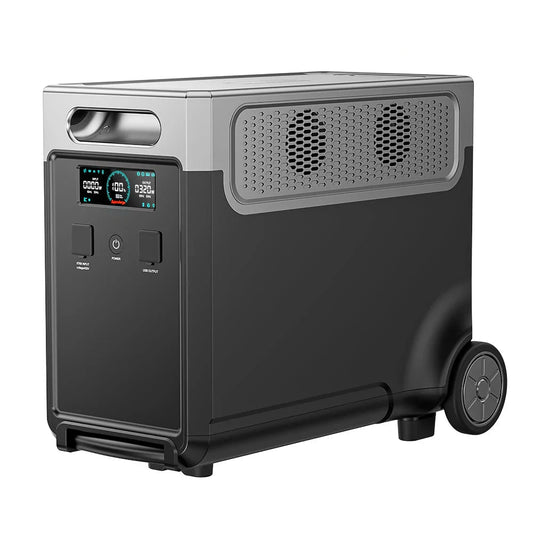
The AFERIY P310 Portable Power Station is an absolute monster. It packs a staggering 3840Wh capacity and a massive 3600W AC output. This unit essentially puts an entire home electrical grid on wheels.
Advantages: * Runs heavy-duty appliances like air conditioners, power tools, and induction cooktops without breaking a sweat.
-
Uses ultra-safe LiFePO4 battery chemistry for 3500+ charge cycles.
-
Supports blazing-fast 1.5-hour recharge times via a standard wall outlet.
Best for: RV owners, full-time van lifers, and serious off-grid basecamps that demand uncompromising power.
AFERIY P280 Portable Power Station
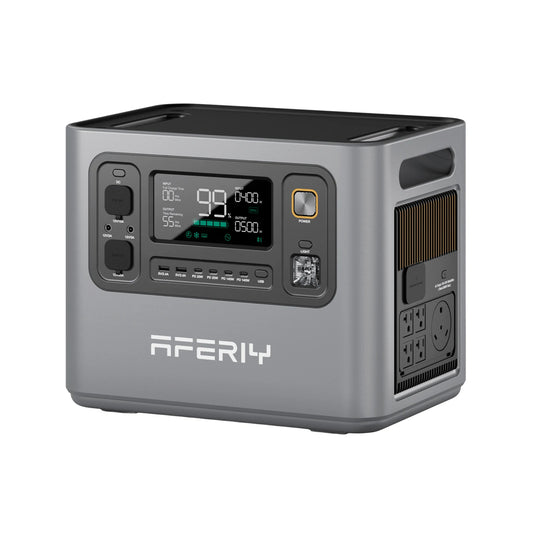
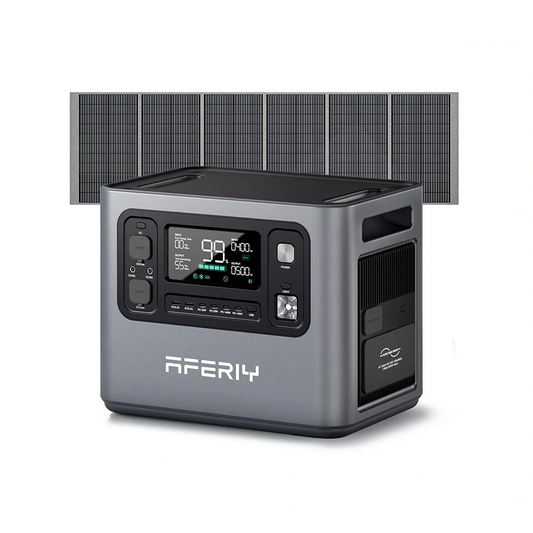
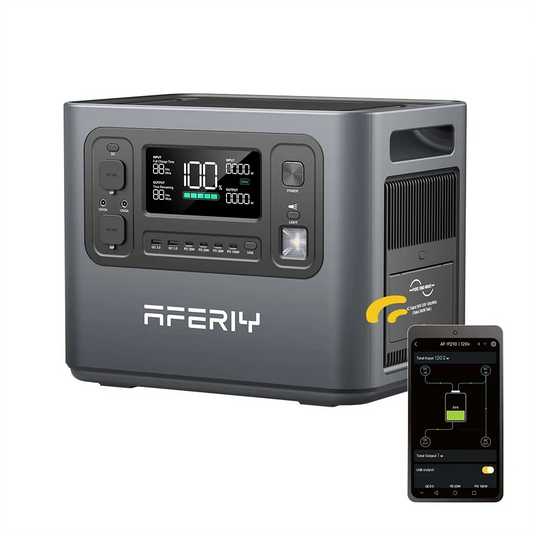
Sitting right in the sweet spot for serious campers, the AFERIY P280 Portable Power Station delivers a 2048Wh capacity paired with a 2800W output. It offers heavy-hitting power in a slightly more manageable footprint than its bigger sibling.
Advantages:
-
Easily handles high-draw appliances like microwaves and coffee makers.
-
Features an incredibly intuitive LCD screen that tracks input/output and remaining runtime perfectly.
-
Operates quietly, even when the internal cooling fans kick on.
Best for: Family camping trips, tailgating, and reliable home emergency backup.
AMPROAD Epic 300 Portable Power Station (300Wh)
AMPROAD built the Epic 300 for the minimalist. It strips away the excess bulk, offering a lightweight 300Wh battery that you can easily toss into a car trunk or carry to a picnic table.
Advantages:
-
Extremely lightweight and highly portable.
-
Excellent value for budget-conscious buyers.
-
suitable size to tuck neatly into a small tent without taking up sleeping space.
Best for: Weekend tent campers, CPAP machine users, and keeping mobile devices charged on short trips.
Jackery Explorer 1000 Portable Power Station
Jackery practically birthed this market. The Explorer 1000 holds its ground as the reliable old guard, offering around 1000Wh inside that iconic orange-and-black shell. Survives absolute torture on rough trails.
Advantages:
-
Proven, battle-tested reliability in rough conditions.
-
Excellent, highly efficient solar charging integration.
-
The very comfortable molded handle makes carrying the 22-pound unit a breeze.
Best for: Overlanders, standard car campers, and anyone wanting a plug-and-play solar generator for camping.
EcoFlow RIVER 2 Pro Portable Power Station
EcoFlow dominates the fast-charging space. The RIVER 2 Pro features a 768Wh capacity and an 800W output, but its real party trick is how quickly it refills.
Advantages:
-
Charges from 0% to 100% in just 70 minutes using an AC outlet.
-
Upgraded LiFePO4 cells guarantee 10 years of everyday use.
-
Smart app integration lets you control ports and monitor charging from your phone.
Best for: Spontaneous weekend warriors who might forget to charge their gear until the morning of the trip.
Comparison Table
|
Model |
Capacity (Wh) |
Output (W) |
Battery Chemistry |
Best Feature |
Best For |
|
AFERIY P310 |
3840Wh |
3600W |
LiFePO4 |
high-capacity power ceiling |
RVs, Van life, Off-grid basecamps |
|
AFERIY P280 |
2048Wh |
2800W |
LiFePO4 |
High-output sweet spot |
Family camping, Tailgating, and home backup |
|
Jackery 1000 |
~1000Wh |
1000W |
Lithium-ion |
Rugged reliability |
Overlanders, Car campers |
|
EcoFlow RIVER 2 Pro |
768Wh |
800W |
LiFePO4 |
70-minute rapid charge |
Spontaneous weekend warriors |
|
AMPROAD Epic 300 |
300Wh |
300W |
Lithium-ion |
Ultra-lightweight |
Weekend tent campers, CPAP users |
How to Choose the Right Portable Power Station for Outdoor Use
Start by writing down a list of everything you plan to plug in. Find the wattage of your most power-hungry device. If you want to run a 1200W travel kettle, you immediately know you need an inverter rated for at least 1500W (like the AFERIY P280).
Next, calculate your total daily energy use. Add up the Watt-hours your gear pulls over 24 hours. If your devices consume 800Wh a day, a 1000Wh station gives you one day of autonomy. For camper setups, selecting the right system size depends on your daily power consumption and appliance usage. This helps determine what size solar generator is suitable for your camper setup. If you plan to stay off-grid longer, you must invest in solar power for camping. A 200W solar panel can easily refill a mid-sized battery during a sunny afternoon, giving you infinite power.
Tips for Using Portable Power Stations Outdoors
Treat your battery right, and it will reward you with years of reliable service. Keep the unit out of direct sunlight whenever possible. High heat degrades lithium cells quickly. If you set up solar panels, place the panels in the blazing sun but keep the actual power station tucked in the shade of a tree or under your RV awning.
Never drain the battery to 0% if you can avoid it. LiFePO4 batteries handle deep discharges better than older tech, but keeping the charge between 20% and 80% drastically extends the overall lifespan of the cells. Finally, always pack a few extra charging cables. A massive battery bank becomes completely useless if you forget the specific cord required for your phone.
One last thing. Pack spare cables. A massive battery becomes a useless plastic brick if you leave your proprietary phone cord on the kitchen counter.
Conclusion
Upgrading your outdoor setup with a dedicated power station completely changes how you experience nature. You gain the freedom to run a fridge, brew fresh coffee, and keep emergency communications charged without listening to a gas motor rattle for hours. By assessing your real-world power needs and choosing a reputable model from our 2026 lineup, you ensure your next camping trip stays comfortable, safe, and fully charged. Now go enjoy a quiet, fully charged weekend in the dirt.
FAQ
How long does a 200W portable power station last?
It depends entirely on what you plug into it. A 200Wh (Watt-hour) station will run a 50W CPAP machine for roughly 4 hours. It will charge a typical smartphone (which requires about 12Wh) roughly 15 times.
Will a 200W solar panel run a 12V fridge?
Yes, easily. A standard 12V camping fridge pulls around 30 to 50 watts while the compressor runs. A 200W solar panel generates more than enough electricity in full sun to run the fridge and simultaneously recharge your power station for the night.
How many watts of solar do I need for camping?
100W covers your phone and a few LED lanterns. If you run a 12V fridge, laptops, and a fan, aim for at least 200W. If you want to use heavy heating appliances like a coffee maker or microwave off-grid, you should build an array pushing 400W to 600W.
How much power is needed for camping?
A guy sleeping in a tent just charging a phone needs less than 100Wh daily. A minimalist tent camper charging a phone and a headlamp needs less than 100Wh a day. A standard car camper with a 12V fridge and a laptop will consume roughly 500Wh to 800Wh daily. A full RV setup running a microwave and an air conditioner can easily demand 3000Wh to 5000Wh per day. Match your battery size to these daily consumption numbers.
 Free shipping from US local warehouse