











How Many Watts Does a CPAP Use? CPAP Power Consumption Guide
For people who rely on CPAP therapy every night, understanding power consumption is important—not only for managing electricity costs but also for preparing for unexpected power outages, travel, or situations where a traditional wall outlet is unavailable.
Many users ask how many watts does a CPAP use because they need to know whether a backup battery, portable power station, or other power source can keep their machine running throughout the night. While CPAP machines are designed to operate efficiently, actual energy consumption depends on several factors, including humidifier settings, heated tubing, pressure levels, and the way the device is powered.

How Much Electricity Does a CPAP Use?
The exact power consumption of a CPAP machine depends on the model and accessories being used. In general, most modern CPAP machines have relatively low power requirements compared with many household appliances.
Typical CPAP Power Consumption
When asking how many watts does a CPAP machine use, the answer is typically between 30 and 100 watts, depending on the setup.
A basic CPAP without heating features usually consumes less electricity, while additional comfort features such as heated humidifiers and heated tubing can significantly increase energy demand.
| CPAP Setup | Average Power Consumption |
|---|---|
| CPAP machine only | 30–60W |
| CPAP with heated humidifier | 60–90W |
| CPAP with heated tubing | 70–100W |
For most users, the machine itself is not the main source of power consumption. Heating components often require more electricity than the airflow system because they need continuous energy to warm water and maintain air temperature throughout the night.
How Much Power Does a CPAP Use in 8 Hours?
One of the most common questions from CPAP users is how much power does a CPAP use in 8 hours.
The calculation depends on the average running wattage:
Energy Used (Wh) = Power (W) × Operating Time (hours)
For example:
| Average Power | 8-Hour Energy Consumption |
|---|---|
| 30W | 240Wh |
| 40W | 320Wh |
| 60W | 480Wh |
| 80W | 640Wh |
| 100W | 800Wh |
A CPAP using 40 watts for eight hours would consume approximately 320Wh overnight. However, real-world usage can vary because many machines do not draw the same amount of power continuously. The blower motor may use less energy during stable operation, while humidifiers and heated tubes may increase consumption throughout the night.
For users planning backup power, it is better to estimate based on the highest expected usage rather than the lowest possible consumption.
For example:
- CPAP only: around 250–400Wh per night
- CPAP with humidifier: around 400–700Wh per night
- CPAP with humidifier and heated tubing: potentially 600Wh or more per night
This provides a more realistic estimate of CPAP electricity usage.
How to Estimate Backup Power Requirements
Once you know how much power does a CPAP use, you can estimate the battery capacity needed for overnight operation.
A simple example:
- CPAP power consumption: 40W
- Sleep duration: 8 hours
40W × 8 hours = 320Wh
However, a backup power system should include additional capacity because of:
- AC inverter losses
- Battery conversion efficiency
- Temperature conditions
- Extra accessories
A practical approach is to add approximately 20–30% extra capacity.
In this example:
320Wh × 1.25 ≈ 400Wh
A battery or portable power station around 500Wh would provide more comfortable operating room.
For users who keep a backup power source for emergencies, selecting a slightly larger capacity can help avoid unexpected shutdowns caused by higher humidity settings, longer sleep periods, or increased power draw.
What Factors Affect CPAP Electricity Usage?
Although CPAP machines are generally energy-efficient, several factors can change total electricity consumption.
Heated Humidifier
The humidifier is usually the biggest factor affecting power usage.
Many CPAP users enable humidification to reduce dry mouth, throat irritation, and nasal discomfort. However, heating water requires additional electricity, especially at higher humidity settings.
Turning down the humidifier level or disabling it when appropriate can significantly extend battery runtime.
Heated Tubing
Heated tubing helps prevent condensation by maintaining warmer air temperatures between the machine and mask.
While this improves comfort for many users, it also increases electricity consumption because the tube requires continuous heating.
Pressure Settings
Higher therapy pressures may require slightly more energy because the machine needs to maintain stronger airflow.
The difference is usually smaller than the impact of heating features, but it can still affect total overnight consumption.
Usage Duration
A person using CPAP for six hours will naturally consume less energy than someone using it for nine hours.
Since CPAP therapy typically runs continuously while sleeping, even small differences in nightly usage time can affect weekly and monthly energy requirements.
AC vs DC Power Connection
The way a CPAP receives power can also influence efficiency.
Using a standard AC outlet requires the power supply to convert electricity before the machine operates. A compatible DC connection may reduce conversion losses and improve battery efficiency.
However, users should always verify compatibility with their specific CPAP model before switching power methods.
How Can You Power a CPAP During a Power Outage?
For many CPAP users, the main concern is not everyday electricity cost but maintaining uninterrupted therapy when power is unavailable.
Several backup options are available depending on the situation.
Wall Outlet
A standard household outlet remains the simplest and most reliable option for daily use.
Advantages:
- Stable power supply
- No charging required
- Suitable for regular overnight use
The limitation is that it will not provide protection during an outage.
CPAP Battery Backup
Dedicated CPAP batteries are designed specifically for medical device use.
They are usually:
- Compact
- Easy to transport
- Designed for short-term backup
However, their limited capacity may not be ideal for extended outages.
Portable Power Station
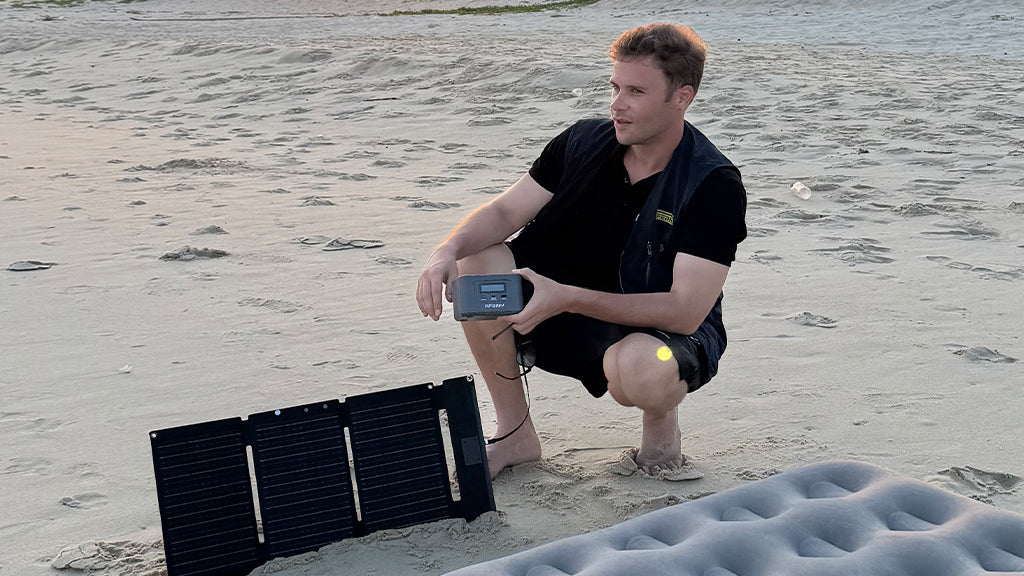
For users who need more than a short-term backup, a portable power station offers a practical way to keep a CPAP running during power outages or while traveling.
Compared with dedicated CPAP batteries, portable power stations typically provide larger battery capacities, multiple output options, and the flexibility to power other essential devices when needed. For most CPAP users, a medium-capacity unit is often sufficient, as a typical CPAP consumes only 250–700Wh during an 8-hour night, depending on whether heated features are enabled.
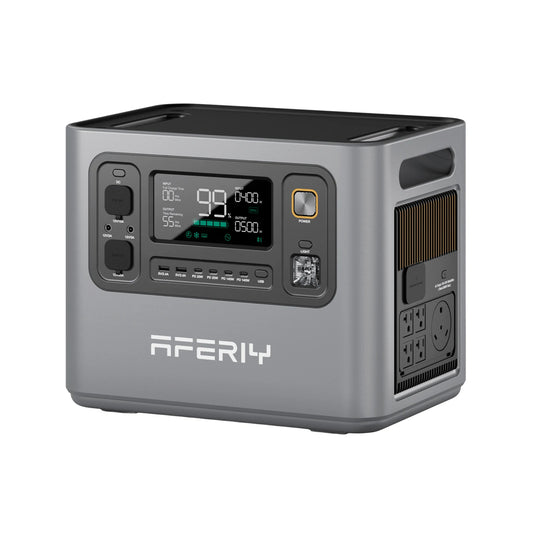
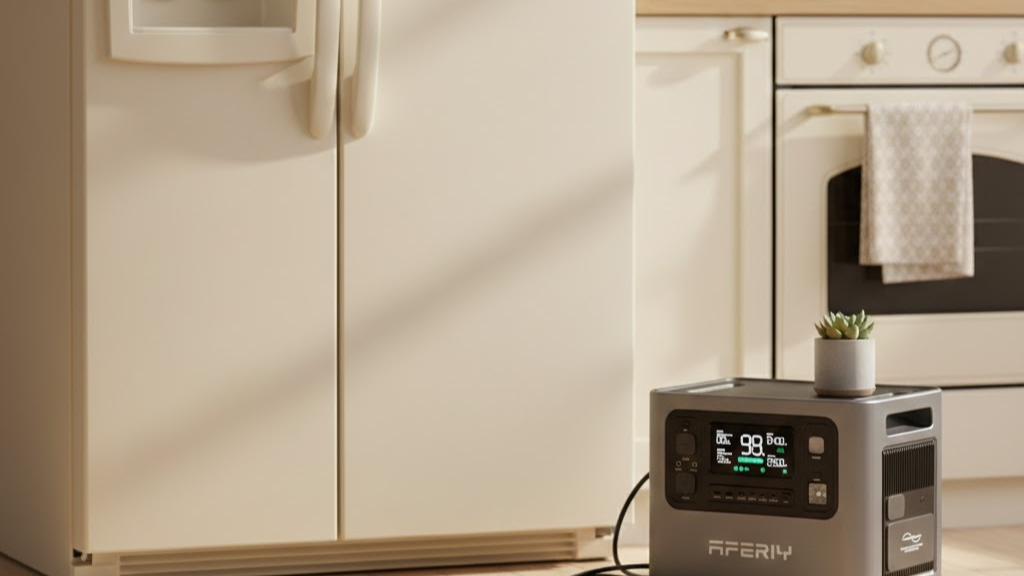
For example, the AFERIY Nomad1800 Pro Portable Power Station features a 1024Wh LiFePO₄ battery and 1800W pure sine wave AC output, providing enough capacity to power most CPAP machines for one or more nights, depending on the machine settings and accessories in use. Its compact design makes it suitable for both home emergency backup and travel, while multiple output ports allow users to charge essential devices such as phones, laptops, or Wi-Fi routers at the same time. Fast AC charging and support for solar recharging also give users greater flexibility when preparing for unexpected outages or time away from the grid.

Solar Generator
A solar generator combines battery storage with solar charging capability, making it a suitable option for users who want to maintain CPAP therapy during extended outages without relying entirely on the electrical grid.
Unlike fuel-powered generators, solar generators operate quietly, produce no exhaust emissions during use, and can be recharged with compatible solar panels when sunlight is available. While weather conditions affect charging speed, solar energy can help replenish the battery during the day and extend backup time over multiple nights.
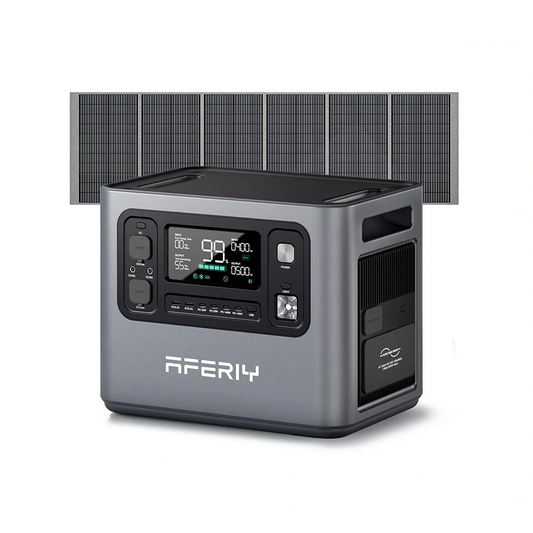
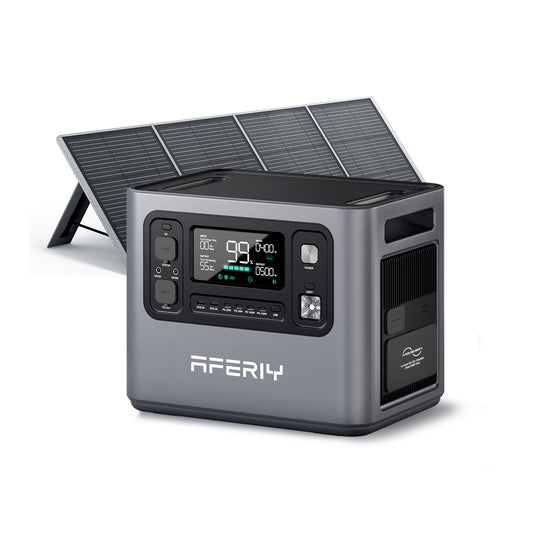
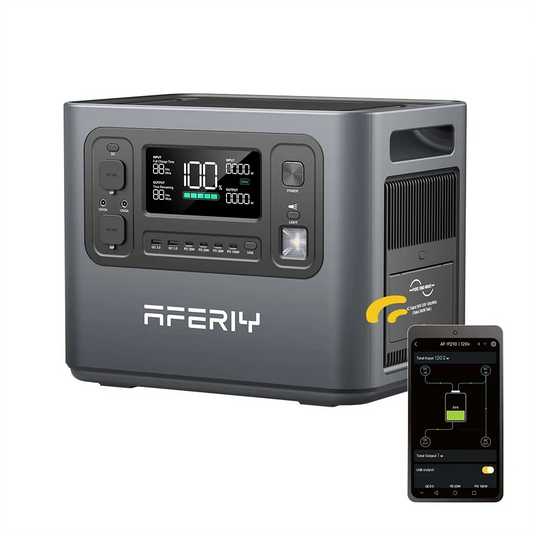
For users preparing for longer outages, the AFERIY P210 Solar Generator pairs a 2048Wh LiFePO₄ battery with compatible solar panels and supports solar charging, providing substantially more runtime than a standard CPAP battery while leaving enough capacity to power other household essentials such as lights, communication devices, or a refrigerator. This makes it a practical solution for users who need dependable backup power beyond a single night’s CPAP therapy.

Tips to Extend CPAP Battery Runtime
If you depend on backup power, reducing unnecessary energy consumption can make a significant difference.
Use Lower Humidity Settings
The heated humidifier is often the largest energy consumer. Adjusting the humidity level may help extend runtime while maintaining comfort.
Disable Heated Tubing When Possible
If condensation is not a problem, turning off heated tubing can reduce energy usage.
Consider DC Power
When supported by your CPAP model, DC power connections may reduce conversion losses and improve efficiency.
Fully Charge Before Use
Always start with a fully charged backup battery or power station before relying on it during an outage.
Test Your Setup in Advance
A backup system should be tested before an emergency. Actual runtime can vary depending on pressure settings, accessories, and environmental conditions.
FAQs
Will a 400-watt inverter run a CPAP machine?
Yes, a 400-watt inverter is usually enough to power most CPAP machines because many models consume far less than 400 watts during normal operation. However, the inverter’s output quality is just as important as its wattage rating.
For CPAP devices, a pure sine wave inverter is generally preferred because it provides cleaner and more stable power. The actual runtime depends mainly on the battery capacity connected to the inverter, not the inverter’s maximum watt output.
How long will a 100Ah battery run a CPAP?
A 100Ah battery’s runtime depends on its voltage, usable capacity, and the CPAP’s actual power consumption.
For example, a 12V 100Ah battery stores about 1,200Wh of energy theoretically. A CPAP using around 40W could consume approximately 320Wh during an 8-hour sleep period. In real use, runtime will be shorter because of energy conversion losses and battery limitations.
Using a CPAP without heated humidification or heated tubing can significantly extend battery life.
How long will a 300-watt power station run a CPAP machine?
A 300-watt power station may run a CPAP overnight, but the key factor is its battery capacity (Wh), not the 300W output rating.
A lower-power CPAP setup without heating features may run longer, while using a humidifier and heated tubing can reduce runtime. Checking your CPAP’s actual watt consumption and the power station’s usable capacity provides a more accurate estimate.
What is the 4-hour CPAP rule?
The 4-hour CPAP rule refers to a common insurance compliance requirement in the United States. It generally means using a CPAP machine for at least 4 hours per night on 70% of nights during a 30-day period. This requirement is often used by insurers to determine continued coverage for CPAP equipment.
However, the 4-hour threshold is a compliance standard, not necessarily the ideal amount of therapy time. Many users need to wear their CPAP throughout their entire sleep period for consistent treatment benefits.
Conclusion
Understanding how many watts does a CPAP use helps users better prepare for everyday operation and emergency situations. Most CPAP machines consume around 30–100 watts, with humidifiers and heated tubing being the main factors that increase energy demand. By calculating overnight consumption, considering backup capacity, and optimizing power settings, users can create a reliable setup that supports uninterrupted CPAP therapy when regular electricity is unavailable.
 Free shipping from US local warehouse