











6 Best Solar Generators for Home Backup (2026 Guide)
A power outage can leave your refrigerator, internet connection, lights, and other everyday essentials without electricity for hours or even days. If you want a backup power source without the noise, fuel, and exhaust of a gas generator, a solar generator is worth considering.
The challenge is finding one with enough power to run your essential appliances without paying for capacity you may never use. This guide compares six solar generators for home backup, looking at battery capacity, AC output, charging options, expandability, and the type of household each model suits best.

What Is a Solar Generator for Home Backup?
A solar generator is a battery-based power system that stores electricity and supplies it to household devices through AC outlets, USB ports, or DC connections. A typical system combines a portable power station with compatible solar panels, although the panels may be sold separately.
The power station stores energy in its battery, while an inverter converts stored DC electricity into AC power for appliances such as refrigerators, televisions, and lamps. Solar panels can recharge the battery during daylight, and most models also support charging from a wall outlet.
Unlike gas generators, battery-based solar generators produce no exhaust while operating and can be used indoors when the manufacturer's instructions are followed. They are also quiet and require less routine maintenance because they have no combustion engine.
For home backup, the main question is not simply how much power a unit can deliver. You also need to consider how much energy it stores, how quickly you can recharge it, and which appliances you want to keep running during an outage.
How to Choose the Best Solar Generator for Home Backup
The best solar generator depends on which appliances you need to power and how long an outage may last. Consider battery capacity, output power, charging options, and expandability before choosing a model.
Battery Capacity: How Long Can It Run Your Appliances
Battery capacity, measured in watt-hours (Wh), determines how much energy a power station stores. Around 1,000Wh may cover small electronics and lighting, while 2,000–3,000Wh can provide more flexibility for refrigerators and multiple devices. For longer outages, consider capacities above 3,500Wh.
Actual runtime depends on appliance energy consumption, inverter efficiency, and other connected loads.
Output Power: Check Running Watts and Startup Demand
Output power, measured in watts (W), determines which appliances a power station can run simultaneously. Check its continuous AC output and surge rating against your appliances' running and startup requirements, especially for refrigerators, pumps, and other motor-driven equipment.
Charging Options: AC, Solar, and Vehicle Charging
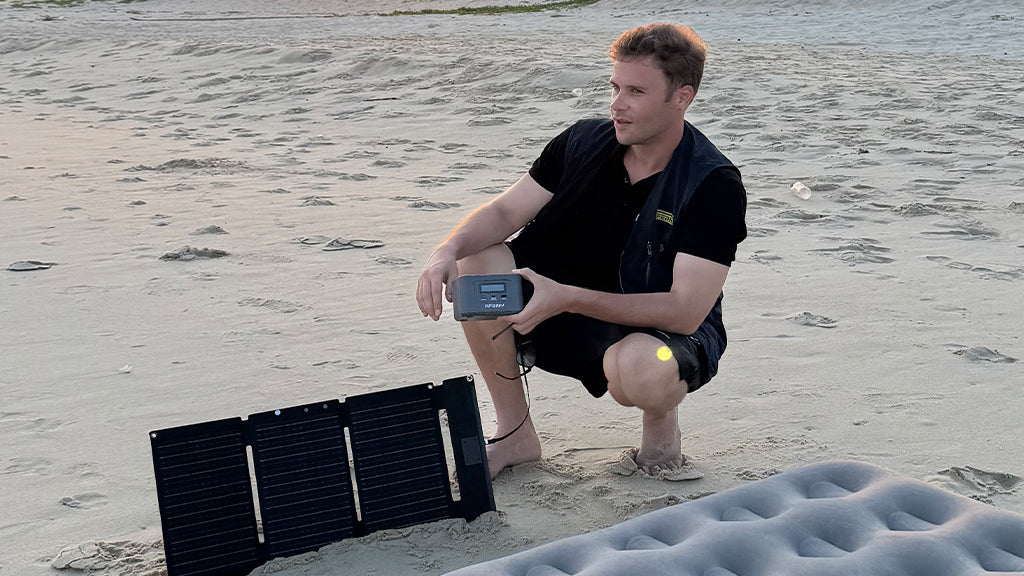
AC charging is convenient before an outage, while solar charging can replenish the battery when the grid is down. Vehicle charging provides another option but may be slower.
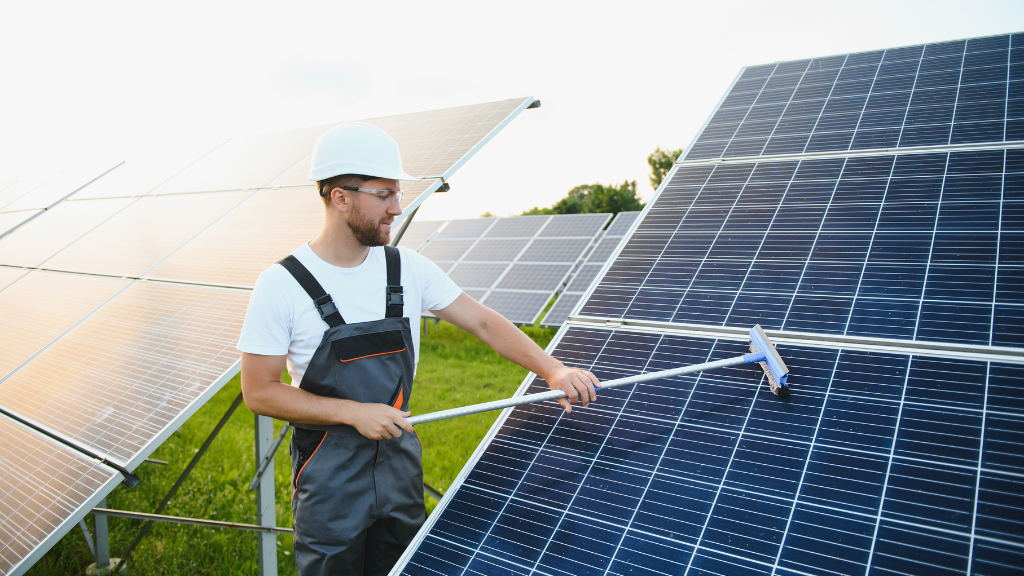
Check the maximum solar input and compatible panel specifications. Actual charging speed depends on sunlight, panel orientation, and operating conditions.
UPS and Expandable Battery Support
A UPS function can help keep compatible electronics running during a power interruption, but transfer times vary by model. Check the manufacturer's specifications if uninterrupted power is essential.
Expandable batteries can extend runtime as your needs grow. For larger household loads, also check 120V/240V support and whether a compatible transfer switch or other home integration equipment is required. Multiple AC outlets alone do not mean a power station can supply an entire home.
Best Solar Generators for Home Backup Compared
The following comparison highlights the battery capacity, AC output, and expansion options of six solar generators for home backup. Specifications refer to US models; battery configurations and included accessories can affect system capacity and output.
| Model | Battery Capacity | AC Output | Expandable Capacity | Best For |
|---|---|---|---|---|
| Jackery Explorer 5000 Plus | 5,040Wh | 7,200W | Up to 60kWh | High-capacity household backup |
| EcoFlow DELTA Pro Ultra | 6,144Wh (6kWh class) | 7,200W per unit | Up to 90kWh | Whole-home backup systems |
| BLUETTI AC500 + B300K | 2,764.8Wh with 1 battery | 3,000W with 1 battery; up to 5,000W with 2 or more | Up to 16,588.8Wh | Modular backup systems |
| VTOMAN FlashSpeed Pro 3600 | 3,096Wh | 3,600W continuous | Up to 5,912Wh | High-output portable backup |
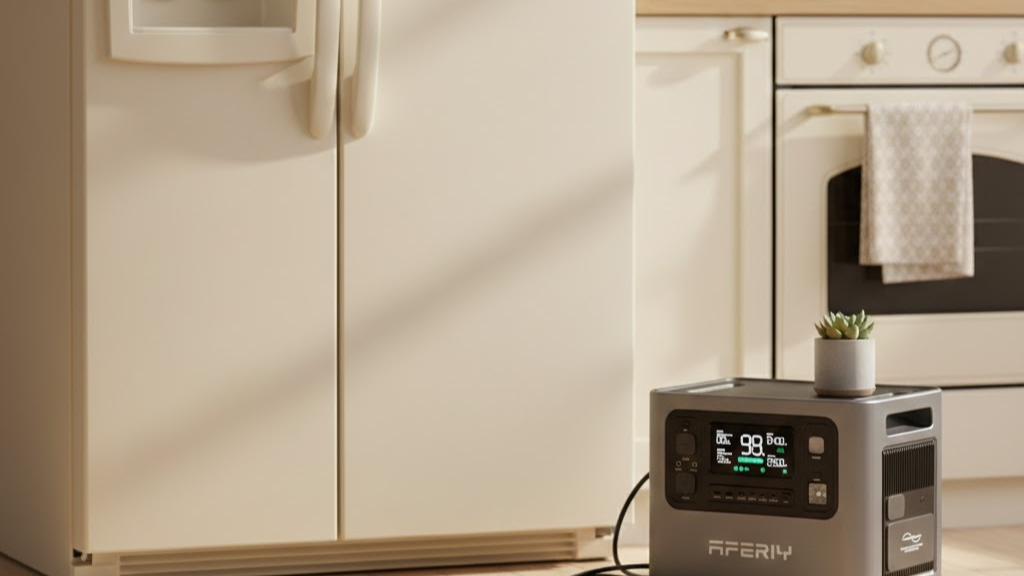
| AFERIY P310 Portable Power Station | 3,840Wh | 3,600W continuous | Up to 11,520Wh | Expandable essential-load backup |
| Anker SOLIX F3800 | 3,840Wh | 6,000W continuous | Expandable with compatible batteries | High-output, 120V/240V backup |
Specifications are based on manufacturer product information. Confirm the selected model, battery configuration, and included accessories before purchase. The BLUETTI AC500's maximum output depends on the number of connected B300K batteries.
Reviews of the 6 Best Solar Generators for Home Backup
1. Jackery Explorer 5000 Plus
The Jackery Explorer 5000 Plus is designed for households that need substantial stored energy and high output during an outage. Its 5,040Wh battery and 7,200W AC output can support multiple compatible appliances, while 120V/240V capability provides more flexibility for home backup.

Its expandable design and compatible home-backup accessories make it worth considering for households planning a larger setup. However, its size, weight, and overall system cost may be more than smaller households need.
Pros
-
5,040Wh battery capacity and 7,200W AC output
-
120V/240V output for compatible loads
-
Expandable storage and home-backup options
Cons
-
Heavy and less convenient to move frequently
-
Higher investment than smaller portable power stations
Best for: Households that need high output and substantial backup capacity.
The Explorer 5000 Plus is a practical option if you want to support several household loads and may expand your system later. Before connecting it to home circuits, confirm the required accessories and installation arrangements.
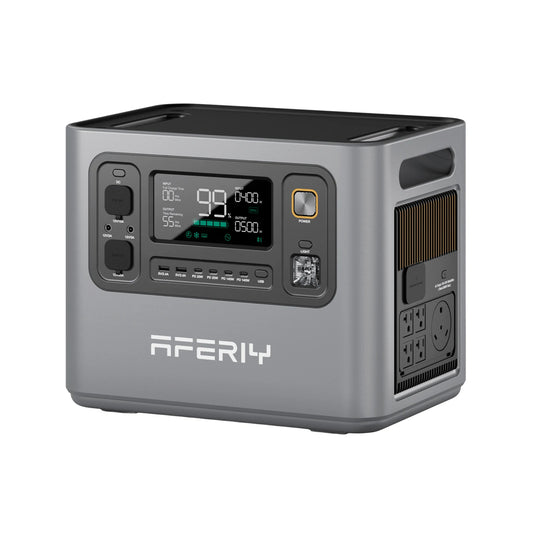
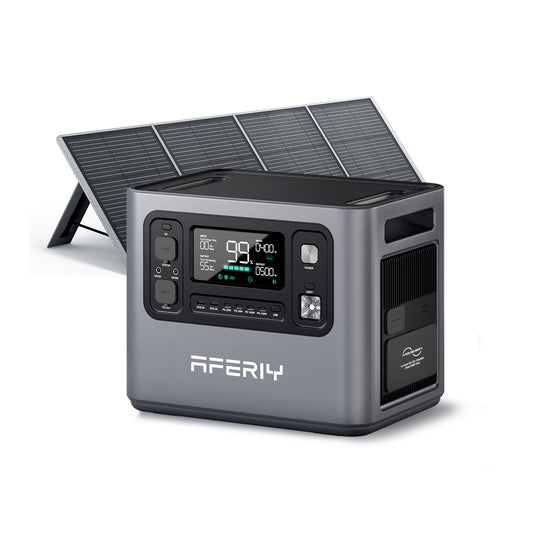
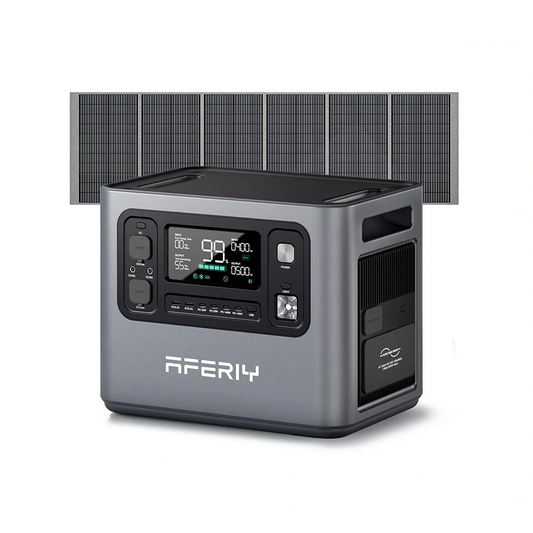
2. AFERIY P310 Portable Power Station
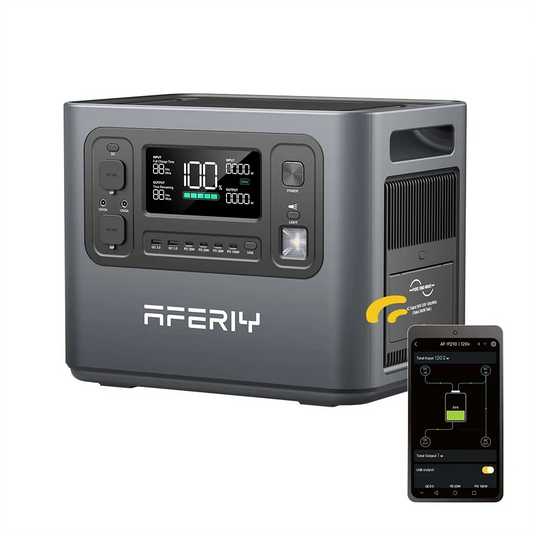
The AFERIY P310 Portable Power Station combines a 3,840Wh LiFePO₄ battery with 3,600W of pure sine wave AC output. Its capacity makes it suitable for backing up essential household appliances, while compatible expansion batteries allow the system to grow as your needs change.

The P310 supports up to 2,000W of solar input and features a UPS function with a stated transfer time of less than 10 milliseconds. Its battery capacity can be expanded to 11,520Wh, giving households more flexibility during longer outages.
Pros
-
3,840Wh LiFePO₄ battery
-
3,600W pure sine wave AC output
-
Expandable capacity up to 11,520Wh
-
Up to 2,000W solar input
-
UPS transfer time of less than 10ms
Cons
-
Larger and heavier than compact portable power stations
-
May offer more capacity than necessary for short outages involving only small electronics
Best for: Families who want expandable backup power for refrigerators, lighting, internet equipment, and other essential loads.
The P310 offers a middle ground between a compact portable power station and a larger home-energy system. Its 3,840Wh battery provides substantial stored energy, while expansion can extend runtime when an outage lasts longer than expected. Actual runtime depends on appliance consumption, conversion losses, and whether solar recharging is available.
3. EcoFlow DELTA Pro Ultra
The EcoFlow DELTA Pro Ultra is designed for more demanding home-backup applications. Its modular system supports additional battery storage, while its high output and home integration options make it suitable for households that need more than a few portable appliances powered during an outage.

With a 6,144Wh base battery configuration and up to 7,200W of output per unit, it can support a range of household loads, depending on the system configuration. Larger setups can provide substantially more stored energy, but the final capabilities depend on the batteries, inverters, and accessories installed.
Pros
-
High output for demanding backup loads
-
Modular battery expansion
-
Designed for more extensive home-energy integration
Cons
-
Higher overall cost and a more involved setup
-
May be unnecessary for households with modest backup needs
Best for: Homeowners planning a larger, expandable backup system.
If you want to back up multiple circuits or manage larger household loads, compare the complete system cost rather than the base unit alone. Include the batteries and accessories required for your intended setup before comparing it with a portable power station.
4. BLUETTI AC500 + B300K
The BLUETTI AC500 is a modular power system that works with compatible expansion batteries. Paired with one B300K battery, it provides 2,764.8Wh of storage and up to 3,000W of AC output. Connecting two or more B300K batteries enables output of up to 5,000W, making the battery configuration an important consideration when comparing this system with other models.

Its main advantage is flexibility. Users can add compatible battery capacity as their backup needs grow, rather than replacing the entire system. This can be useful if you initially want to power a refrigerator, lights, and internet equipment but later need longer runtime.
Pros
-
Modular battery expansion
-
Up to 5,000W output with a supported multi-battery configuration
-
Flexible storage capacity for changing energy needs
Cons
-
Maximum output depends on battery configuration
-
Total cost increases as batteries and accessories are added
-
Requires more planning than an all-in-one portable power station
Best for: Users who want to customize their backup system over time.
The AC500 is worth considering if flexibility is a priority. Check the number of batteries included and the resulting system capacity before comparing prices, as the inverter alone does not provide stored energy.
5. VTOMAN FlashSpeed Pro 3600
The VTOMAN FlashSpeed Pro 3600 is designed for users who need high-output portable backup power. Its 3,096Wh battery and 3,600W continuous output make it suitable for a range of household appliances, provided their running and startup requirements stay within the unit's limits.
The system supports expansion to a stated maximum capacity of 5,912Wh with compatible batteries. It also supports solar charging, with a maximum solar input of 800W, giving users another way to recharge when grid power is unavailable.
Pros
-
3,600W continuous AC output
-
3,096Wh base battery capacity
-
Expandable to 5,912Wh with compatible batteries
-
Solar charging support
Cons
-
Less convenient to move than smaller portable power stations
-
Lower maximum solar input than some higher-capacity systems
Best for: Users who need high-output portable backup for selected household appliances.
For home use, this model can help keep a refrigerator, lights, communications equipment, and selected small appliances running. Estimate the combined load and expected runtime before relying on it for an extended outage, and confirm the exact expansion and UPS specifications for the model sold in your market.
6. Anker SOLIX F3800
The Anker SOLIX F3800 features a 3,840Wh LiFePO₄ battery and up to 6,000W of continuous AC output in its US configuration. Its 120V/240V capability provides flexibility for compatible household loads, while its expandable design allows users to increase stored energy with compatible batteries.

Solar charging provides another way to replenish the battery during an outage, although actual charging speed depends on panel capacity, sunlight, and the system's input limits. The F3800 is a substantial piece of equipment, so it is better suited to planned backup use than frequent carrying over long distances.
Pros
-
3,840Wh LiFePO₄ battery
-
Up to 6,000W continuous AC output
-
120V/240V support in the US
-
Expandable storage and solar charging
Cons
-
Heavy and relatively bulky
-
Larger backup setups may require additional equipment
Best for: Homeowners who need high output and 120V/240V support in an expandable system.
Compared with the AFERIY P310, the F3800 offers higher continuous AC output from a similar base battery capacity. This may be useful if you need to run higher-demand appliances or several devices simultaneously. However, higher output does not automatically mean longer runtime; that depends primarily on battery capacity and the energy consumed by connected appliances.
What Size Solar Generator Do You Need for Home Backup?
The right solar generator size depends on which appliances you need to power and how long you need backup electricity. Use the estimates below as a starting point when choosing a capacity for home backup.
| Appliance or Load | Approximate Power | Suggested Battery Capacity |
|---|---|---|
| Wi-Fi router | 10–20W | 300–500Wh |
| Laptop | 40–100W | 500–1,000Wh |
| CPAP machine | 30–60W | 500–1,000Wh |
| Refrigerator | 100–200W while running | 1,000–2,000Wh |
| Multiple essential appliances | 500W combined | 2,000–4,000Wh+ |
These capacity ranges are general estimates. Actual needs depend on appliance usage, startup surges, and the power station's usable capacity. Refrigerators cycle on and off, while CPAP machines may draw more power when using heated humidifiers.
To estimate runtime, use this formula:
Estimated Runtime (hours) = Battery Capacity (Wh) × Usable Capacity (%) ÷ Total Power Consumption (W)
For example, a 3,840Wh solar generator with 85% usable capacity powering appliances with a combined consumption of 500W would provide approximately 6.5 hours of runtime:
3,840Wh × 85% ÷ 500W ≈ 6.5 hours
This is an estimate; actual runtime varies with conversion losses and changes in power demand. Solar charging can extend backup time when sunlight is available. Before buying, check both battery capacity (Wh) and continuous AC output (W) to ensure the generator can handle your appliances.
Can a Solar Generator Power an Entire House?
A solar generator can power selected household appliances or support whole-home backup, depending on its output, battery capacity, and electrical setup. A system with 1,000–2,000Wh of capacity and 1,000–2,000W of continuous output may cover a refrigerator, Wi-Fi router, LED lights, and phone charging for several hours. A larger system with 3,000–6,000Wh of capacity and 3,000–7,200W of output can support more appliances, such as a refrigerator, lighting, a TV, and a microwave, depending on their combined power demand.
For example, if essential appliances draw an average of 500W, a 3,840Wh power station with 85% usable capacity could run them for approximately 6.5 hours. At a 1,000W average load, estimated runtime drops to about 3.3 hours.
Running an entire house is more demanding. Central air conditioning, electric dryers, electric water heaters, and well pumps can draw substantial power, especially at startup. Whole-home backup may require a system that supports 120V/240V output, sufficient surge capacity, and a compatible transfer switch or other approved connection equipment. Check appliance ratings and installation requirements before choosing a system.
Solar Generator vs. Gas Generator
Both solar and gas generators can provide backup electricity, but they suit different situations.
|
Feature |
Solar Generator |
Gas Generator |
|---|---|---|
|
Noise |
Generally quiet |
Usually louder |
|
Fuel |
No gasoline required |
Requires fuel |
|
Exhaust during operation |
None |
Produces exhaust |
|
Maintenance |
Generally low |
Engine maintenance required |
|
Indoor operation |
Can be used indoors according to manufacturer instructions |
Must be operated outdoors, away from doors, windows, and vents |
|
Recharging or refuelling |
Solar, AC, or other supported inputs |
Fuel replenishment |
A solar generator is a practical choice if you want quiet backup power without storing gasoline. It can also be useful during an outage when fuel is difficult to obtain, provided you have enough stored energy or suitable sunlight to recharge it.
Gas generators can be useful for sustained high-power demand when fuel is available. However, they produce carbon monoxide, which can be fatal. Never operate a gas generator inside a home, garage, or other enclosed or partially enclosed space.
FAQs
What is the best solar generator for home backup?
The best solar generator for home backup depends on your required output, battery capacity, and budget. The Jackery Explorer 5000 Plus and EcoFlow DELTA Pro Ultra suit more demanding backup needs, while the AFERIY P310 offers 3,840Wh of storage, 3,600W of output, and expandable capacity for essential household loads.
Can a solar generator run a refrigerator?
Yes. Many medium- and high-capacity solar generators can run a refrigerator, provided their AC output can handle its running and startup power requirements. Runtime depends on the refrigerator's energy consumption, battery capacity, and other connected loads.
How long can a solar generator power a house?
There is no single runtime for a house because energy consumption varies significantly. A power station may run a few essential devices for many hours, but supporting more appliances or larger loads will drain the battery faster. Estimate your essential loads and calculate the required watt-hours before choosing a system.
Are solar generators safe to use indoors?
Battery-based solar generators do not produce exhaust or carbon monoxide during operation, unlike fuel-burning generators. Follow the manufacturer's instructions for ventilation, operating temperature, charging, and placement, and do not confuse a battery power station with a gas-powered generator.
Can solar generators recharge during a power outage?
Yes. A compatible solar generator can recharge from solar panels when sufficient sunlight is available. Charging speed depends on the power station's maximum solar input, panel output, weather, orientation, and other operating conditions.
What is the difference between a solar generator and a portable power station?
A portable power station stores electricity in a battery and supplies power to connected devices. The term solar generator generally refers to a portable power station used with solar panels or sold as part of a solar charging kit. The solar panels recharge the battery; they do not necessarily come included with every product.
Conclusion
The best solar generator for home backup depends on your essential appliances, required runtime, and charging options. Larger batteries provide longer backup, while sufficient AC output ensures your appliances can run reliably.
The Jackery Explorer 5000 Plus and EcoFlow DELTA Pro Ultra suit larger backup needs, while the BLUETTI AC500 offers modular expansion. The Anker SOLIX F3800 delivers high output, and the AFERIY P310 Portable Power Station provides 3,840Wh of capacity, 3,600W of output, and expansion up to 11,520Wh.
Before buying, estimate your power needs and compare battery capacity, output, and recharging options.
 Free shipping from US local warehouse