













How to Convert Watts to BTU: Formula, Chart & Examples
Watts and British thermal units (BTUs) are commonly used to describe the power consumption and heating or cooling capacity of household appliances. You’ll often see these measurements when comparing space heaters, air conditioners, and other home energy equipment, but they serve different purposes and can be confusing when used together.
Understanding how these units relate to each other can help you compare appliance specifications, evaluate energy efficiency, and plan your home backup power needs. This guide covers the watts-to-BTU conversion formula, a quick reference chart, reverse conversions, and practical examples for heating, cooling, and portable power applications.

Why Convert Watts to BTU?
Watts measure power, while BTU (British thermal unit) measures energy. In heating and cooling specifications, you’ll often see BTU per hour (BTU/h), which measures the rate at which heat is produced, removed, or transferred.
Understanding the relationship between these units helps in several everyday situations:
Choosing a heater: Compare its electrical power consumption with its approximate heat output.
Comparing air conditioners: Understand the difference between an AC unit’s electrical input and its cooling capacity.
Planning backup power: Check whether a portable power station can handle an appliance’s running wattage and how long its battery might last.
Comparing equipment specifications: Convert values into a common unit when manufacturers use different measurements.
The key is knowing what each number represents. A heater’s electrical input can closely correspond to its heat output, but an air conditioner’s cooling capacity is not the same as its electricity consumption.
How to Convert Watts to BTU per Hour
Watts and BTU per hour (BTU/hr) express power in different units. Converting between them makes it easier to compare appliance specifications and understand equivalent heat output.
Watts to BTU/hr Formula
To convert watts to British thermal units per hour (BTU/hr), multiply the wattage by 3.412142. This conversion factor expresses the equivalent rate of energy transfer and is useful when comparing electrical power with thermal output.
Watts to BTU/hr formula: BTU/hr = Watts × 3.412142
For everyday calculations, you can round the conversion factor to 3.412. The result represents an equivalent rate of heat transfer, but it does not necessarily indicate an appliance’s actual heating or cooling capacity.
Watts to BTU/hr Conversion Chart
Use this chart to find the approximate BTU/hr equivalent of common wattage values without performing the calculation manually.
| Power (Watts) | Equivalent (BTU/hr) |
|---|---|
| 100W | 341 |
| 200W | 682 |
| 300W | 1,024 |
| 500W | 1,706 |
| 750W | 2,559 |
| 1,000W | 3,412 |
| 1,200W | 4,095 |
| 1,500W | 5,118 |
| 1,800W | 6,142 |
| 2,000W | 6,824 |
| 2,500W | 8,530 |
| 3,000W | 10,236 |
| 4,000W | 13,649 |
| 5,000W | 17,061 |
| 10,000W | 34,121 |
Note: Values are rounded to the nearest whole BTU/hr.
Watts to BTU/hr Conversion Example
Suppose you’re comparing two electric space heaters rated at 1,200W and 1,500W. Converting their wattage to BTU/hr helps you compare their equivalent heat output.
For a 1,200W heater:
1,200 × 3.412142 = 4,094.57 BTU/hr
For a 1,500W heater:
1,500 × 3.412142 = 5,118.21 BTU/hr
The 1,500W heater has an equivalent heat output approximately 1,024 BTU/hr higher than the 1,200W model. However, it also consumes more electricity when operating at full power.
Keep in mind that this direct conversion is appropriate for equivalent power and heat-transfer rates. For air conditioners, BTU/hr measures cooling capacity, while watts measure electrical input. To understand an AC unit’s actual cooling performance or electricity consumption, check its rated cooling capacity and efficiency rather than relying on this conversion alone.
How to Convert BTU to Watts
If an appliance’s specifications list its heating or cooling capacity in BTU per hour (BTU/hr), but you need to compare it with power ratings in watts, converting between the two units makes the figures easier to understand. The calculation is straightforward once you know the conversion factor.
BTU to Watts Formula
To convert BTU per hour (BTU/hr) to watts, divide the BTU/hr value by 3.412142. This formula helps you compare equivalent rates of heat transfer when appliance specifications use different units.
BTU/hr to watts formula: Watts = BTU/hr ÷ 3.412142
For a quick estimate, you can also multiply the BTU/hr value by 0.2931 to get watts. Both methods provide approximately the same result.
BTU to Watts Conversion Chart
Use this chart to find the approximate watt equivalent of common BTU/hr ratings.
| Capacity (BTU/hr) | Equivalent Power (Watts) |
|---|---|
| 1,000 | 293 |
| 2,000 | 586 |
| 3,000 | 879 |
| 5,000 | 1,465 |
| 6,000 | 1,758 |
| 8,000 | 2,345 |
| 10,000 | 2,931 |
| 12,000 | 3,517 |
| 15,000 | 4,396 |
| 18,000 | 5,275 |
| 24,000 | 7,034 |
| 36,000 | 10,551 |
Note: Values are rounded to the nearest whole watt and represent equivalent heat-transfer power, not necessarily an appliance’s electrical input.
BTU to Watts Conversion Example
Suppose a heating system is rated at 6,824 BTU/hr. To convert this value to watts, divide it by 3.412142.
6,824 ÷ 3.412142 ≈ 2,000W
The equivalent power is approximately 2,000 watts.
If you’re checking an air conditioner rated at 12,000 BTU/hr, the same calculation gives approximately 3,517W of equivalent cooling power. However, this does not mean the air conditioner draws 3,517W of electricity. Its actual electrical consumption depends on its efficiency and operating conditions. Check the manufacturer’s rated input wattage when determining electricity use or choosing a portable power station.
Watts vs. BTU: What’s the Difference?
Watts and British thermal units (BTUs) are both used when discussing energy and heating or cooling equipment, but they describe different quantities. Watts measure power, while a BTU measures an amount of energy. In the HVAC industry, BTU per hour (BTU/hr) is commonly used to describe how quickly a heating or cooling system transfers heat.
Here’s how these measurements differ:
- Watts (W): Measure power, including the rate at which an electrical appliance consumes energy. You’ll commonly see watts on space heaters, household electronics, and portable power stations.
- BTU: Measures thermal energy. One BTU is the amount of heat needed to raise the temperature of one pound of water by 1°F.
- BTU/hr: Measures the rate of heat transfer. Air conditioners use this rating to indicate cooling capacity, while heating systems may use it to describe heat output.
The distinction becomes especially important when comparing appliances. A space heater’s wattage tells you how much electrical power it consumes, while its heat output can be expressed in BTU/hr. An air conditioner’s BTU/hr rating, on the other hand, indicates how much heat it can remove from a space over time, not how much electricity it uses.
In short, watts help you understand electrical power requirements, BTU measures the quantity of thermal energy, and BTU/hr describes heating or cooling capacity. Knowing which unit a specification refers to makes it easier to compare equipment and assess your household energy needs.
How to Use Watts and BTU When Planning Your Power Needs
Understanding these units can also help when preparing for a power outage, planning an RV trip, or choosing a portable power station for essential appliances.
Start by checking the appliance’s actual power consumption in watts. Then check two separate specifications on the power station: its rated AC output, which determines which appliances it can run, and its battery capacity in watt-hours (Wh), which helps estimate how long they can run.
For example, a portable air conditioner might list its cooling capacity in BTU/hr and its electrical consumption in watts. The BTU rating helps describe its cooling performance, but the wattage is the more relevant starting point when checking power compatibility.
If you’re preparing to run several appliances during an outage, add their running wattages together and check whether the total stays within the power station’s continuous output rating. Also account for the higher startup power that some compressors and motors require.
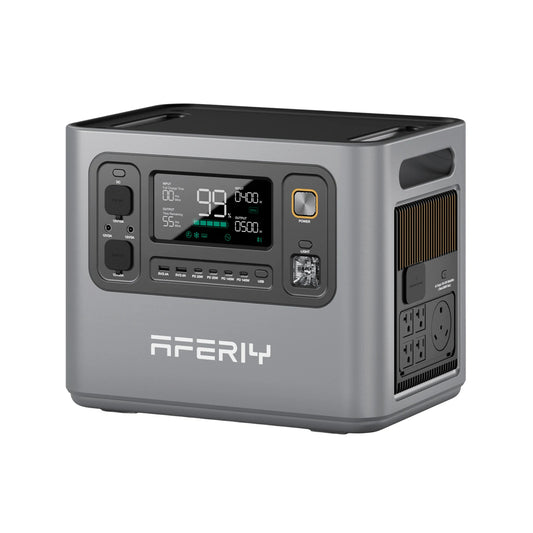
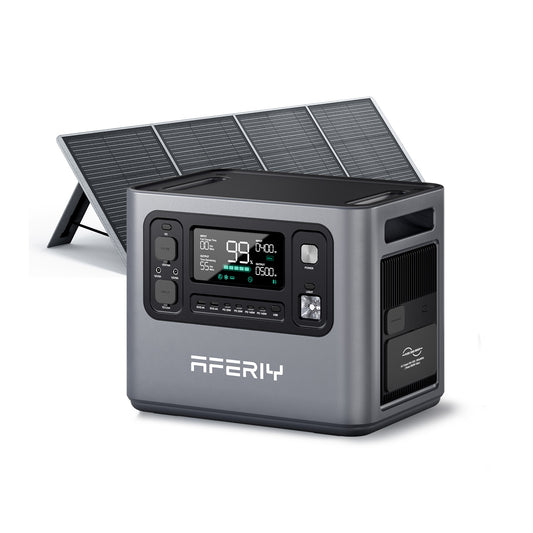
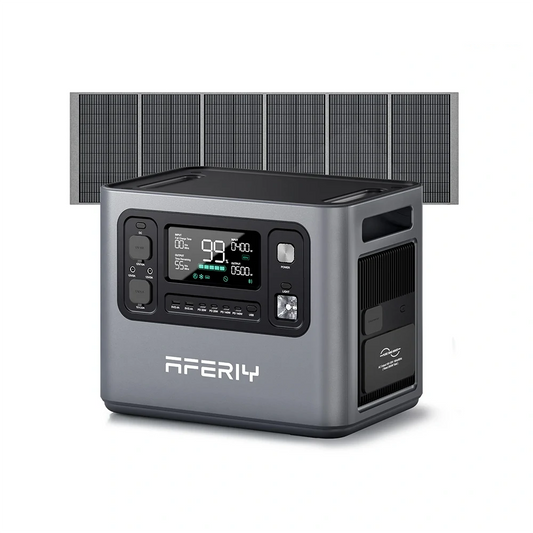
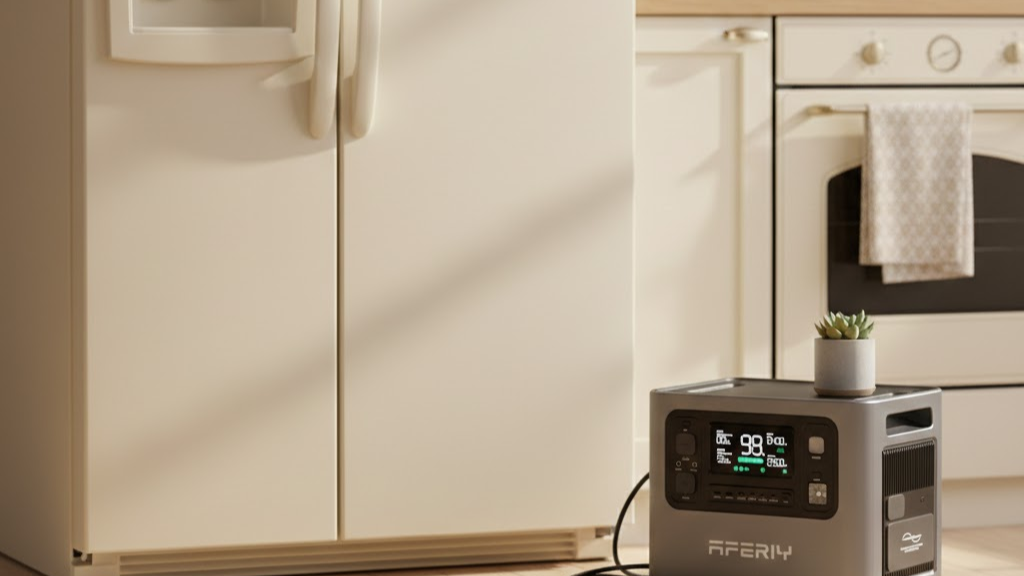
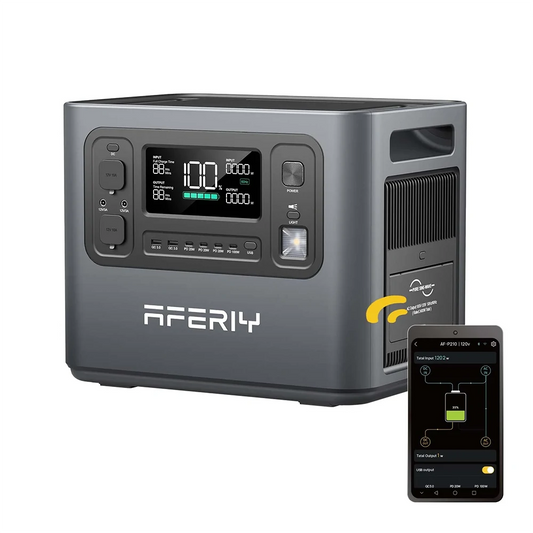
A unit such as the AFERIY P300 Portable Power Station offers 3,000W of rated output and a 2,048Wh battery capacity, expandable to 10,240Wh. That combination can be useful when you need to run multiple compatible household devices or extend backup runtime. However, whether it can power a particular air conditioner depends on the unit’s running and startup requirements.

Battery capacity also needs to be interpreted correctly. A 2,048Wh battery does not necessarily provide 2,048W of output for one hour in every situation. Actual runtime depends on the connected load, conversion losses, and operating conditions. For a more realistic estimate, divide usable battery energy by the appliance’s running wattage rather than converting its BTU cooling rating directly into battery runtime.
FAQs
How many BTU/h is 1 watt?
One watt is approximately equal to 3.412 BTU/h. This conversion describes the equivalent rate of energy transfer, not necessarily an appliance’s actual heating or cooling performance.
How many watts are in 12,000 BTU/h?
For a direct energy conversion, 12,000 BTU/h is approximately 3,517W. However, a 12,000 BTU/h air conditioner may consume much less electricity because it transfers heat rather than converting electricity directly into an equivalent amount of heat.
How do you convert BTU to watts?
Divide the BTU/h rating by 3.412. For example, 6,824 BTU/h divided by 3.412 equals approximately 2,000W. This method applies to equivalent power or heat-transfer rates, not directly to an air conditioner’s electrical consumption.
Is BTU the same as BTU per hour?
No. BTU measures an amount of energy, while BTU/h measures the rate at which energy is transferred. This distinction matters when comparing battery energy capacity, heating output, and air conditioner cooling capacity.
Conclusion
Converting watts to BTU/h is simple once you know the 3.412 multiplier, and reversing the calculation only requires division. The important part is understanding what the result represents. For electric heaters, it provides a useful estimate of heat output. For air conditioners, you need to consider cooling capacity and efficiency separately. When planning backup power, focus on the appliance’s electrical wattage, startup requirements, and the battery’s Wh capacity to make a practical comparison.
 Free shipping from US local warehouse