











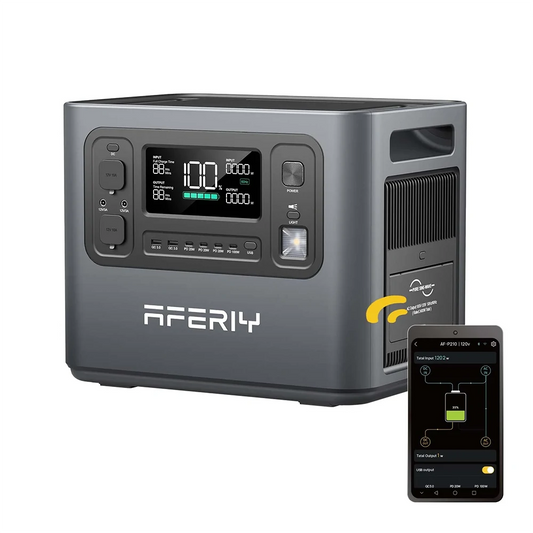


How Many Watts in an Amp?
If you’re checking an appliance’s power requirements, comparing electrical equipment, or choosing a portable power station, understanding amps and watts can help you determine how much power a device needs. But how many watts in an amp? The answer depends on voltage and, for AC systems, the type of circuit and power factor.
Amps measure electrical current, watts measure power, and volts measure electrical potential difference. These three values are connected by mathematical formulas that help you calculate electrical requirements for household appliances, battery systems, and commercial equipment.

How Many Watts Are in an Amp?
The number of watts in an amp depends on voltage and the type of electrical system. In a DC circuit, power is calculated by multiplying current by voltage. For AC circuits, the power factor must also be considered when calculating real power. Three-phase AC systems require an additional factor to account for the three phases.
DC Phase
Direct current (DC) flows in one direction and is commonly used in batteries, vehicle electrical systems, solar setups, and portable power equipment.
Formula: Watts = Amps × Volts
For example, a 12V battery supplying 10A delivers 120W of electrical power. At 24V, the same current corresponds to 240W. This is why voltage is important when calculating the output of a battery-powered system.
Single Phase AC
Single-phase alternating current (AC) is commonly used in US homes to power household appliances, lighting, and electronics.
Formula: Watts = Amps × Volts × Power Factor
For example, a 120V appliance drawing 5A with a power factor of 1 uses 600W of real power. If the power factor is 0.8, the same voltage and current correspond to 480W. For resistive appliances, such as conventional electric heaters, the power factor is approximately 1.
Three Phase AC
Three-phase AC is commonly used in commercial buildings and industrial equipment that requires higher electrical power.
Formula: Watts = 1.732 × Amps × Volts × Power Factor
For a balanced three-phase system using line-to-line voltage, a 208V system drawing 10A with a power factor of 1 delivers approximately 3,603W.
This formula is useful for estimating the real power of three-phase equipment. Actual values depend on the load, voltage configuration, and power factor.
Amps to Watts Conversion Chart
The following table compares the power associated with different current levels. DC values use 12V, single-phase AC values use 120V, and three-phase AC values use 208V line-to-line. AC calculations assume a power factor of 1.
| Current | 12V DC | 120V Single-Phase AC | 208V Three-Phase AC |
|---|---|---|---|
| 1A | 12W | 120W | 360W |
| 2A | 24W | 240W | 721W |
| 5A | 60W | 600W | 1,801W |
| 10A | 120W | 1,200W | 3,603W |
| 15A | 180W | 1,800W | 5,404W |
| 20A | 240W | 2,400W | 7,205W |
| 30A | 360W | 3,600W | 10,808W |
| 50A | 600W | 6,000W | 18,013W |
How Many Amps Are in a Watt?
To convert watts to amps, divide the power in watts by the voltage. The exact formula depends on whether the system uses DC, single-phase AC, or three-phase AC. For AC systems, a power factor adjustment may be necessary.
DC Phase
For DC circuits, divide watts by volts to calculate current.
Formula: Amps = Watts ÷ Volts
For example, a 120W device connected to a 12V battery draws 10A. If the same device operates at 24V, it draws 5A. Lower-voltage systems require more current to deliver the same power, so cable ratings and connector limits are important.
Single Phase AC
For single-phase AC, divide real power by voltage and power factor.
Formula: Amps = Watts ÷ (Volts × Power Factor)
For example, a 1,000W resistive appliance operating at 120V draws approximately 8.33A. If the power factor is 0.8, a 1,000W real-power load at the same voltage draws approximately 10.42A.
When checking appliances such as refrigerators, pumps, and power tools, use the rated current where available because their electrical characteristics and startup requirements can affect current draw.
Three Phase AC
For a balanced three-phase AC system using line-to-line voltage, divide real power by the voltage, power factor, and √3.
Formula: Amps = Watts ÷ (1.732 × Volts × Power Factor)
For example, a balanced 6,000W load operating at 208V with a power factor of 1 draws approximately 16.65A.
The power factor affects the result: a lower power factor requires more current to deliver the same real power. Always use the voltage and electrical configuration specified for the equipment.
Watts to Amps Conversion Chart
The following table compares current requirements for common power levels. DC values use 12V, single-phase AC values use 120V, and three-phase AC values use 208V line-to-line. AC calculations assume a power factor of 1.
| Power | 12V DC | 120V Single-Phase AC | 208V Three-Phase AC |
|---|---|---|---|
| 50W | 4.17A | 0.42A | 0.14A |
| 100W | 8.33A | 0.83A | 0.28A |
| 300W | 25.00A | 2.50A | 0.83A |
| 500W | 41.67A | 4.17A | 1.39A |
| 1,000W | 83.33A | 8.33A | 2.78A |
| 1,500W | 125.00A | 12.50A | 4.16A |
| 2,000W | 166.67A | 16.67A | 5.55A |
| 3,000W | 250.00A | 25.00A | 8.33A |
These figures are theoretical calculations. Actual AC current may vary with power factor, and the calculated current should not be used alone to determine wire size or circuit protection.
Why Amps and Watts Matter When Choosing a Power Station
Understanding amps and watts can help you choose a portable power station for camping, RV trips, or home backup during a power outage. Two specifications matter most: rated output power in watts (W) and battery capacity in watt-hours (Wh). Output power determines how much power a station can supply at one time, while battery capacity indicates how much energy it stores. A station may have enough stored energy but still be unable to run an appliance if its rated output is too low.
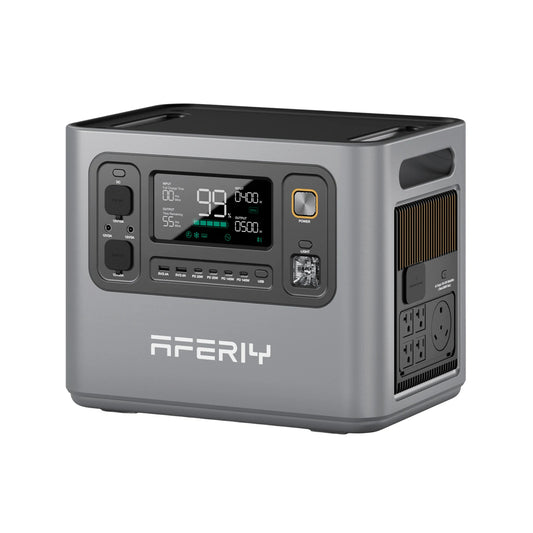
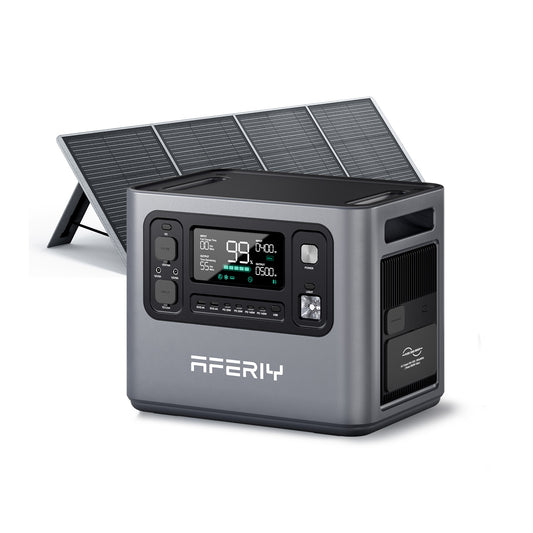
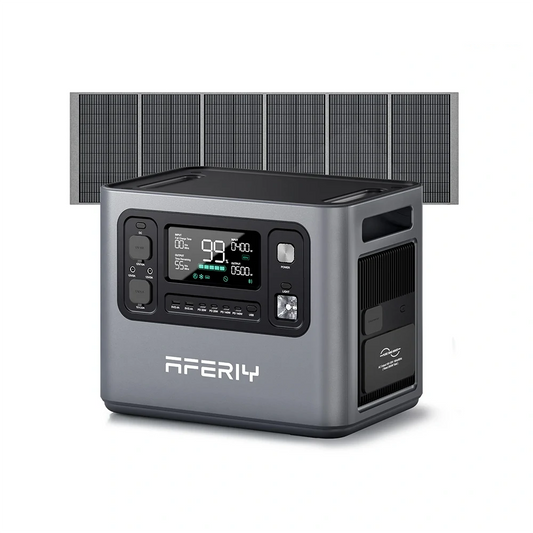
For camping, RV trips, or backup power for essential electronics, the AFERIY P180 Pro Portable Power Station provides 1,800W of rated output and 1,024Wh of battery capacity, expandable to 5,120Wh with compatible expansion batteries. It can suit users who need to run several everyday devices or selected small appliances, provided their combined running wattage and startup requirements stay within the station’s limits.

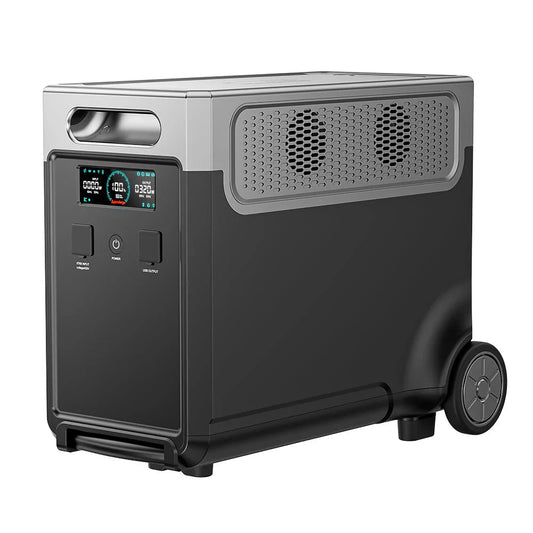
For higher-demand home backup, the AFERIY P300 Portable Power Station offers 3,000W of rated AC output and 2,048Wh of battery capacity, expandable to 10,240Wh with compatible expansion batteries. Its higher output supports a wider range of compatible appliances, while the larger expandable capacity can help extend runtime during longer outages. Adding expansion batteries increases stored energy, not the station’s rated output power.

How to Estimate Power Station Runtime
A simple way to estimate how long a power station can run a device is to divide its battery capacity by the device’s power consumption.
Runtime (hours) = Battery Capacity (Wh) ÷ Device Power (W)
For example, a 1,000Wh battery powering a 100W device would theoretically last 10 hours. Actual runtime will be shorter because of inverter losses, standby consumption, and variations in power demand. Appliances that cycle on and off, such as refrigerators, may consume less energy over time than their rated running wattage suggests.
When choosing a power station, check both the combined wattage of the devices you plan to run and how long you need them powered. Output power determines which devices can operate simultaneously, while battery capacity helps determine how long they can run.
FAQs
How many amps is 1,000 watts?
At 120V, a 1,000W load draws approximately 8.33 amps under the basic formula. At 240V, it draws approximately 4.17 amps. For AC equipment with a power factor below 1, the current may be higher.
How many amps is 50 watts?
A 50W load draws approximately 0.42 amps at 120V, 0.21 amps at 240V, or 4.17 amps at 12V DC, assuming a power factor of 1.
Can I convert amps to watts without knowing the voltage?
No. Voltage is necessary to calculate watts from amps. For AC equipment, you may also need the power factor and the circuit’s phase configuration.
Are amps and watts the same thing?
No. Amps measure electrical current, while watts measure electrical power. Voltage connects the two, and AC power factor can affect the relationship between current and real power.
Are watts and watt-hours the same?
No. Watts measure power, while watt-hours measure energy over time. A 100W device running continuously for five hours consumes 500Wh before accounting for conversion losses.
Conclusion
Converting amps to watts or watts to amps requires knowing the voltage and the type of electrical system. DC uses a straightforward formula, single-phase AC may require a power factor adjustment, and balanced three-phase AC includes an additional factor of 1.732.
These calculations help you understand electrical specifications, estimate appliance loads, and compare portable power stations. Checking rated output, battery capacity, startup requirements, and the equipment’s actual current draw provides a more reliable basis for choosing a power solution.
 Free shipping from US local warehouse