











Best Solar Generator for Camping in 2026
A solar generator provides portable electricity for camping without relying on a campsite power hookup or fuel. Whether you need to charge phones, run a portable refrigerator or power several appliances during an off-grid trip, the right system depends on your energy needs, camping style and access to sunlight.
This guide compares three AFERIY solar generator kits and explains how to choose the right capacity and power output for your trip.
Best Solar Generators for Camping in 2026
The best solar generator for camping should provide enough energy for your essential devices while remaining practical to transport. Here are three AFERIY options for different camping needs.
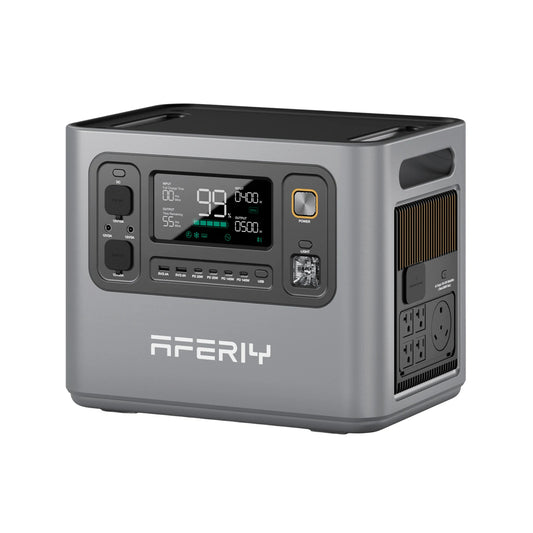
1. AFERIY P210 Solar Generator Kit: For Weekend Camping
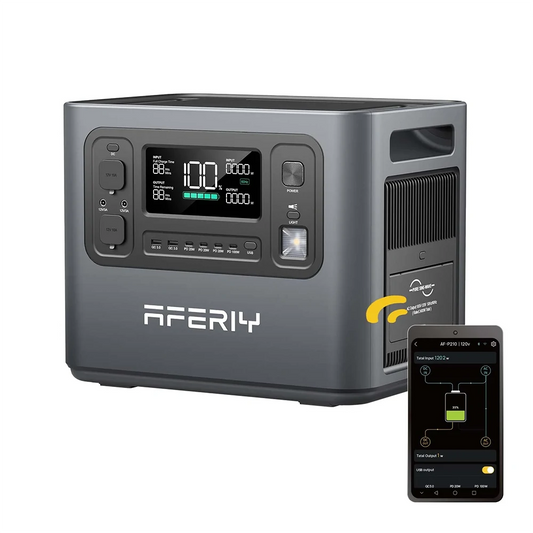
The AFERIY P210 Solar Generator Kit is suitable for weekend car camping and campers who need to power everyday electronics and small appliances. It features a 2,048Wh LiFePO₄ battery and 2,400W rated output.
Its battery capacity can support devices such as phones, laptops, LED lights and fans. It can also power compatible portable refrigerators, although actual runtime depends on the refrigerator’s daily energy consumption.
The P210 supports up to 500W of solar input, allowing you to recharge with compatible solar panels during the day. Its 22kg weight makes it more suitable for vehicle-based camping than trips that require carrying equipment over long distances.
Best for: Weekend car camping and powering essential electronics and campsite devices.

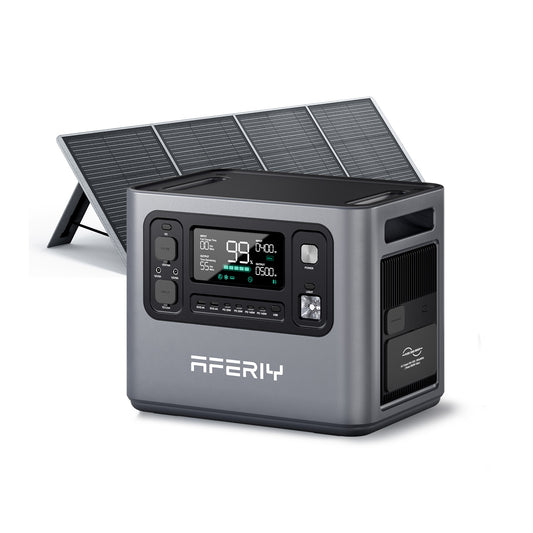
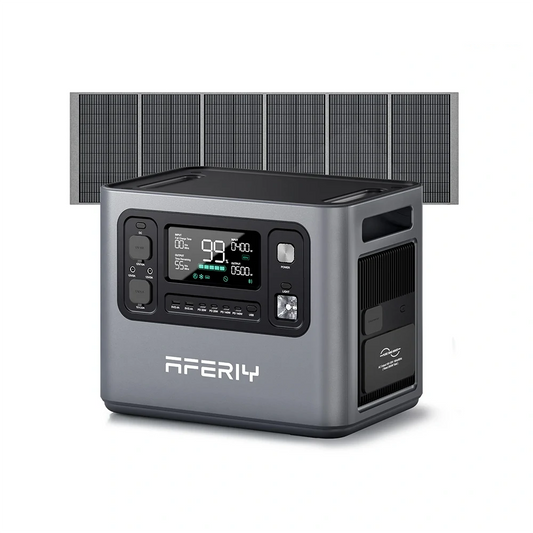
2. AFERIY P280 Solar Generator Kit: For Multi-Day Camping
The AFERIY P280 Solar Generator Kit offers more flexibility for longer camping trips. It starts with a 2,048Wh LiFePO₄ battery and can be expanded to 10,240Wh with additional batteries.
This expandable capacity is useful when you need to power more devices or stay off-grid for several days. Its maximum solar input of 1,200W also allows it to accept a larger solar charging setup than the P210, helping replenish the battery when sunlight is available.
Weighing approximately 21.6kg, the P280 is suitable for car camping and established campsites. It is not designed for backpacking, but its expansion options make it a flexible choice for campers with changing electricity needs.
Best for: Multi-day car camping, family trips and users who may need additional battery capacity.

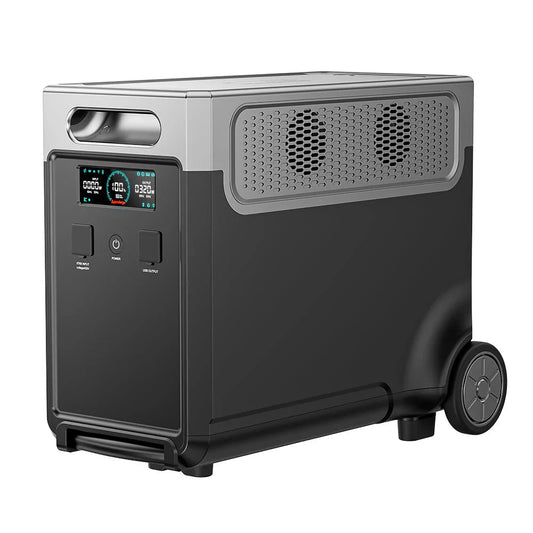
3. AFERIY P310 Solar Generator Kit: For RV and High-Power Camping
For campers with higher electricity demands, the AFERIY P310 Solar Generator Kit provides a larger starting battery and higher output. It features a 3,840Wh LiFePO₄ battery, 3,600W rated output and expandable capacity of up to 11,520Wh.
This makes it suitable for RV camping and extended off-grid stays where you may need to power several appliances. Depending on their power requirements, compatible equipment can include portable refrigerators, cooking appliances, laptops and lighting.
The P310 supports up to 2,000W of solar input, providing greater solar charging capacity than the P210 and P280. However, actual charging performance depends on panel configuration, sunlight and weather.
At approximately 42kg, the P310 is much heavier than the other two models. It is best transported by vehicle rather than carried between campsites.
Best for: RV camping, extended off-grid trips and higher-power equipment.

AFERIY Solar Generator Comparison Table
The three AFERIY solar generators differ in battery capacity, output power, solar charging capability and portability. Compare their key specifications below to find the right option for your camping setup.
| Specification | AFERIY P210 Solar Generator Kit | AFERIY P280 Solar Generator Kit | AFERIY P310 Solar Generator Kit |
|---|---|---|---|
| Battery Capacity | 2,048Wh | 2,048Wh | 3,840Wh |
| Battery Type | LiFePO₄ | LiFePO₄ | LiFePO₄ |
| Rated AC Output | 2,400W | 2,800W | 3,600W |
| Maximum Solar Input | 500W | 1,200W | 2,000W |
| Solar Input Voltage | 11.5–50V | 11.5–55V | 12–160V |
| Maximum AC Input | 1,100W | 1,800W | 1,500W |
| Expandable Capacity | No | 10,240Wh | 11,520Wh |
| AC Outlets | 6 | 5 | 5 |
| USB-C Output | 1 × 100W + 3 × 20W | 2 × 140W + 2 × 20W | 1 × 100W + 3 × 20W |
| UPS Switching Time | Under 10ms | Under 10ms | Under 10ms |
| Weight | 22kg | 21.6kg | 42kg |
| Dimensions | 398 × 280 × 315mm | 398 × 280 × 315mm | 584 × 321 × 464mm |
| Warranty | 7 Years | 7 Years | 7 Years |
The AFERIY P210 Solar Generator is a practical choice for weekend camping, while the AFERIY P280 Solar Generator offers greater flexibility with expandable battery capacity and higher solar input. For RV camping and extended off-grid trips, the AFERIY P310 Solar Generator provides more stored energy and higher output, but its heavier weight makes it less convenient to transport.
How to Choose a Solar Generator for Camping
The right solar generator depends on your power needs, camping duration and campsite conditions. Consider these four factors to find a system that balances performance and portability.
Battery Capacity
Battery capacity, measured in watt-hours (Wh), determines how much energy a generator stores and how long it can power your devices. Choose a capacity based on your daily electricity consumption and how long you expect to go between recharging opportunities. For multi-day trips or continuous refrigerator use, consider a larger battery or an expandable system.
Output Power
Output power, measured in watts (W), determines which devices a generator can run. Check the running and starting wattage of your appliances, especially those with motors or compressors. Also make sure the combined power consumption of devices used simultaneously stays within the generator’s rated output.
Solar Charging Capability
Check the maximum solar input and compatible panel specifications to understand the generator’s solar charging potential. Higher solar input can support faster recharging with a suitable panel setup, although actual performance depends on sunlight, weather and panel positioning. AC and car charging can also provide alternative ways to recharge when solar energy is insufficient.
Portability and Durability
Consider the generator’s weight and size in relation to your camping style. Heavier models are generally more suitable for car camping and RV trips, while lighter systems are easier to transport to walk-in campsites. For outdoor use, also check the product’s protection rating and follow its instructions for exposure to moisture, dust and changing weather conditions.

How Much Power Do You Need for Camping?
Estimate your daily electricity use before choosing a battery capacity. Multiply each device’s power consumption by its daily usage time, then add the results together.
| Device | Example Consumption | Daily Usage | Estimated Daily Energy |
|---|---|---|---|
| LED Camping Light | 5W | 5 hours | 25Wh |
| Smartphone Charging | 15Wh per charge | 2 charges | 30Wh |
| Tablet Charging | 30Wh per charge | 1 charge | 30Wh |
| Laptop | 60W | 3 hours | 180Wh |
| Portable Fan | 20W | 6 hours | 120Wh |
| Portable Refrigerator | 30–60W while running | Varies | Check daily energy use |
| Electric Kettle | 1,500W | 10 minutes | 250Wh |
| Digital Camera Charging | 10Wh per charge | 2 charges | 20Wh |
| Portable Projector | 50W | 2 hours | 100Wh |
These are illustrative estimates, not fixed consumption figures. Actual usage varies by device and settings. Portable refrigerators are particularly variable because their compressors cycle on and off. Use the manufacturer’s daily energy estimate rather than assuming they run continuously at their rated wattage.
For example, if your devices consume 400Wh per day and you camp for three days without reliable recharging, you will need at least 1,200Wh of usable energy, plus extra capacity for conversion losses and a reserve.
Solar panels can replenish the battery during the day, but their output changes with weather and campsite conditions. Avoid assuming that solar charging will fully replace everything you use.
Tips for Using a Solar Generator While Camping
Position Solar Panels in Direct Sunlight
Place panels in an open area away from trees, tents and other sources of shade. Adjust their angle when possible to improve sunlight exposure, and keep them stable during use.
Manage Your Electricity Use
Charge phones and other small devices during daylight when solar energy is available. Turn off equipment when it is not needed and prioritise essential appliances to preserve battery capacity overnight.
Prepare for Poor Weather
Cloudy weather can reduce solar generation significantly. Start your trip with a sufficiently charged battery and keep enough reserve for essential devices. If your campsite has a suitable mains connection, AC charging can provide an alternative.
FAQs
Can a solar generator run a portable refrigerator while camping?
Yes, if its output power and battery capacity meet the refrigerator’s requirements. Check the appliance’s starting wattage and estimated daily energy consumption to determine how long the generator can run it.
Can solar panels charge a generator on cloudy days?
Yes, but charging output is generally lower than in direct sunlight. The amount of energy generated depends on cloud cover, daylight and panel positioning, so keep enough battery capacity for periods of reduced sunlight.
Is a solar generator better than a gas generator for camping?
They suit different needs. Solar generators operate quietly and produce no exhaust during normal battery operation. Gas generators can provide power as long as fuel is available, but produce noise and exhaust and must be operated outdoors according to safety instructions. Your choice depends on power requirements, campsite rules and access to sunlight.
Conclusion
Choosing the best solar generator for camping depends on your power needs, trip duration and camping setup. The AFERIY P210 Solar Generator is suitable for weekend trips, the P280 Solar Generator offers expandable capacity for longer stays, and the P310 Solar Generator is designed for higher-power RV and off-grid use. Compare their capacity, output and solar charging options to find the right system for your next camping adventure.
 Free shipping from US local warehouse