












Power Outage Kit: What to Pack for 4 Hours, 24 Hours, and 3 Days
The average U.S. electric customer lost 11 hours of power in 2024. In a year without a major storm, the same customer lost 2.2 hours. Most kits get built for a number nobody checks, and the result is a bin of supplies aimed at the wrong outage.
A power outage kit is easier to get right in layers. This guide covers what goes into each layer, how much battery those layers need, and the items that cause more trouble than they prevent.

Why Should the Kit Come in Layers?
Because the outage that arrives twice a year and the one that arrives once a decade share almost nothing.
The everyday outage is over within an evening. It asks for light, a working phone and a refrigerator door that stays shut. The storm outage runs for days, and what fails first is not the flashlight but the refrigerator, the well pump and the sump pump, none of which a box of supplies fixes.
One kit built for the worst case buries the headlamps under twelve gallons of water, so the thing needed tonight takes ten minutes to find in the dark. One kit built for the typical evening goes silent in the first multi-day storm. Layers fit both: the first layer stays small and reachable, and each layer below it is bought for an outage that lasts longer and costs more.
What Should Be in a Power Outage Kit?
A power outage survival kit is built in three layers, and each one should be complete on its own. The later layers add to the earlier ones rather than replacing them.
Four hours. This layer is about seeing and communicating. One headlamp per person beats a single flashlight, because it leaves both hands free. Add a charged 20,000mAh power bank, spare batteries, and the utility’s outage number written on paper, since the number usually lives in a phone that is now at 14%. Nothing here needs buying except the headlamps.
One day. Now the kitchen matters. Add a cooler with two bags of ice, one meal that needs no cooking, a battery or hand-crank weather radio, a first aid kit, a week of prescriptions, and the battery. Water runs at one gallon per person per day, so four people need four gallons.
Three days and beyond. Twelve gallons for four people, a manual can opener, a camp stove with fuel that is only burned outdoors, a five-gallon bucket with liners for sanitation, cash in small bills, copies of ID and insurance, and a full tank of gas. This is also where an evacuation bag belongs: the 72-hour emergency kit covers that case, and it has to be packed separately because it leaves with you.
How Much Backup Power Does the Kit Need?
The battery is the one item you can size wrong in a way that shows up at two in the morning. Three numbers decide it, and each is printed on the appliance.
|
Load |
Running |
Surge on start |
|
Refrigerator, 18 cu ft |
100–150W |
300–450W |
|
Sump pump, 1/3 hp |
600–800W |
2,400W |
|
Router, modem, two lamps |
30–50W |
— |
Running watts. The label inside the refrigerator door gives amps, and amps times 120V gives a figure you can plan with. A pump states its draw on the motor housing plate.
Startup surge. Every motor pulls several times its running draw for a second or two, so multiply by three for a compressor or pump. A pump rated 800W can pull 2,400W on start. A unit sized on the running figure alone will trip its own protection each time the motor cycles.
Hours you want. Capacity times 0.85 for inverter losses, divided by average draw. Average is not the running figure: a compressor switches on and off, so divide by what the appliance uses over a day, which for an 18 cu ft refrigerator sits near 120W in a 70°F kitchen. On 2,048Wh that gives roughly 14 hours, enough for an overnight outage with room for the router and two lamps. A newer unit averaging 60W doubles that; a garage at 90°F or a battery that has aged a few years takes it back down.
Two rules finish it: run one motor at a time, since a pump and a refrigerator starting together add their surges, and check both ratings, continuous and peak.
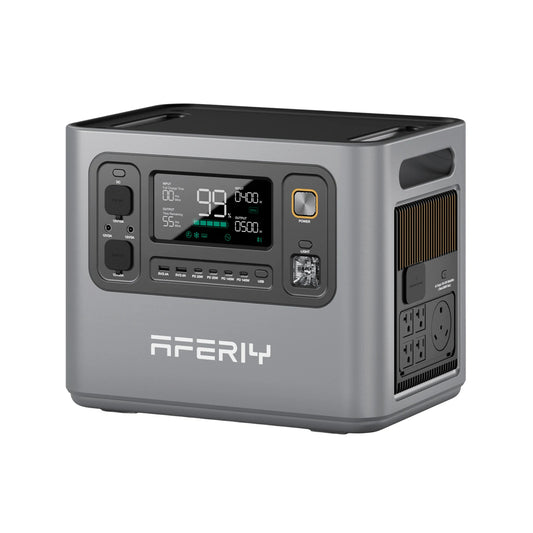
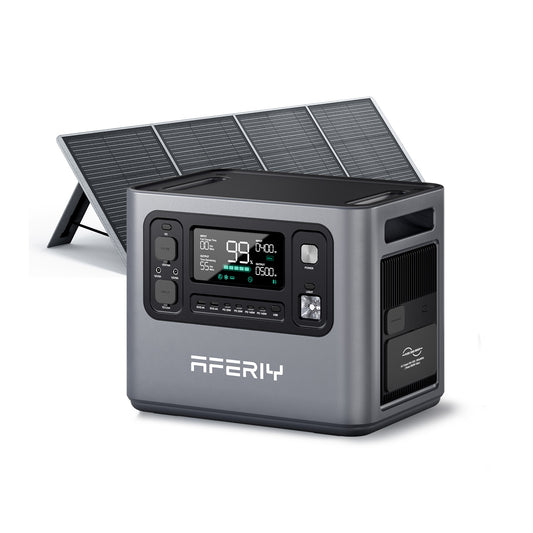
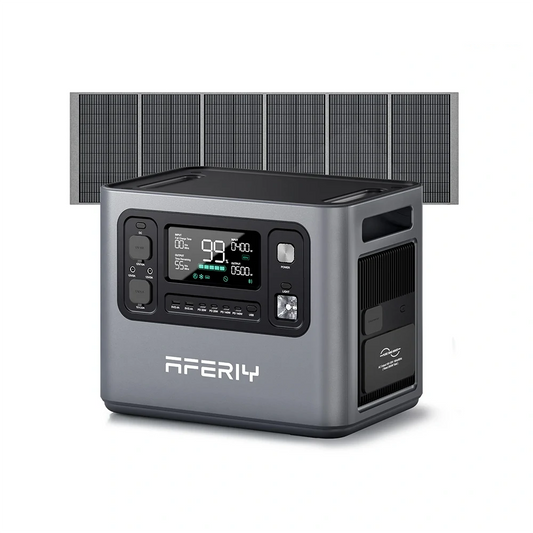
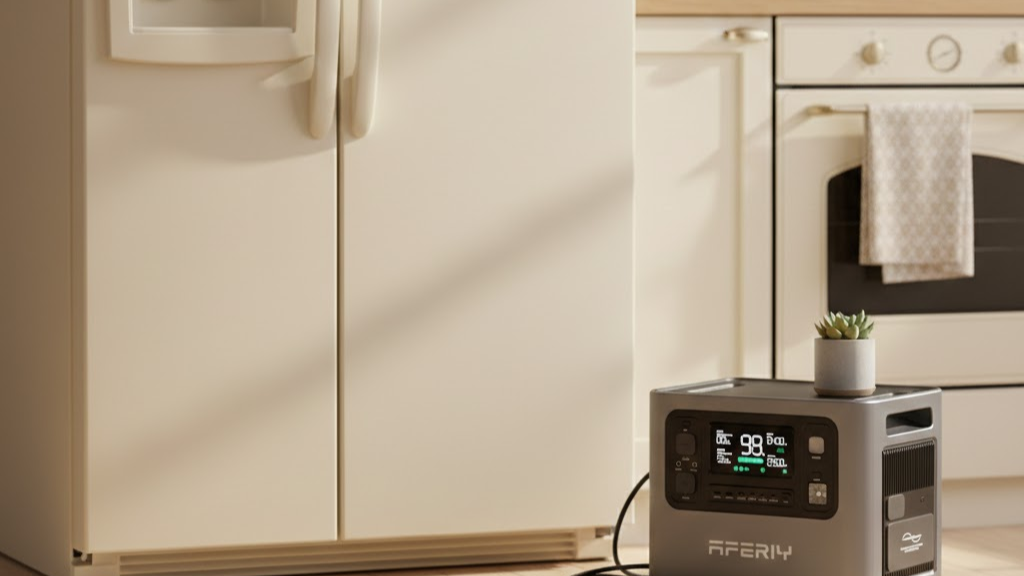
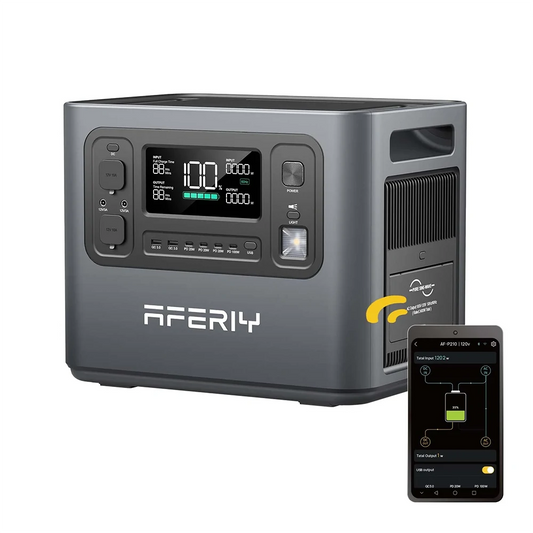
For the overnight case, the AFERIY P210 Portable Power Station carries 2,048Wh and 2,400W continuous, headroom to start a full-size refrigerator, not just run one. Sixteen outputs take the fridge, router and lamps without a power strip, and the transfer to battery takes under 10ms.

What Should You Do in the First Hour?
The items for a short outage sit in the four-hour layer above. What follows is the order to use them.
Close the refrigerator and leave it closed. An unopened refrigerator holds temperature for about four hours, a full freezer for 48, a half-full one for 24. Perishables that sit above 40°F for more than two hours should be thrown out, so a cooler with ice in the garage is worth more than a second look inside.
Leave one lamp switched on so the house tells you when power returns. Unplug the television, the desktop and the game console before the surge arrives on reconnection, and run the router and the phones on the battery instead.
Find the manual release on the garage door before you need it. The cord hangs from the trolley, and pulling it with the door down drops the door onto whatever is underneath.
Report the outage through the utility’s app or outage line. Keep 911 for a downed line, a fire or a medical emergency.
What Should You Leave Out of a Power Outage Emergency Kit?
A prebuilt 100-piece kit looks complete. Open one and you find a whistle, a compass and twelve tealights, and nothing that keeps a refrigerator cold. Buy the light, the water and the battery, and skip the tin box that bundles them.
Candles belong on the shelf. An open flame you cannot see well turns a two-hour outage into a house fire that outlasts it.
A generator in the garage is worse than no generator. Carbon monoxide has no odor, and the CDC guidance is 20 feet from doors, windows and vents, with the unit outdoors. An attached garage counts as indoors.
Bulk bottled water is a storage problem before it is a supply. Twelve gallons weighs about 100 lbs and takes a shelf. Two five-gallon containers you can carry, refilled every six months, work better than a pallet.
How Should You Adapt the Kit for Medical Devices, Pets, or a Sump Pump?
Call the utility before storm season and ask to be listed as a medical baseline customer. The listing puts a household on the restoration priority list and, in many states, a notification list. Keep the account number and the equipment supplier’s phone number on paper, because the phone that stores them may be the phone that dies.
Insulin and other refrigerated drugs need a temperature range, not ice. A cooler with a thermometer and a frozen bottle wrapped in a towel keeps 36 to 46°F longer than a refrigerator that is already warming up. A CPAP draws 30 to 60W with the humidifier off, so a 2,048Wh unit covers several nights; the heated humidifier is what drains it by morning. A medium dog drinks close to a gallon a day in heat, which doubles the count for a three-day layer.
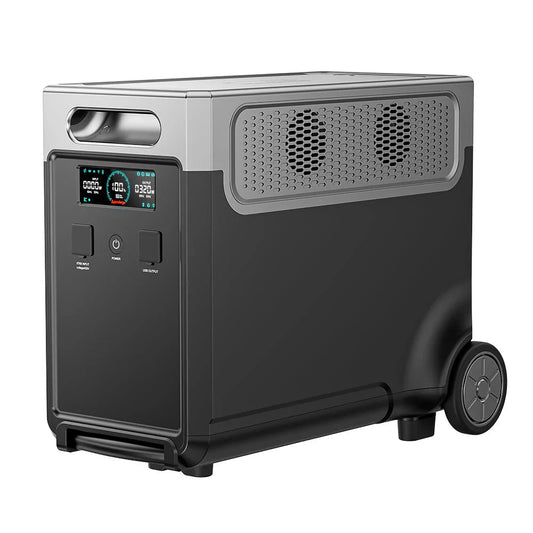
A sump pump is the load that decides whether a battery is enough. One that runs fifteen minutes an hour through a two-day rain averages near 175W, so the number that matters is capacity rather than output. The AFERIY P310 Portable Power Station starts at 3,840Wh with 3,600W continuous and expands to 11,520Wh, roughly 18 hours of the heaviest rain before a recharge, and its 88 lbs come on wheels.

Where Should You Store It, and How Often Should You Check It?
Keep the kit in one place on the main floor, in containers one adult can carry. A basement shelf fails the test that matters: reaching it at night with every light off.
Check the power outage kit when the clocks change. Headlamps and the radio get a battery test, water gets replaced if it is not commercially sealed, and every package gets a date check.
A lithium battery left in a cold garage loses capacity quietly. Charge the unit to about 80% and top it up every three months; a unit reading 40% in October can read 15% in July, and 15% of 2,048Wh will not start a compressor.
Prescriptions rotate forward, one week ahead of the refill schedule. Food goes first in, first out: a three-day supply eaten once a year and replaced costs less than one thrown away every second spring.
FAQs
What should be in an emergency kit for power outage season?
Water at one gallon per person per day, food that needs no cooking, a manual can opener, one headlamp per person, a battery or hand-crank weather radio, a week of prescriptions, cash, and a battery sized to the loads in the house. A cooler with ice covers the four-hour refrigerator window while you decide what to keep.
Is a power outage survival kit different from a 72-hour kit?
A 72-hour kit is built for leaving or sheltering after a disaster. A power outage survival kit is built for staying in a house that still has walls and running water but no electricity. The overlap is water and food. The difference is the battery, the cooler and the pump.
How long will a power station run a refrigerator?
Budget twelve to fourteen hours for a modern refrigerator on 2,048Wh, and expect less in three cases: a garage that hits 90°F in August, a unit that has lost capacity with age, and a compressor that cycles more often than the rating assumes. Nameplate wattage is a starting point, not an answer.
Can a power outage kit work in an apartment?
Yes, with two changes. Floor space replaces storage space, so a cooler on a balcony and a battery that fits a closet beat a shelf of gallon jugs. And the building may keep hallway lighting on emergency circuits, which changes how much lighting the kit carries.
Do I need a generator as well as a battery?
Only when a load runs for days at high draw. A battery covers lights, phones, a router and a refrigerator overnight. A well pump, electric heat or a sump pump in a long storm pushes the answer toward a generator, an interlocked inlet or a second battery, and fuel has to be stored and rotated before that week arrives.
Conclusion
Three layers, one battery, and a check twice a year. Start tonight with headlamps and the outage number on paper. Add water, a cooler and a first aid kit before the next storm, and size the battery once the loads it has to start are on a list.
A power outage kit earns its place by being used twice a year, not by being complete.
 Free shipping from US local warehouse