











How Many Watts Does a Washing Machine Use
Knowing how many watts a washing machine uses is a good idea if you want to control your electrical bills, prevent crowding electrical outlets, ordetermine when to have electrical backup power. Although washing machines do not always operate at full power, their wattage may range greatly depending on size, type of cycle, and other options such as built-in heaters.
This guide simplifies all this clearly, including average power consumption up to practical backup power systems.
How Many Watts Does a Washing Machine Use on Average
A washing machine uses an average of 400 to 1,300 watts when operational, with only short startup spikes, which may be significantly higher. Cold-water cycles are at the low end of power consumption, and the hot-water washers or washer-dryer combinations consume more power.
The current washing machines are also made energy efficient, though the motor, spin cycle, and water heating components also influence the total wattage. That is the reason how many watts a washing machine uses cannot be explained by a single number.
For comparison, if you are wondering how many watts a TV uses, most modern LED TVs consume between 50 and 200 watts — significantly less than a washing machine. Meanwhile, when people ask how many watts a house uses, the answer often ranges from 3,000 to 8,000 watts during active daytime use, depending on the appliances running simultaneously.

Washing Machine Power Consumption by Capacity
Capacity is a significant factor in electricity consumption. Bigger drums require heavy motors and increased spin cycles, which in turn demand increased power.
1. Small / Compact Washers (Under 5 Kg / 11 Lbs.)
Compact washers are perfect in apartments or RVs, and they usually use less power. Normally, they consume between 400 and 700 watts when operational. Cycles are shorter, and they place less demand on electrical systems because they carry smaller loads.
2. Medium / Standard Washers (5-8 Kg / 11-18 Lbs.)
The typical home washers are in this category. The typical power consumption during use of these machines is between 700 and 1200 watts, and the start-up spikes may actually be higher than that. It is the most commonly used size in residential houses.
3. Large / Extra-Large Washers (8 Kg+ / 18 Lbs.+)
Extra-large and large washers are intended for family use. They are capable of drawing 1,000 to 1,500 watts, particularly when performing spin cycles at high speed or during water-heating. Independent circuits or powerful backup power are suitable for these machines.
4. Comparison Table
|
Washer Size |
Typical Running Watts |
Startup Surge |
|
Small / Compact |
400-700 W |
800-1,000 W |
|
Medium / Standard |
700-1,200 W |
1,500-2,000 W |
|
Large / Extra-Large |
1,000-1,500 W |
2,000 W+ |
Factors That Affect Washing Machine Electricity Usage
The number of watts that a washing machine consumes varies depending on several factors, even in the same size category. Hot water cycles consume much power due to heating components, which require additional power. The rotational speed also plays a role because the fasterthe rotational speed consumes greater the power. There is an influence of load size, duration of cycle, and machine efficiency ratings.
Front-load models typically use less energy than top-load models, with old machines typically using more power than new machines that have the Energy Star-rated units.
How to Calculate Washing Machine Energy Usage and Cost
Just knowing about wattage is not enough. Time and frequency of use is another factor that you should consider to see the real costs.
1. Understanding Running Vs. Startup Watts
Running watts are the amount of power consumed by the washer when it is operating normally. Startup watts are momentary bursts required at the start-up of the motor. Although short, these spikes are essential in situations where generators or portable power stations are involved, where both have to be dealt with safely.
2. Estimating kWh per Load
In order to determine the amount of energy a particular washer consumes, multiply the average wattage of the washer by the number of hours per cycle. As an example, one kilowatt-hour (kWh) is used when a 1,000-watt washer is used for one hour. Now, take the price of electricity multiplied by the number of kWh and estimate the cost of one wash.
3. Portable & Backup Power Options for High-wattage Loads
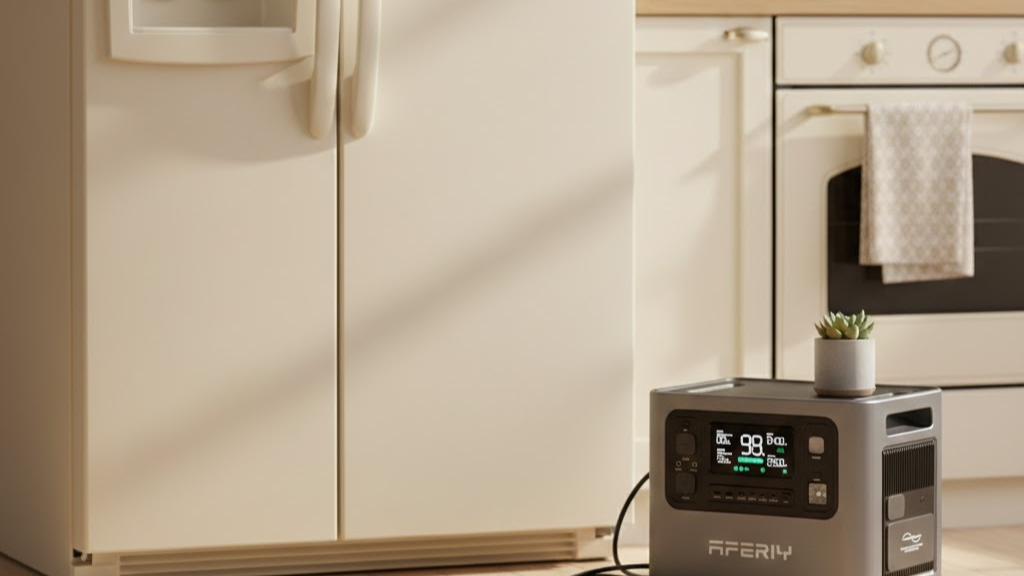
You need to have a reliable home battery backup in case you intend to operate a washing machine, even when off-grid or in case of a power outage. Portable power stations with high capacity are safer and quieter alternatives to gas generators.

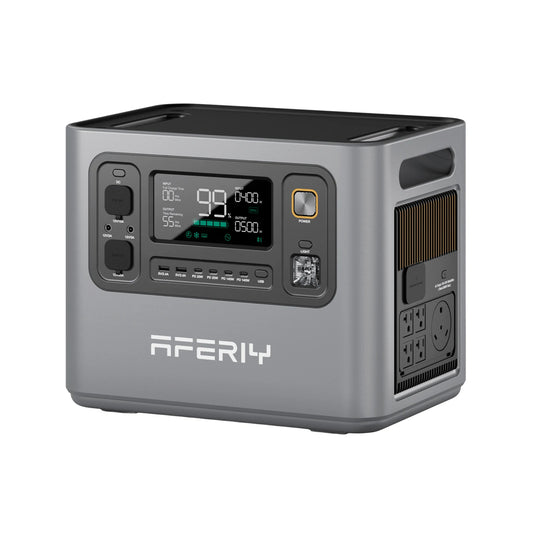
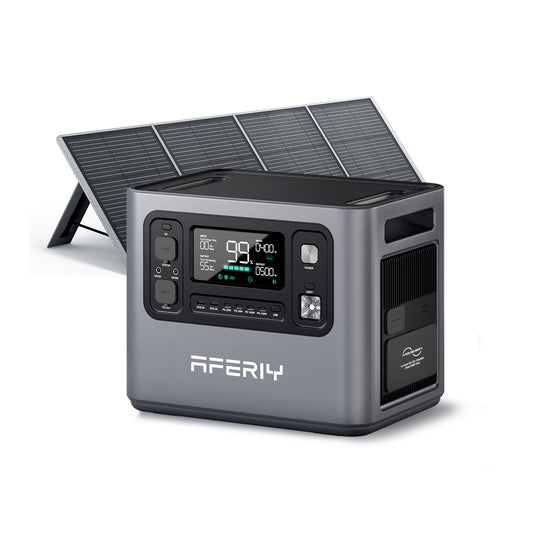
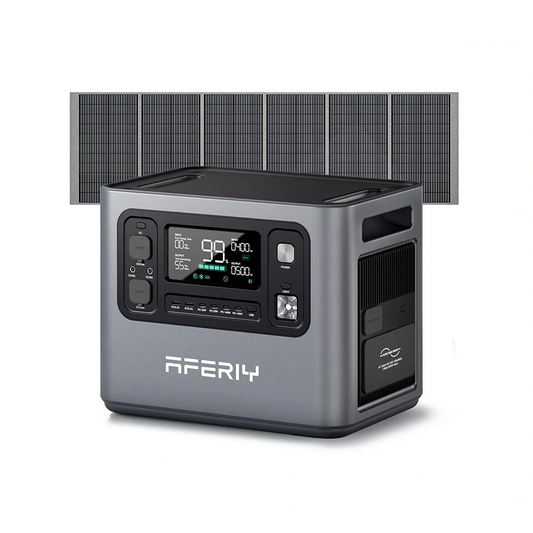
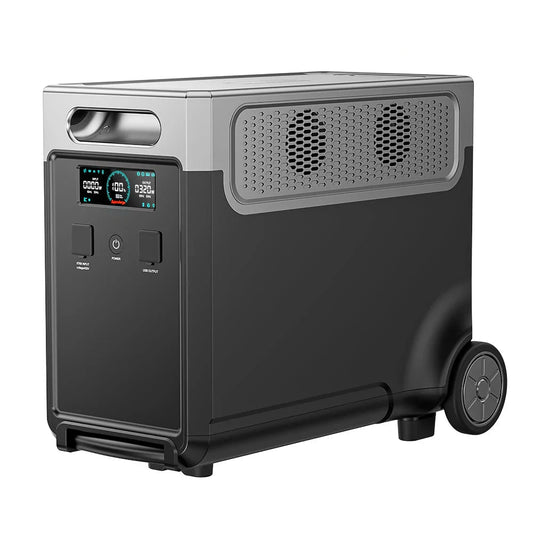
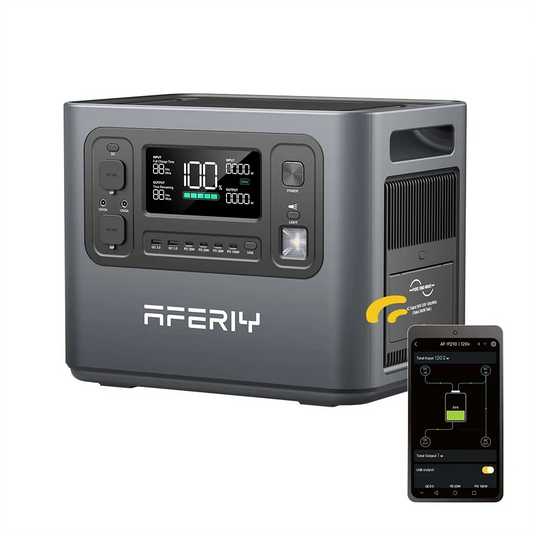
AFERIY P280 2800W Solar Generator Kit can be considered a good option when it comes to full-size washing machines. It has a high 2800W output, an expandable 2048Wh capacity, a pure sine wave inverter, and can safely handle startup surges, and at the same time, keep your washer running without issue. Their rapid recharge and ability to be solar powered make them perfect to use in homes or cabins, or to be used in case of an emergency.
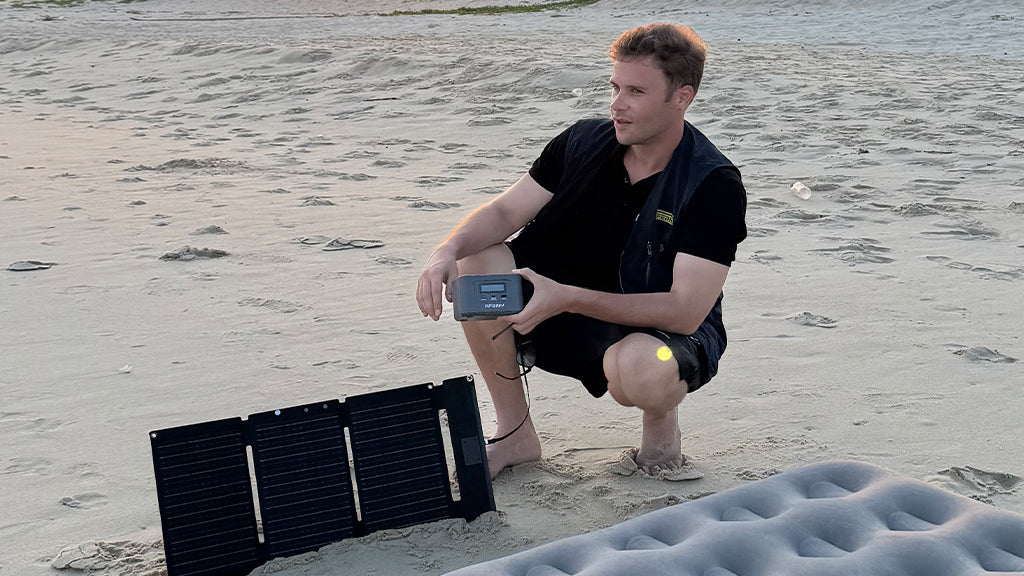
In the case of smaller or compact washers, the AFERIY Nomad1800 P180 Portable Power Station is a good combination of power and portability. Its 1800W output and lightweight design can easily fit into an apartment or RV, making it ideal for an emergency backup power system without consuming a lot of valuable space.
Common Misconceptions About Washing Machine Energy Consumption
There is a myth that washing machines always use a lot of power. The truth is that the majority of energy is used in heating water, not in spinning clothes. The other myth is that larger machines are less efficient; fortunately, this does not always hold, and some modern high-capacity washers are surprisingly efficient with a full load.
It is possible to determine how much power a washing machine consumes and thus distinguish between facts and assumptions to make smarter energy planning.
Conclusion
So, how many watts does a washing machine use? The response will vary based on size, type of cycle, and characteristics, but most of them are between 400 and 1,500 watts with short-lived startup spikes.
That is important to know because, when you know these numbers, you can manage electricity expenses and can also select an appropriate backup solution. To have consistent power access in times of outage or off-grid applications, such products as the AFERIY P280 or the AFERIY Nomad1800 P180 can offer safe, effective, and scalable power to operate a washing machine at the time when it counts.
FAQ
1. Can I Run a Washing Machine off a Generator?
Yes, provided that the generator or power station is capable of handling both running and startup watts. To safeguard the motor, it is recommended to have a pure sine wave output.
2. What Size Generator Do You Need to Run a Washing Machine?
The majority of the washing machines need a minimum of 2,000 watts surge capacity. A device such as the AFERIY P280 can suit the purpose well.
3. Do You Need a 15 or 20 Amp Outlet for a Washing Machine?
The majority of residential washing machines are directly connected to a standard 120 V, 15-amp outlet connection, although larger or high-efficiency models may require a dedicated 20-amp circuit for safety.
 Free shipping from US local warehouse