











How Many Watts Does a TV Use? 24–75 Inch TV Wattage Guide
Many modern TVs use roughly 50–200 watts (W) while operating, although some smaller models use less and larger or high-brightness models can use more.
Knowing how many watts a TV uses can help you estimate your electricity costs, reduce energy consumption, and choose the right portable power station for a power outage, camping trip, or off-grid setup.
In this guide, we'll explain TV wattage by screen size and type, show how much electricity a TV uses per hour, explain how to calculate running costs, and show how to determine whether a portable power station can run your TV.
How Many Watts Does a TV Use by Size?
The following ranges are general estimates for modern TVs during typical operation. Actual power consumption varies by model, display technology, brightness, picture settings, and content.
| TV Size | Typical Power Use |
|---|---|
| 24-inch | About 20–40W |
| 32-inch | About 30–55W |
| 43-inch | About 45–80W |
| 50-inch | About 60–100W |
| 55-inch | About 60–120W |
| 65-inch | About 90–160W |
| 75-inch | About 100–200W |
| 85-inch | About 120–250W+ |
What Affects a TV’s Power Usage?
Several factors can affect how much power a TV uses.
1. Screen Size
Larger TVs generally use more power because they have a larger display area. However, screen size alone does not determine actual wattage.
2. Display Technology
LED, OLED, QLED, and Mini-LED TVs can have different power requirements even when they are the same size. The specific model is a better indicator of actual power consumption than display type alone.
3. Brightness and Picture Settings
Higher brightness and certain picture modes can increase power consumption. Energy-saving or lower-brightness settings may reduce the TV's power draw.
4. HDR Content
HDR content can require higher brightness levels, which may increase power consumption on some TVs.
5. Usage Time
The longer your TV operates, the more electricity it consumes. Even a small difference in wattage can add up over many hours of use.

How Much Electricity Does a TV Use?
How much electricity a TV uses depends on its wattage and how long it operates. Electricity consumption is measured in kilowatt-hours (kWh), rather than watts.
For example, a 100W TV running for four hours per day consumes:
100 × 4 ÷ 1,000 = 0.4 kWh per day
Over 30 days:
0.4 × 30 = 12 kWh per month
A higher-wattage TV or longer viewing time will increase electricity consumption, while a lower-wattage TV or shorter viewing time will reduce it.
How Much Does It Cost to Run a TV?
The cost of running a TV depends on its power consumption, viewing time, and local electricity rate.
Use this formula: Energy Cost = Electricity Used (kWh) × Electricity Rate
For example, if a 120W TV runs for five hours per day:
120 × 5 ÷ 1,000 = 0.6 kWh per day
At an electricity rate of $0.16 per kWh:
0.6 × $0.16 = $0.096 per day
That's approximately 10 cents per day, or $2.88 over 30 days.
Your actual cost will vary depending on your TV's power consumption, viewing time, and local electricity rate.
How Many Watts Does a TV Use in Standby Mode?
A TV uses much less electricity in standby mode than when it is operating.
For ENERGY STAR-certified TVs, standby-passive power is limited to 0.5 watts or less. For TVs capable of network connectivity, the current ENERGY STAR criteria limit standby-active power to 1.0 watt under the specified test conditions.
Actual standby consumption depends on the TV model and the standby features it supports. Network-connected features can affect how much power a TV uses while it is not actively displaying content.
If you want to eliminate standby power consumption completely, disconnect the TV from the power supply.
How to Measure Your TV's Power Consumption
If you want to know how much power your TV actually uses, checking the manufacturer's specifications or measuring it directly is more reliable than using a general estimate.
Check the TV Specifications
Start with the manufacturer's specifications, owner's manual, or information label. Depending on the model, you may find its rated power, voltage, current, or energy-use information.
Use a Plug-In Power Meter
A plug-in power meter can measure how much power your TV draws while operating. This gives you a more accurate picture of real-world consumption because power draw can change with brightness, picture mode, HDR content, and other settings.
How Many Amps Does a TV Use?
A TV's current draw depends on its power consumption and the voltage of the electrical supply.
In the U.S., household outlets generally provide a nominal 120 volts. You can estimate current using: Amps = Watts ÷ Volts
| TV Power | Approx. Current at 120V |
|---|---|
| 50W | 0.42A |
| 75W | 0.63A |
| 100W | 0.83A |
| 120W | 1.00A |
| 150W | 1.25A |
| 200W | 1.67A |
For example, a 120W TV connected to a 120V supply would draw approximately 1 amp.
Can a Portable Power Station Run a TV?
Yes. Most modern TVs use relatively little power, so a portable power station can easily run one during a power outage, camping trip, or RV trip.
When choosing one, check two specifications: rated output (W), which determines whether it can handle the TV's power demand, and battery capacity (Wh), which affects runtime.
For example, a 100W TV uses about 100Wh per hour. A 1,024Wh power station would provide a theoretical runtime of about 10.2 hours before accounting for conversion losses and the station's own power consumption.
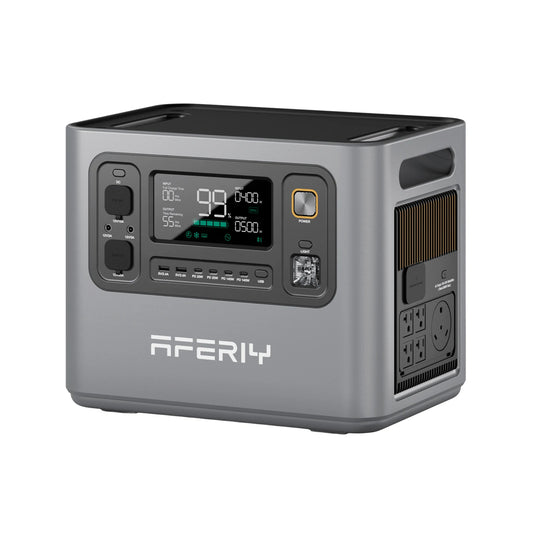
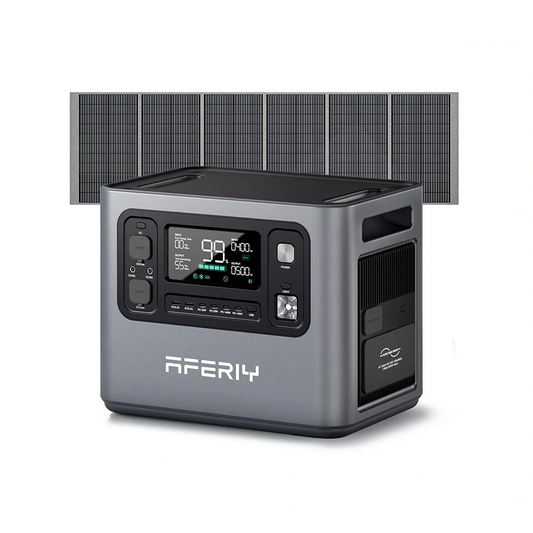
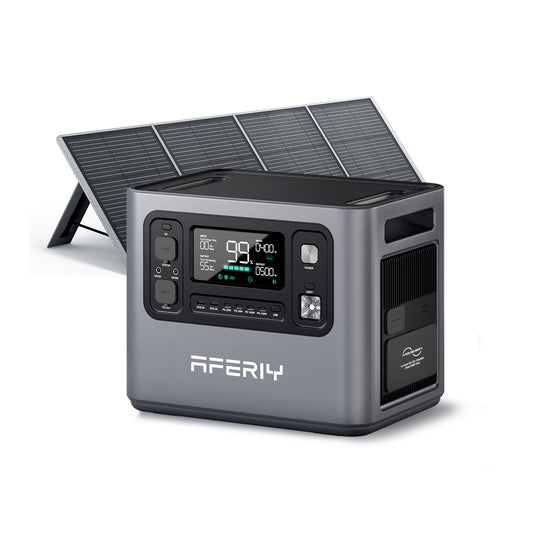
AFERIY P180 Pro Portable Power Station
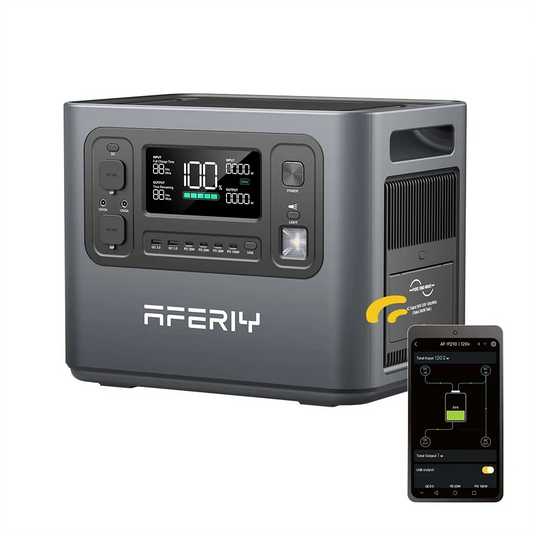
The AFERIY P180 Pro Portable Power Station provides 1,800W of rated output and 1,024Wh of battery capacity, giving it more than enough output for a typical TV. It is a practical option for users who want portable backup power for a TV, small electronics, camping, RV trips, or short-term power outages.
The P180 Pro can also be expanded to a total capacity of 5,120Wh with additional batteries, providing longer runtime when more energy storage is needed. It also features a pure sine wave inverter and UPS backup with a switchover time of less than 10 milliseconds.

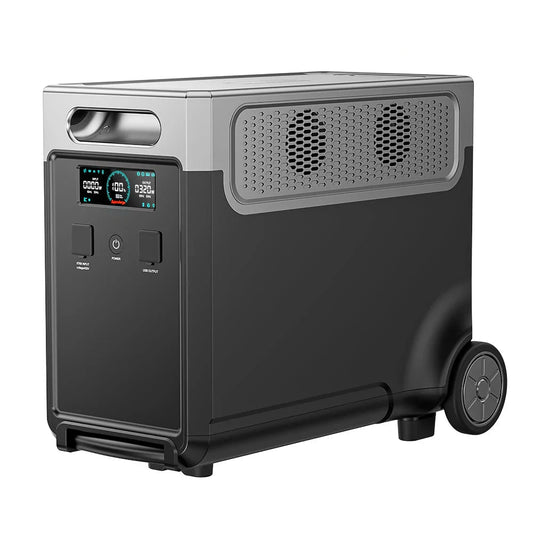
AFERIY P300 Portable Power Station
For larger home backup needs, the AFERIY P300 Portable Power Station provides 3,000W of rated output and 2,048Wh of battery capacity. This is substantially more power and storage than a TV normally requires, but the additional capacity is useful when you want to run a TV together with other household appliances and electronics during an outage.
The P300 supports expandable capacity up to 10,240Wh with additional batteries, making it a better choice for longer backup periods or higher overall household power demands. It also provides UPS backup with less than 10 milliseconds of switchover time.
Actual TV runtime will vary depending on the TV's real-world power consumption, operating conditions, inverter efficiency, and the amount of usable battery capacity.

How to Reduce Your TV's Energy Consumption
If you want to reduce your TV's electricity use, a few simple changes can help.
Lower the Screen Brightness
Avoid using a higher brightness setting than necessary. Lowering brightness can reduce power consumption while maintaining a comfortable viewing experience.
Use Energy-Saving Mode
Many modern TVs include an Energy Saving or Eco mode. These settings can adjust brightness and other functions to reduce energy consumption.
Turn the TV Off When You Are Finished
Turn the TV off when nobody is watching. If you will be away for an extended period, disconnecting the TV from the power supply can also eliminate standby consumption.
Use a Sleep Timer
If you often fall asleep while watching TV, use the sleep timer to automatically turn the TV off after a set period.
Choose an Energy-Efficient Model
When buying a new TV, compare energy-use information rather than looking only at screen size. ENERGY STAR-certified televisions must meet specific energy-efficiency requirements.
FAQs
How Many Watts Does a 65-Inch TV Use?
A 65-inch TV typically uses around 90–160 watts while operating. Actual power consumption varies by model, display technology, brightness, HDR content, and picture settings.
How Many Watts Does a TV Use Per Hour?
A TV's power rating is measured in watts (W), while electricity consumption over time is measured in kilowatt-hours (kWh). For example, a 100W TV running for one hour consumes approximately 0.1 kWh.
Use this formula to estimate electricity consumption:
Electricity Used (kWh) = TV Wattage × Hours Used ÷ 1,000
How long can a portable power station run a TV?
Runtime depends on the TV's actual power consumption and the power station's usable battery capacity. A simple estimate is:
Runtime ≈ Battery Capacity (Wh) ÷ TV Power (W)
Actual runtime will be shorter because of conversion losses and the power station's own energy consumption.
Conclusion
TV power consumption depends on more than screen size. Display technology, brightness, HDR content, picture settings, and viewing time can all affect how much electricity a TV uses.
For the most accurate estimate, check your TV's specifications or measure its actual power draw with a plug-in power meter. If you need backup power, choose a portable power station with sufficient output for the TV and enough battery capacity for your desired runtime.
A suitable portable power station can keep a TV running during power outages, camping trips, RV travel, and other situations where grid power is unavailable.
Related Reading:
Can I Run a TV off Portable Power Stations?
What Size Portable Power Station Do I Need for a TV?
 Free shipping from US local warehouse