











What Size Solar Battery Do I Need? Sizing Guide
If you have solar panels or are considering adding battery storage, one of the first questions is: what size solar battery do I need? The answer depends on how much electricity you use, how much solar energy is available to store, and what you want the battery to power.
A battery used for everyday solar self-consumption may need a different capacity from one designed for outage backup. Your required size can also change significantly depending on whether you want to keep only essential appliances running or support a larger portion of your home.

What Size Solar Battery Do I Need?
There is no single battery size that works for every U.S. home. The right starting point depends on whether you want to shift excess solar into the evening, provide backup for essential loads, or support most of your home during an outage.
Current U.S. residential battery systems commonly fall around the 10–13.5 kWh range, while larger systems can be built with multiple batteries for higher energy needs. For essential-load backup, 10–20 kWh is a useful reference range, while homes with high electrical loads or more extensive backup requirements may need substantially more storage.
What Size Solar Battery Do I Need for My Home?
The following ranges are starting points rather than fixed requirements. Actual sizing depends on which appliances you want to run, how long you want them powered, and how much usable capacity the battery provides.
| Home Backup Scenario | Reference Range | Typical Use |
|---|---|---|
| Smaller essential-load backup | 5–10 kWh | Refrigerator, lights, Wi-Fi, phones and other essentials |
| Partial-home backup | 10–20 kWh | Essential loads plus selected appliances |
| Higher-demand backup | 20–30 kWh | Larger electrical loads or longer backup periods |
| Whole-home or high-demand backup | 30 kWh+ | Multiple major appliances, HVAC, electric heating and other high loads |
For example, a homeowner who mainly wants to keep the refrigerator, internet equipment, lights, and a few outlets running during an outage may need far less storage than someone who wants to operate central air conditioning, electric water heating, and other major appliances.
Whole-home backup also depends on power output, not just battery capacity. A battery may have enough stored energy but still be unable to run several high-power appliances simultaneously if its inverter cannot provide sufficient continuous or surge output.
What Size Battery Do I Need for Solar Panels?
Your solar array and battery do not need to have matching numbers. Solar panels are rated by power in kilowatts (kW), while battery storage is measured in kilowatt-hours (kWh).
Instead of matching the two directly, consider how much excess solar your system typically produces and how much electricity your home uses after solar production declines. A battery is most useful when there is enough surplus solar to charge it and enough later-day consumption to use that stored energy.
So, when asking how much solar battery storage do I need, look at your typical solar production, daytime electricity use, and evening or overnight consumption. The goal is to store a useful amount of surplus energy without routinely paying for storage that your solar system cannot fill or your home cannot use.
How Do I Calculate the Right Solar Battery Size?
Start with the loads you want the battery to support rather than automatically using your home’s total daily electricity consumption.
For example, during an outage you might choose to power a refrigerator, Wi-Fi equipment, lighting, computers, and other essential devices. If you also want to run central AC, an electric water heater, or other high-power appliances, those loads need to be included.
Next, estimate how much energy those loads require during the period you want the battery to cover. A simple starting formula is: Required battery capacity ≈ Energy needed ÷ Usable capacity fraction
For example, if your selected backup loads require 10 kWh and the battery provides 90% usable capacity, the rated battery capacity would need to be about 11.1 kWh before accounting for other system losses.
For a more detailed estimate, calculate each appliance’s energy use by multiplying its power consumption by the number of hours it operates, then add the results together.
The same principle applies to solar self-consumption, but the starting point is the surplus solar energy available for storage rather than your entire daily electricity use.
What Factors Affect the Solar Battery Size You Need?
Energy Consumption and Appliance Loads
Your electricity use is one of the biggest factors in determining battery size. Two homes with similar floor plans can have very different requirements because of differences in heating, cooling, appliances, and other electrical loads.
Central air conditioning, electric heating, electric water heaters, pool equipment, and EV charging can increase both the amount of energy you need and the battery power output required to run those loads. This is why home size alone is not a reliable way to determine battery capacity. Jackery’s current sizing guide likewise considers appliance count and energy requirements rather than relying only on house size.
Backup Duration
How long you want backup power directly affects the amount of storage you need.
A battery designed to cover a short outage may only need to support essential loads for several hours. Overnight or multi-day backup requires substantially more stored energy unless the battery can be recharged during the outage.
For longer outages, solar generation becomes particularly important. A smaller battery that can be replenished during the day may provide more practical backup than a larger battery that cannot be adequately recharged.
Solar Generation
Solar production changes throughout the year and is affected by weather, shading, panel orientation, seasonal sunlight, and system losses.
For a solar-plus-storage system, the battery should therefore be sized around the amount of surplus solar your system can realistically produce and the amount of that energy your household can use later.
A larger solar array can support more storage, but it does not automatically mean you need a larger battery. If your home has little electricity demand after sunset, some additional storage may remain unused.
Usable Capacity and Efficiency
The capacity shown on a battery’s specification sheet is not always the amount of energy available to your appliances.
Depth of discharge, round-trip efficiency, inverter losses, temperature, and operating conditions can affect how much energy you actually receive. For this reason, compare usable capacity when evaluating different batteries rather than looking only at the headline kWh rating.
Power Output
Battery capacity and power output answer two different questions.
Capacity, measured in kWh, tells you how much energy the battery stores. Power output, measured in kW or watts, tells you how much electricity it can deliver at one time.
This matters when multiple appliances operate simultaneously. A battery may have enough stored energy to run a refrigerator for many hours but still be unable to start or operate an air conditioner, pump, or several high-power appliances at the same time if its inverter output is too low.
How to Choose the Right Solar Battery
Once you have estimated the capacity you need, compare batteries based on usable capacity, continuous and peak power output, solar input, and system compatibility.
For a solar-plus-storage installation, make sure the battery can accept an appropriate amount of solar power and work with the planned inverter and other system components. If your electricity needs may increase later, such as after adding an EV or electric heating, expansion capability can also be useful.
For a permanently installed system, also consider battery chemistry, cycle life, warranty, installation requirements, and operating conditions. The largest battery is not automatically the best choice; the goal is to have enough usable energy and power for your actual loads without paying for capacity that will rarely be used.
Solar Battery vs. Portable Power Station for Home Backup
A permanently installed home battery and a portable power station can both provide backup power, but they serve different purposes.
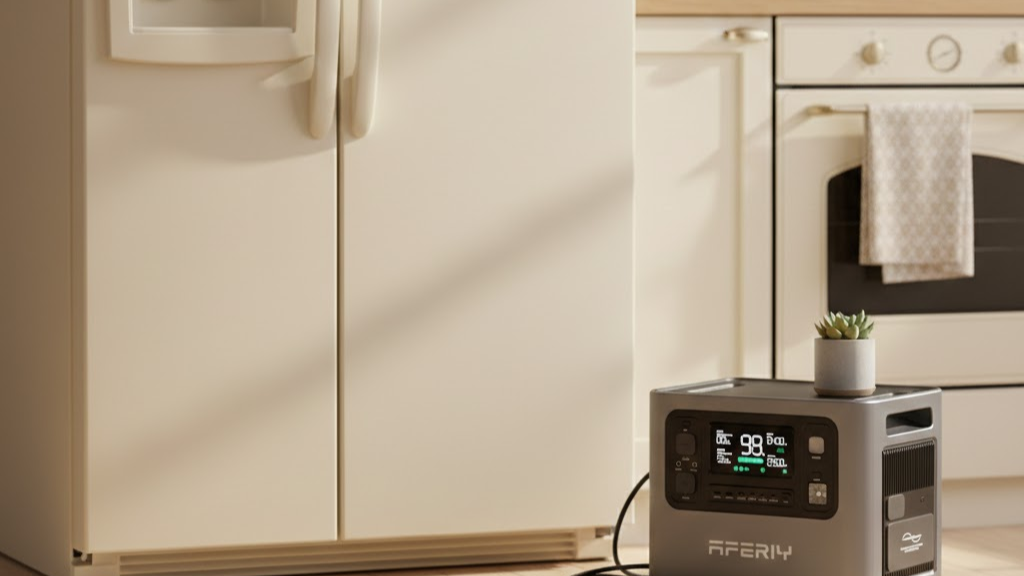
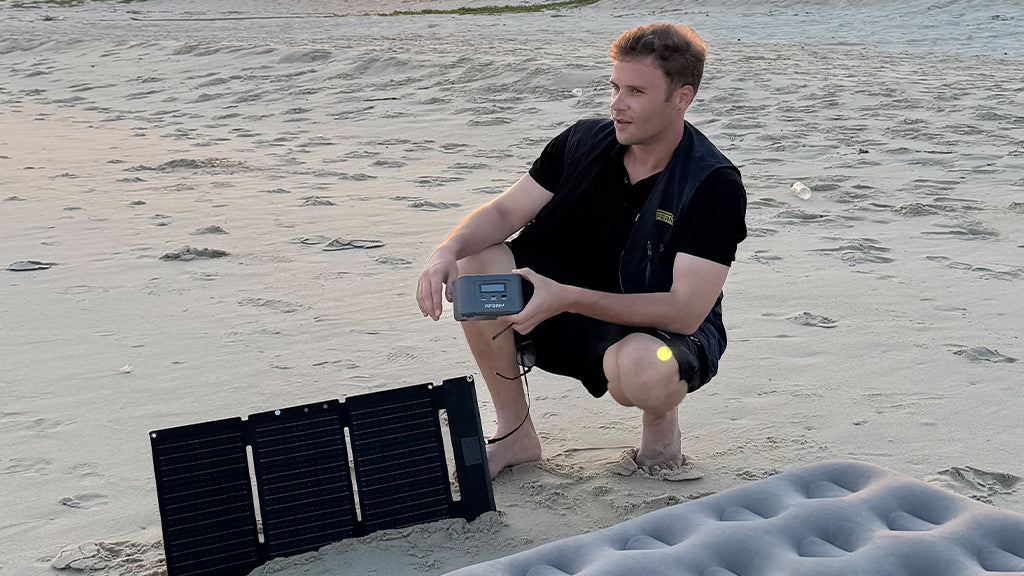
A home battery is integrated with the home’s electrical system and is designed for permanent circuit-level or whole-home backup. A portable power station is more flexible and can be useful when the goal is essential-load backup, temporary outage protection, or a power source that can also be used outside the home.
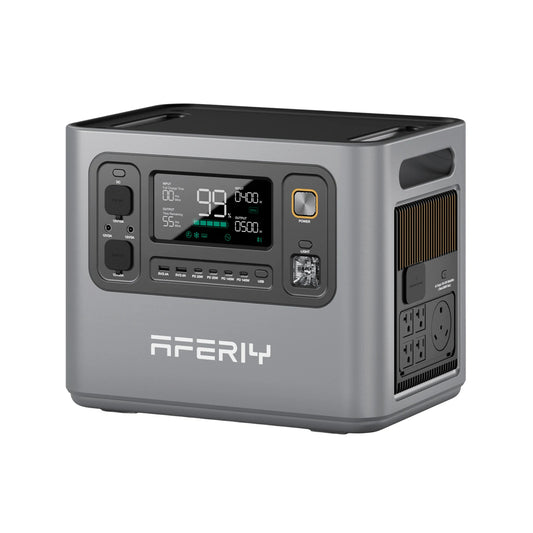
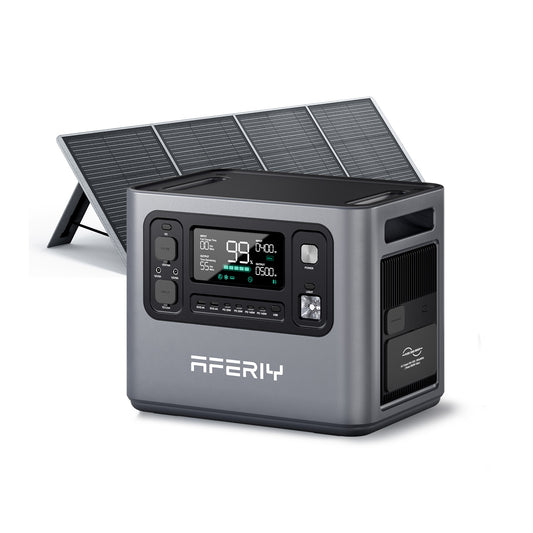
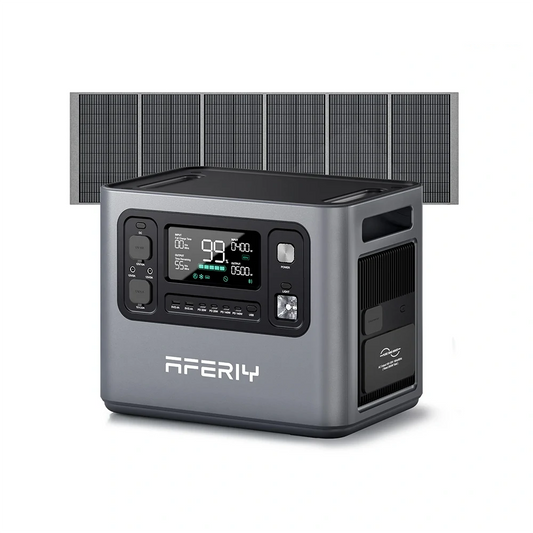
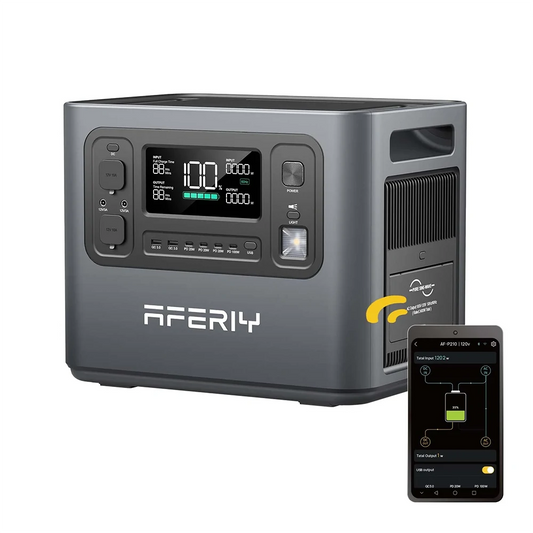
For example, the AFERIY P180 Pro portable power station provides 1,024Wh of capacity and 1,800W of output, with expandable storage up to 5,120Wh. Its UPS function has a transfer time of less than 10 ms, making it suited to scenarios where a homeowner wants portable backup for electronics and essential devices rather than permanent whole-home integration.

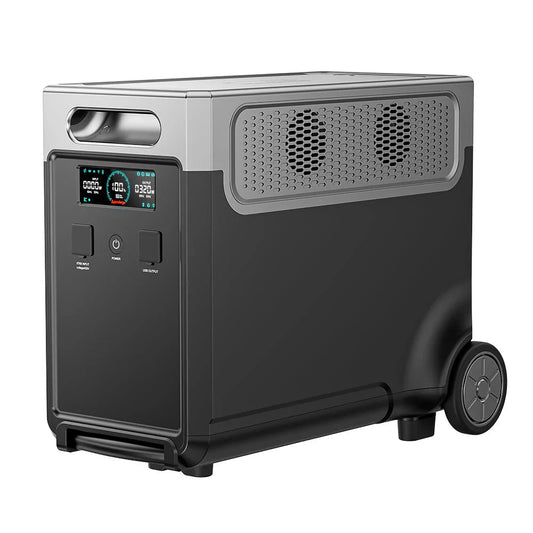
For higher-power portable backup, the AFERIY P300 portable power station provides 2,048Wh of capacity and 3,000W of output, with expansion up to 10,240Wh. It also supports up to 1,200W of solar input, giving it more capacity and charging flexibility for longer or more demanding backup scenarios.

These systems are not direct substitutes for a permanently installed home battery. They are better suited to homeowners who prioritize flexible backup power without committing to a permanently integrated residential battery system.
FAQs
Is a 10 kWh Solar Battery Enough for a House?
A 10-kWh battery can be enough for essential loads or partial-home backup, but it will not necessarily provide whole-home backup. Runtime depends on how much power your appliances use and how long they need to operate. Current U.S. guidance commonly places 10 kWh-class systems in the range of essential-load backup rather than unrestricted whole-home operation.
How Much Solar Battery Storage Do I Need for a Power Outage?
Start by identifying the appliances you need during an outage and estimating their energy use over the required backup period. A refrigerator, Wi-Fi equipment, lighting, and electronics require considerably less storage than a system also supporting HVAC, electric water heating, or other high-power loads.
Should My Solar Battery Be the Same Size as My Solar System?
No. Solar panels are rated in kW, while battery storage is rated in kWh. Instead of matching the numbers, consider how much surplus solar the array produces and how much electricity your home can use later.
Is a Bigger Solar Battery Always Better?
Not necessarily. More storage can extend backup time, but it may not provide much additional value if your solar system rarely produces enough surplus energy to charge it or your household has limited demand after sunset.
Can I Add More Battery Storage Later?
Some systems are designed for expansion while others are not. If your energy needs may increase later, choosing an expandable system can provide more flexibility. However, expansion should also be compatible with the battery, inverter, and overall electrical system.
Conclusion
So, what size solar battery do I need? There is no single answer for every U.S. home. A 10–20 kWh system can be a useful reference range for many essential-load and partial-home backup applications, while higher-demand or whole-home systems may require considerably more storage.
The most reliable way to size a battery is to start with the loads you actually want to support, estimate how long they need to run, and then account for usable capacity, solar generation, and power output. This approach gives you a more realistic battery size than simply matching storage to your home’s square footage or the rated size of your solar array.
 Free shipping from US local warehouse