











Can You Use a Home Battery Without Solar?
When the power goes out, most homeowners think of a generator or a solar‑plus‑battery system as the obvious backup options. But what if you want reliable backup power without installing solar panels?
A home battery can work without solar, but whether it makes sense depends on how you plan to use it and how long you need backup power.

Can You Use a Home Battery Without Solar Panels?
Yes, you can use a home battery without solar panels. A home battery can charge from the electrical grid and store that energy for later use, so solar panels are not required for the battery to provide backup power.
When the grid is working normally, the battery can charge and remain on standby. If the power goes out, a compatible backup system can switch to battery power and continue supplying electricity to connected appliances or selected circuits.
The amount of power available during an outage depends on the battery’s capacity and the appliances you choose to run. A smaller system may be enough for essentials such as a refrigerator, lights, Wi‑Fi equipment, and phones, while a larger system can support more appliances or provide backup for a longer period.
How Does a Home Battery Work Without Solar?
Without solar panels, a home battery charges directly from the electrical grid and stores that energy for later use. If the power goes out, a compatible backup system switches to stored battery power and supplies electricity to connected appliances or circuits.
Two specifications are particularly important when choosing a battery: capacity and output. Capacity, measured in Wh or kWh, determines how much energy the battery can store and therefore affects runtime. Output, measured in W or kW, determines how much power it can deliver at once.
For example, a battery may have enough capacity to run essential appliances for several hours but still lack the output needed to operate multiple high‑power appliances simultaneously.
When Does a Home Battery Without Solar Make Sense?
A home battery without solar can be a practical option when you want backup power or more control over when you use electricity, but don’t want to install solar panels at the same time. It can be particularly useful in the following situations.
Frequent Short Power Outages
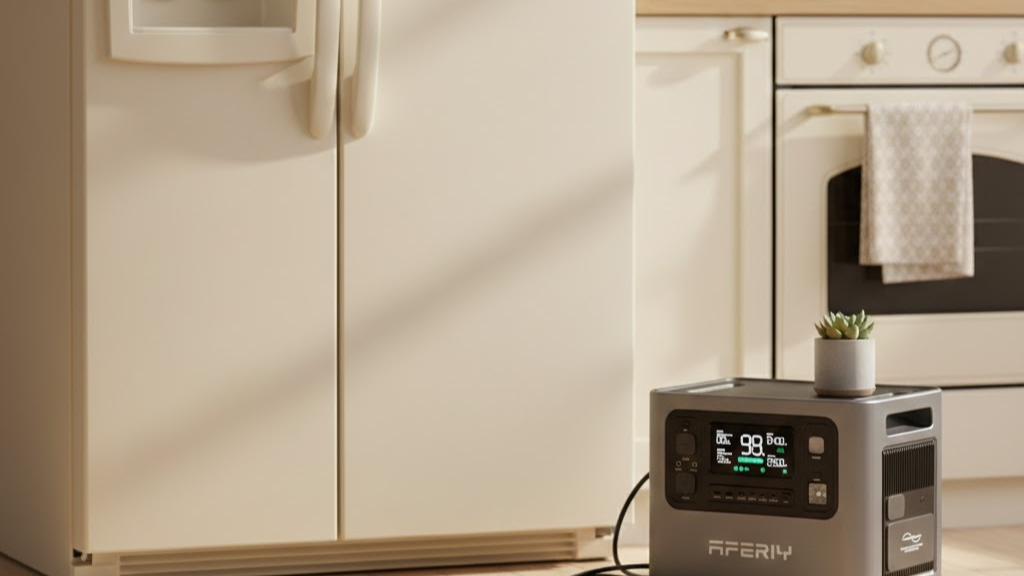
If your home regularly experiences short outages, a battery can provide backup without the noise, fuel, or emissions associated with a gas generator. It can keep essential devices such as a refrigerator, lights, Wi‑Fi equipment, and phones running until utility power returns.
Focusing on essential loads can make a smaller system more practical.
Time‑of‑Use Electricity Rates
A battery can also be useful when your utility charges different electricity rates at different times of day. You may be able to charge the battery when rates are lower and use stored electricity during more expensive periods.
Whether this actually reduces your electricity costs depends on the difference between peak and off‑peak rates, your household’s usage, and the battery system’s efficiency and operating costs. A battery should not be assumed to provide savings simply because time‑of‑use pricing is available.
Solar Isn’t Practical Right Now
You don’t necessarily have to install solar and battery storage at the same time. Your roof may not be suitable for solar, or you may simply want backup power before deciding whether solar makes sense for your home.
In these situations, a battery can provide backup today while leaving open the possibility of adding solar later, provided the system supports the appropriate charging equipment.
You Only Need Essential‑Load Backup
Not every outage requires keeping the entire house running. If your main priorities are the refrigerator, internet connection, lighting, medical equipment, or a few other essential devices, backing up selected loads can require considerably less capacity than powering every circuit.
This can make a battery‑only setup more practical for households that want reliable backup without building a full whole‑home system.
What Are the Limitations of a Home Battery Without Solar?
The main limitations of battery‑only backup are recharge availability, runtime, and the cost of supporting larger loads.
Limited Recharge During an Outage
Without solar panels or another charging source, a battery cannot normally recharge while the grid is down. Once its stored energy is used, you generally have to wait for utility power to return before recharging.
This is less of a concern during a short outage but becomes more important when a power failure lasts a day or longer. A larger battery can extend runtime, but it does not provide an ongoing source of electricity during a prolonged outage.
Runtime Depends on Your Power Usage
Battery capacity alone does not determine how long your backup will last. The appliances and devices you run have a major impact on runtime.
Keeping a refrigerator, Wi‑Fi router, lights, and phone chargers running uses considerably less energy than operating central air conditioning, electric heating, or an electric water heater. EnergySage notes that a 5‑ton central AC unit can draw 3.5 kW or more while running, which can use stored energy much faster than smaller household loads.
Higher Cost for Whole‑Home Backup
The cost can also increase significantly when the goal is to keep most or all of the house running. A permanently installed system may require the battery itself, an inverter, electrical equipment, installation, and other components.
Whole‑home backup also requires considerably more storage and power output than essential‑load backup. EnergySage estimates that a typical whole‑home setup may require around 30 kWh of storage, compared with roughly 10 kWh for a system focused on critical loads.
Best Home Battery Backup Without Solar
The best home battery backup without solar depends on how much power you need and how long you want your backup to last. Smaller systems can cover essential loads, while higher‑output systems with expandable capacity are better suited to heavier loads or longer outages.
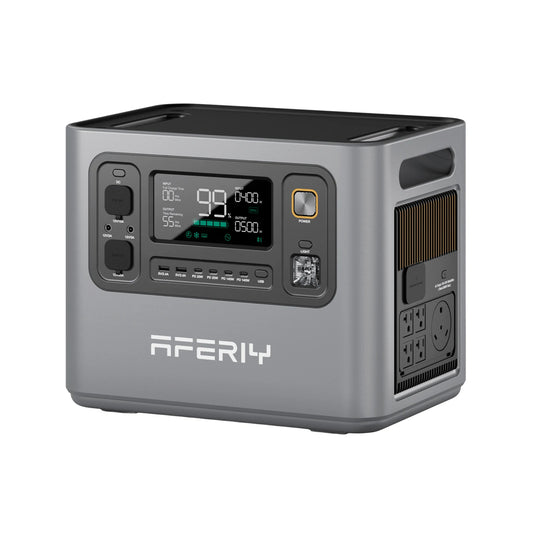
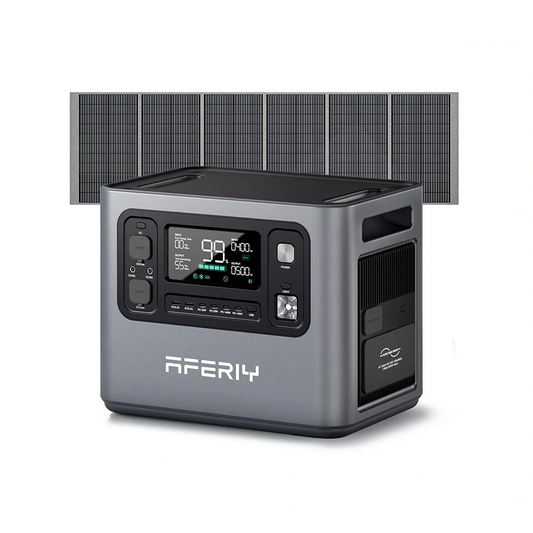
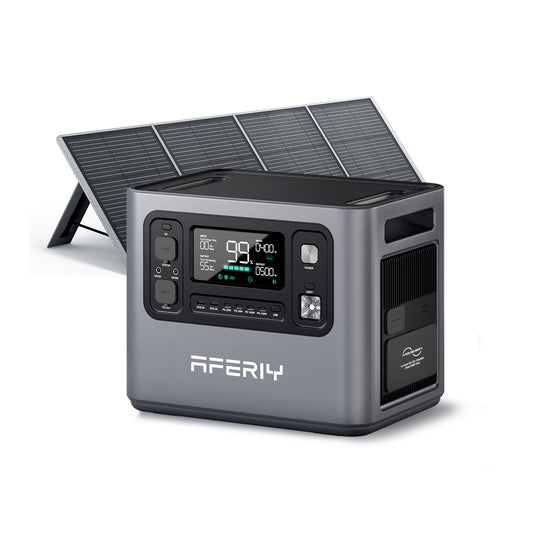
AFERIY P180 Pro Portable Power Station: Best for Essential Loads
If your priority is keeping a few essential devices running during an outage, the AFERIY P180 Pro Portable Power Station is a more compact option.
It provides 1,024Wh of capacity and 1,800W of continuous AC output, which puts it in a useful range for appliances and electronics such as refrigerators, Wi‑Fi equipment, lighting, laptops, and other essential devices within its output limits. It also supports UPS backup with a switchover time of less than 10ms, which can help keep connected electronics powered during a brief interruption.

Its relatively compact 25.5‑pound design also makes it easier to move between rooms or use where backup power is needed. If more runtime is required later, the system can be expanded to up to 5,120Wh with compatible expansion batteries.
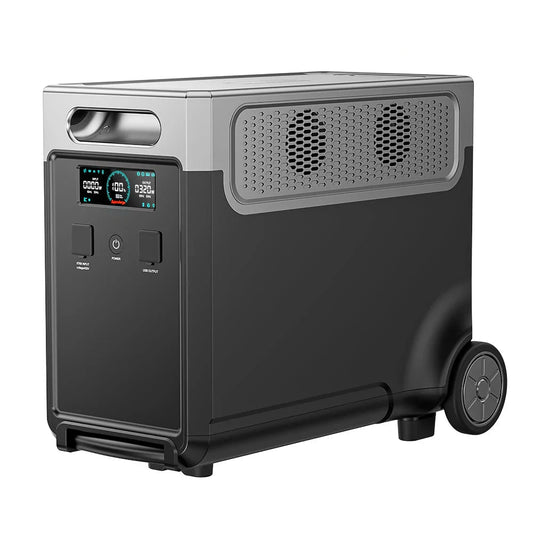
AFERIY P300 Portable Power Station: Best for Higher Loads and Longer Backup
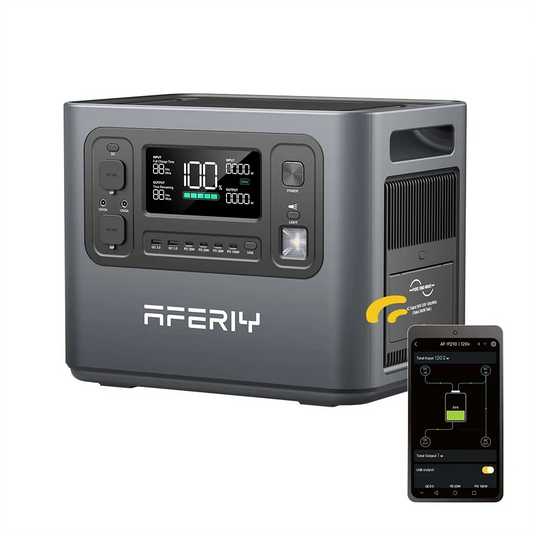
For households that need more output or want more room to expand, the AFERIY P300 Portable Power Station offers a larger starting point.
It provides 2,048Wh of capacity and 3,000W of AC output, with expandable capacity up to 10,240Wh. That additional storage can be useful when an outage lasts longer or when several essential appliances need to remain available without depleting the battery as quickly.
For example, a household might use the AFERIY P300 Portable Power Station to keep a refrigerator, networking equipment, lights, and other essential electronics operating while reserving additional capacity for appliances used only when necessary.

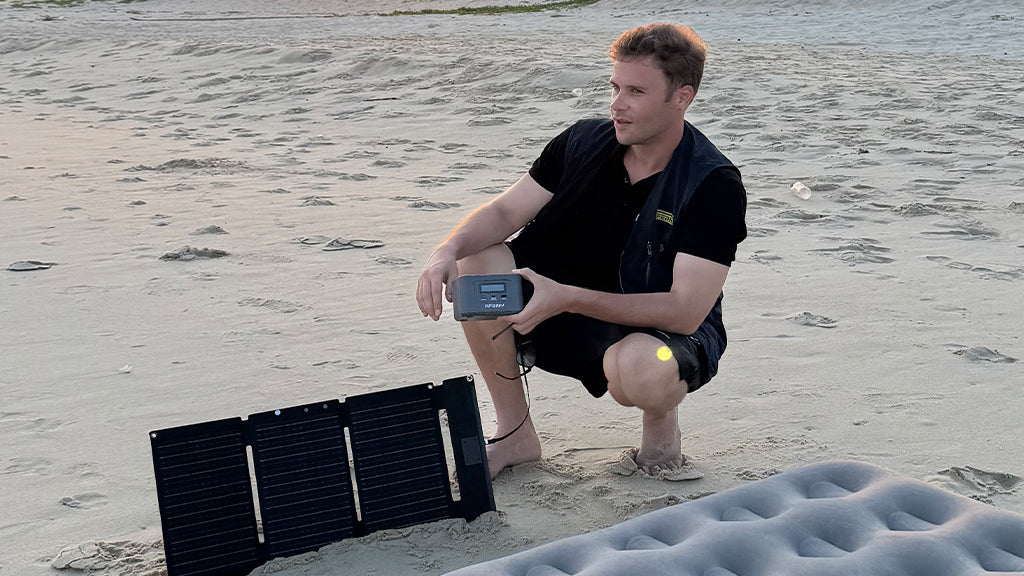
The system can charge from AC, solar, or a vehicle, so solar isn’t required for basic home‑backup use. It also supports up to 1,200W of solar input, giving homeowners another charging option if they later decide to add solar.
The AFERIY P180 Pro Portable Power Station is better suited to essential loads and portability, while the AFERIY P300 Portable Power Station provides more output and substantially more expansion capacity for larger backup requirements.
How to Choose a Home Battery Without Solar
Choosing a home battery without solar starts with the appliances you actually want to keep running, rather than simply choosing the largest battery available.
Check Battery Capacity
Start by listing the appliances you want to keep running during an outage and estimating how long you need them. A higher Wh or kWh rating provides more stored energy, but your actual runtime depends on how much power those appliances consume.
Check Power Output
Make sure the battery’s continuous output is high enough for the appliances you want to run. Appliances with motors or compressors may also have higher startup power than their normal operating consumption.
Consider Expandability
Expandable storage can be useful if your backup requirements may increase over time. You might start by backing up essential appliances and later decide that you want longer runtime or additional loads covered.
Think About How You Will Recharge It
Consider whether you’ll have another charging option if an outage lasts longer than expected. A system that supports solar or other charging methods gives you more flexibility than one that relies entirely on the grid.
FAQs
Can a home battery power a whole house without solar?
It can, but the answer depends on the system’s output, capacity, electrical configuration, and the loads in the home. Whole‑home backup generally requires substantially more capacity and output than backing up a few essential circuits.
How long can a home battery last without solar?
There is no single runtime for every home. It depends on the battery’s usable capacity and the power consumed by connected appliances. Using only essential loads can extend runtime considerably compared with running large heating, cooling, or cooking appliances.
Can I add solar panels to a home battery later?
In many cases, yes, provided the battery and inverter are compatible with solar charging. Starting with battery‑only backup can therefore be a practical option for homeowners who are not ready for solar but may want another charging source in the future.
Conclusion
You can use a home battery without solar, and it can be a practical backup option for households that want to protect essential appliances or manage electricity use. The main trade‑off is that the battery relies on stored energy and the grid for normal recharging, so prolonged outages can be more challenging.
The right setup depends on what you need to keep running, how long outages typically last, and how much capacity and output you need. For essential loads, a portable power station can provide flexible backup, while larger systems are better suited to more extensive home coverage.
 Free shipping from US local warehouse