












Best 3000W Portable Power Stations in 2026
A 3,000W portable power station can provide enough power for many of the appliances, tools, and electronics used at home, on the road, or outdoors. But with so many models offering different battery capacities, charging speeds, expansion options, and backup features, choosing the right one is not simply a matter of picking the highest wattage.
In this guide, we compare five popular options to help you find the best 3000‑watt power station for your needs. We look at output power, battery capacity, charging performance, portability, expandability, and backup capabilities, with options suited to home backup, RV travel, camping, and everyday power needs.

Best 3000W Portable Power Stations at a Glance
A 3,000W portable power station can handle many high‑demand appliances and tools, but output is only one part of the equation. Battery capacity, charging speed, solar input, expansion potential, and UPS performance can significantly affect how useful a model is for home backup, RVs, or outdoor use.
The table below highlights the key specifications of the five models compared in this article, making it easier to see their differences at a glance.
| Model | Rated Output | Battery Capacity | Max Solar Input | Max AC Charging | Expandable Capacity | UPS |
|---|---|---|---|---|---|---|
| Jackery Explorer 2000 Plus | 3,000W | 2,042.8Wh | 1,400W | 1,800W | Up to 12,000Wh | 20ms EPS |
| AFERIY Haven3000 P300 Portable Power Station | 3,000W | 2,048Wh | 1,200W | 1,800W | Up to 10,240Wh | <10ms |
| EcoFlow DELTA 3 Max Plus | 3,000W | 2,048Wh | 1,000W | 1,800W | Up to 10,240Wh | <10ms |
| BLUETTI AC300 + B300 | 3,000W | 3,072Wh | 2,400W | 3,000W | Up to 12,288Wh | 24/7 EPS |
| Anker SOLIX F3000 | 3,600W | 3,072Wh | 2,400W | 3,600W* | Up to 24,000Wh | 20ms |
Maximum AC charging depends on the charging configuration. Specifications may vary by configuration and market.
The comparison also shows why the best portable power station 3000W is not necessarily the one with the highest output. Battery size, recharge options, and expansion capacity can be just as important depending on how and where the power station will be used.
Top Picks for the Best Portable Power Station 3000W
Jackery Explorer 2000 Plus
The Jackery Explorer 2000 Plus delivers 3,000W of continuous AC output and up to 6,000W of peak power. It has a 2,042.8Wh LiFePO4 battery, supports up to 1,400W of DC input, and is rated for 4,000 cycles while retaining at least 70% of its original capacity. Weighing 61.5 pounds, it is designed for portable home backup as well as camping and RV use. Its expandable battery system also allows users to increase storage when more capacity is needed.

Pros
- 3,000W continuous AC output
- 6,000W peak power
- 2,042.8Wh LiFePO4 battery
- Up to 1,400W DC input
- 4,000‑cycle rating to at least 70% capacity
- Expandable battery capacity
Cons
- 61.5‑pound weight makes it less convenient to carry over long distances
- 1,400W DC input is below the maximum input offered by some models in this comparison
Best for: Users who want a proven 3,000W portable power station for home backup, camping, and RV use.
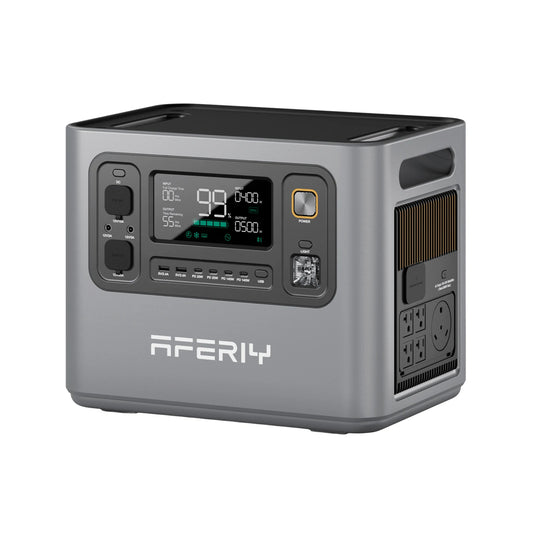
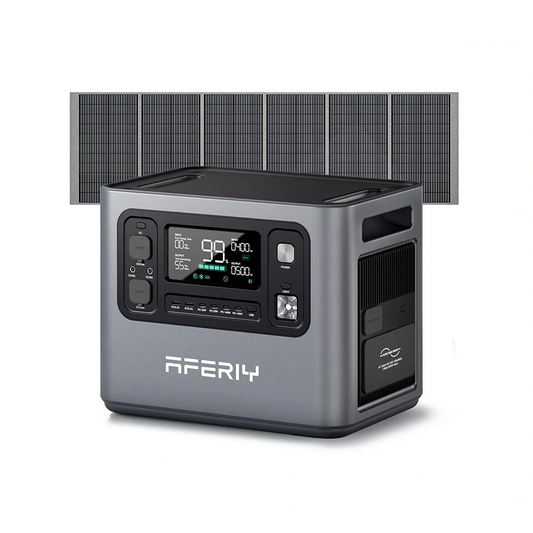
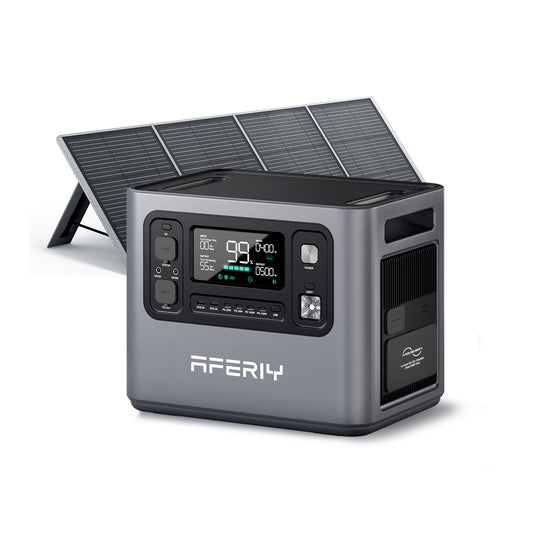
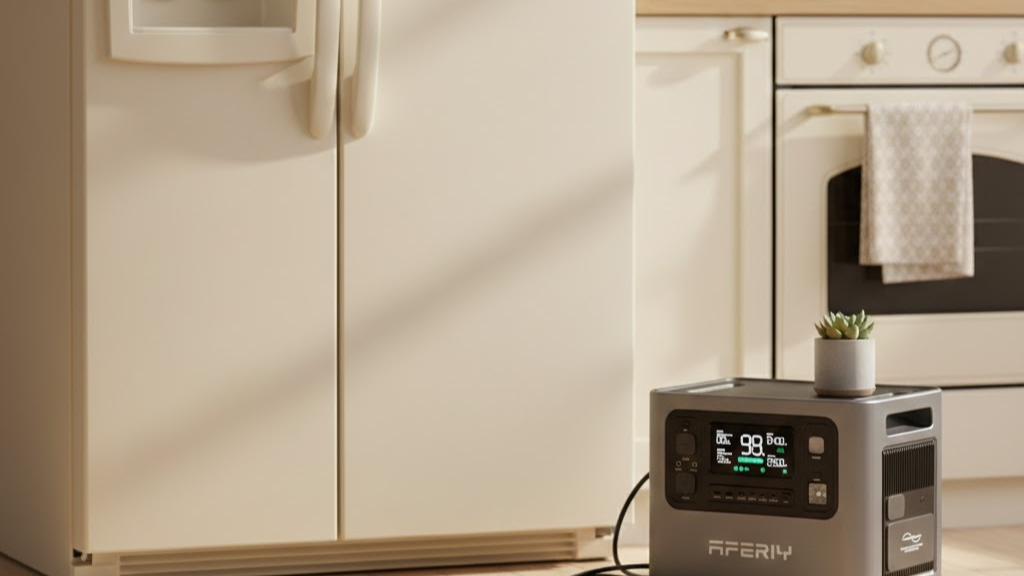
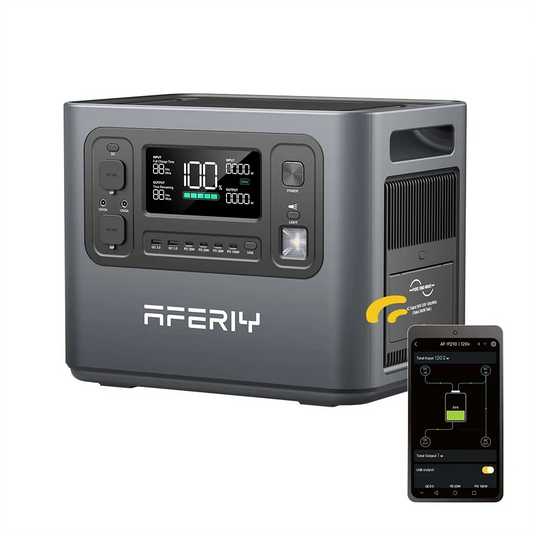
AFERIY Haven3000 P300 Portable Power Station
The AFERIY Haven3000 P300 Portable Power Station combines a 3,000W pure sine wave inverter with a 2,048Wh LiFePO4 battery. The system can expand to 10,240Wh with additional batteries and supports up to 1,800W AC charging and 1,200W solar input. Its UPS function provides a switchover time of less than 10ms. At 21.6kg (47.6 lb), the P300 offers a relatively manageable weight for a power station in the 3,000W class.

Pros
- 3,000W pure sine wave output
- 2,048Wh LiFePO4 battery
- Expandable up to 10,240Wh
- Up to 1,200W solar input
- Up to 1,800W AC charging
- Less‑than‑10ms UPS switchover
- 21.6kg (47.6 lb) weight
Cons
- 1,200W solar input is below that of some models in this comparison
- Maximum expandable capacity is lower than some larger modular systems
Best for: Users who want a balance of high output, portability, fast charging, and expandable battery capacity.
EcoFlow DELTA 3 Max Plus
The EcoFlow DELTA 3 Max Plus provides 3,000W of continuous AC output and up to 6,000W of surge power from a 2,048Wh LFP battery. Its X‑Boost technology can support certain appliances rated up to 3,800W, although this does not change the unit’s 3,000W continuous output rating. The U.S. model supports up to 1,000W of solar input and 1,800W AC charging, along with Wi‑Fi and Bluetooth connectivity and UPS switching in under 10ms.

Pros
- 3,000W continuous output
- 6,000W surge output
- 2,048Wh LFP battery
- X‑Boost supports certain loads up to 3,800W
- Up to 1,800W AC input
- Wi‑Fi and Bluetooth connectivity
- Less‑than‑10ms UPS
Cons
- 1,000W solar input is lower than the other models in this comparison
- X‑Boost does not provide 3,800W of continuous AC output
Best for: Users who prioritize fast charging, app‑based monitoring, and smart power management.
BLUETTI AC300 + B300
The BLUETTI AC300 + B300 uses a modular design, pairing the AC300’s 3,000W pure sine wave inverter with a B300 battery providing 3,072Wh of storage. It supports up to 2,400W of solar input and up to 3,000W of AC charging. With two or more B300 batteries, combined AC and solar input can reach 5,400W. The system can expand to 12,288Wh with four B300 batteries, and two AC300 units can be combined for 240V split‑phase operation.

Pros
- 3,000W pure sine wave output
- 3,072Wh starting capacity
- Up to 12,288Wh expandable capacity
- Up to 2,400W solar input
- Up to 3,000W AC charging
- Up to 5,400W combined AC and solar input
- 240V capability with two AC300 units
- 24/7 EPS home backup
Cons
- AC300 requires a compatible B300‑series battery
- Modular design is less convenient to move than an all‑in‑one power station
Best for: Home backup users who need more starting capacity, extensive battery expansion, and 240V capability.
Anker SOLIX F3000
The Anker SOLIX F3000 sits above the standard 3,000W category with 3,600W of continuous AC output and 3,072Wh of LFP battery capacity. It supports up to 2,400W of solar input and can expand to 24kWh. From a standard 120V outlet, AC charging is rated at up to 1,800W, while compatible charging configurations can provide up to 3,600W. The F3000 also supports 20ms UPS operation and 240V output when two units are combined.

Pros
- 3,600W continuous AC output
- 3,072Wh LFP battery
- Up to 2,400W solar input
- Expandable up to 24kWh
- Up to 3,600W AC charging with compatible charging configurations
- 20ms UPS
- 240V capability with two units
Cons
- 91.5‑pound weight makes it substantially heavier than the 2kWh‑class models
- Its 3,600W output may be more than some users need
Best for: Users who want more output, starting capacity, and expansion potential than a typical 3,000W portable power station provides.
How We Chose the Best 3000W Portable Power Stations
Output power was the first filter. A true 3,000W rating gives users enough continuous power for many demanding household appliances, while surge capacity matters when equipment such as refrigerators, pumps, or power tools starts up.
Battery capacity was the second major consideration. A 3,000W inverter does not mean a battery will deliver 3,000W for an hour. The inverter determines how much power can be supplied at one time, while watt‑hours determine how much stored energy is available. This is why a 3,072Wh system can provide noticeably longer runtime than a 2,048Wh model when powering the same load.
We also considered charging options. Solar input becomes important for camping and extended outages, while fast AC charging is more useful when the power station needs to be recharged quickly between uses.
Finally, we looked at expansion, UPS functionality, portability, and the intended use case. The best 3000‑watt power station for an RV owner may not be the same as the best option for home emergency backup. A lighter 2kWh model makes more sense for frequent travel, while a modular system with 3kWh or more of storage can be better for multi‑day outages.
FAQs
Is 3,000W enough for home backup?
For many essential loads, yes. A 3,000W power station can handle combinations of refrigerators, lights, TVs, computers, fans, kitchen appliances, and selected power tools, provided their combined running and startup requirements stay within the unit’s limits.
What should I look for in the best 3000w portable power station?
Look beyond the 3,000W number. Check battery capacity, surge output, solar input, AC charging speed, UPS performance, weight, expansion capability, and the type of outlets you actually need.
Is a 3,000W power station better than a 2,000W model?
Not necessarily. If your appliances never approach 2,000W, a smaller model may be lighter and easier to transport. The higher output becomes valuable when you need to operate several appliances together or handle equipment with high startup power.
Conclusion
The best portable power station 3000W depends largely on how the stored energy will be used. The Jackery Explorer 2000 Plus is a straightforward portable option, while the AFERIY P300 Portable Power Station combines 3,000W output with expandable 2,048Wh storage. EcoFlow’s DELTA 3 Max Plus emphasizes smart control and fast charging, BLUETTI AC300 is better suited to modular home backup, and Anker’s F3000 steps above the category with 3,600W output and 3,072Wh capacity.
For most buyers, the important comparison is not simply which model has the highest wattage. It is whether the combination of output, battery capacity, charging speed, portability, and expansion matches the appliances and backup duration they actually need.
 Free shipping from US local warehouse