












What Can a 3000‑Watt Generator Run?
A 3000‑watt generator is a practical middle ground for many homeowners, RV owners, campers, and DIY users. It can provide enough power for essential appliances during an outage, several common kitchen appliances, selected air conditioners, and many power tools. The key is knowing how much power your equipment actually needs and which devices require extra power when they start.
If you’re wondering what can a 3000‑watt generator run, the answer depends on more than the number printed on the generator. Running watts, starting watts, and the combination of appliances you use at the same time all affect what the generator can handle.

Understanding 3000‑Watt Generator Power Ratings
Running Watts vs. Starting Watts
Running watts are the amount of power an appliance needs while it is operating normally. This is the figure you need to consider when adding several appliances together. Starting watts, sometimes called surge watts, are the additional power required by some equipment for a short period when it starts.
The difference is especially important with refrigerators, air conditioners, pumps, compressors, and power tools because their motors can draw significantly more power during startup. A refrigerator, for example, may use several hundred watts during normal operation but require considerably more for a brief moment when its compressor starts. The exact figures vary by model, so the manufacturer’s specifications should always take priority over a general wattage estimate.
For a 3000‑watt generator, you therefore need to consider both the total running load and the highest starting demand. A group of appliances that appears to be below 3000W on paper can still overload a generator if a motor‑driven appliance starts while other high‑demand equipment is already operating.
Does 3000W Mean 3000W of Continuous Power?
Not necessarily. Generator specifications can include both a rated or continuous output and a higher peak or starting output. When comparing models, check which figure the manufacturer uses when describing the generator as “3000 watts.”
For example, a model with a 3000W rated output is designed to continuously provide up to 3000W under its specified operating conditions. A generator advertised with 3000W as its peak output may have a lower continuous rating.
This distinction is particularly important when you are choosing a generator for refrigerators, air conditioners, pumps, or power tools. The continuous rating determines how much load the generator can support during normal operation, while the peak capability helps it handle short startup surges.
What Can a 3000‑Watt Generator Run?
A 3000‑watt generator can power a wide range of household appliances, RV equipment, camping devices, and power tools when the total load stays within its rated output. The important thing is to look at both running watts and starting watts, especially when several appliances need to operate at the same time.
Essential Home Appliances
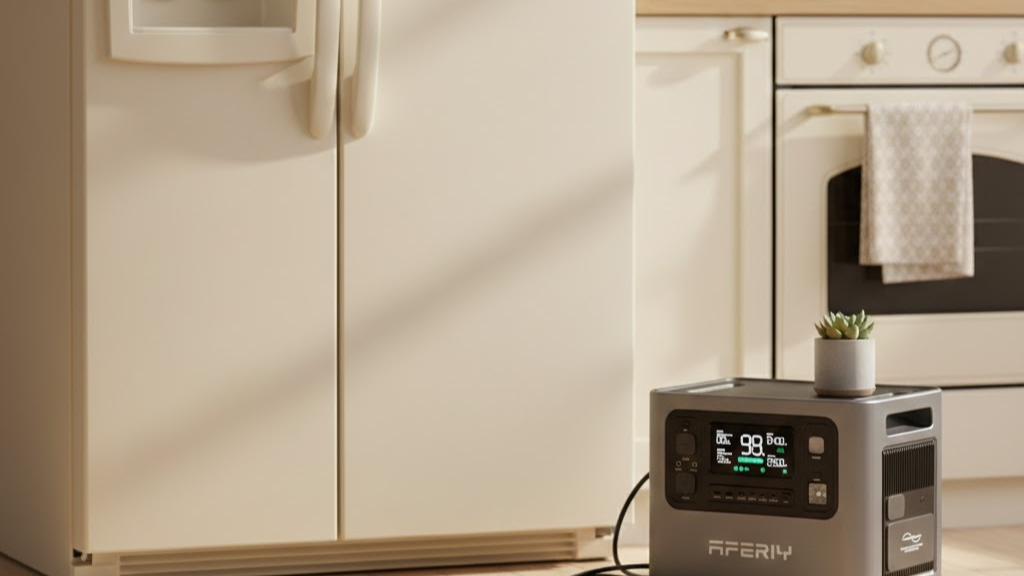
For basic home backup, a 3000‑watt generator can provide enough power for many essential appliances and electronics. A refrigerator or freezer can run alongside LED lighting, a television, Wi‑Fi router, laptop, and phone chargers without necessarily using the generator’s full capacity.
Refrigerators deserve extra attention because their compressors require additional power when starting. A typical refrigerator may use several hundred watts during normal operation, while its startup demand can be considerably higher. The exact requirement depends on the appliance, so checking the manufacturer’s specifications is more reliable than relying on a general wattage estimate.
For a power outage, this makes a 3000‑watt generator particularly useful when the goal is to keep essential systems operating rather than power every appliance in the home simultaneously.
Kitchen Appliances
Kitchen appliances can use much more power than everyday electronics because many rely on heating elements. A microwave may require around 1,000 watts or more, while coffee makers, toasters, electric kettles, and air fryers can also consume several hundred to more than 1,000 watts depending on the model.
A 3000‑watt generator can therefore run many kitchen appliances individually while still supporting smaller loads such as a refrigerator and lights. The challenge comes when several high‑power appliances are used simultaneously. Running a microwave while a coffee maker and electric kettle are also operating can quickly use most of the generator’s available output.
For this reason, users often need to manage when high‑wattage appliances operate. Using one major kitchen appliance at a time can leave more capacity available for refrigerators, lighting, and other essential equipment.
Air Conditioners and Heating
Air conditioners require more careful planning because their compressors can draw significantly more power when they start. A smaller window or portable air conditioner may fit within the capabilities of a 3000‑watt generator, but the unit’s running and starting requirements need to be checked first.
RV air conditioners provide a useful example. A smaller 13,500 BTU unit may require roughly 1,500 to 1,800 watts while operating, while its startup demand can be considerably higher. Larger 15,000 BTU units can require even more power, which leaves less capacity for other appliances.
Heating equipment can create a similar problem. A typical 1,500‑watt electric space heater alone can use half of a 3000‑watt generator’s rated output. If a refrigerator, microwave, or other high‑demand appliance is already running, there may not be enough remaining capacity to operate the heater safely.
RV and Camping Appliances
A 3000‑watt generator can cover many of the appliances and electronics commonly used in an RV trip or at a campsite. An RV refrigerator typically requires a few hundred watts, while a TV, LED lighting, phone chargers, and other small electronics add relatively little to the overall load. A microwave can use around 750–1,500W, while a coffee maker may require roughly 800–1,200W, so a 3000‑watt generator can generally handle these types of appliances with proper load management.
Air conditioning is usually the biggest consideration in an RV. A 13,500‑BTU RV air conditioner may use around 1,500–2,000W while running, but its startup demand can reach roughly 2,800–3,500W. This means a 3000‑watt generator may be able to run the air conditioner, but there may be little capacity left for other high‑power appliances, particularly when the compressor starts. A microwave or coffee maker may need to be used separately rather than at the same time.
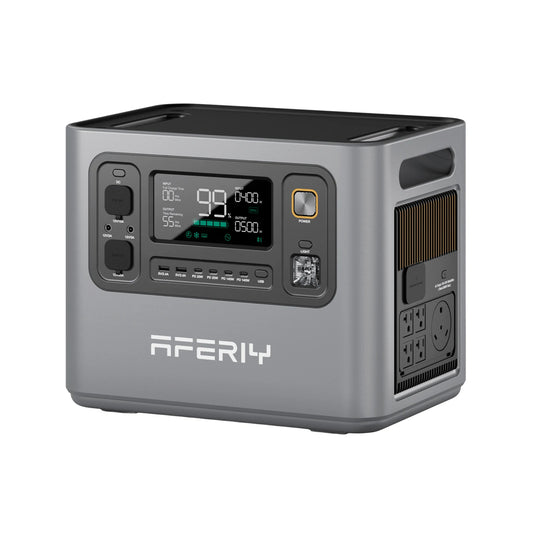
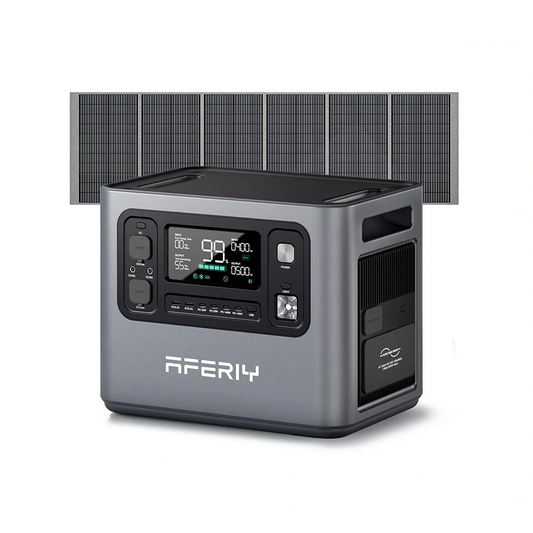
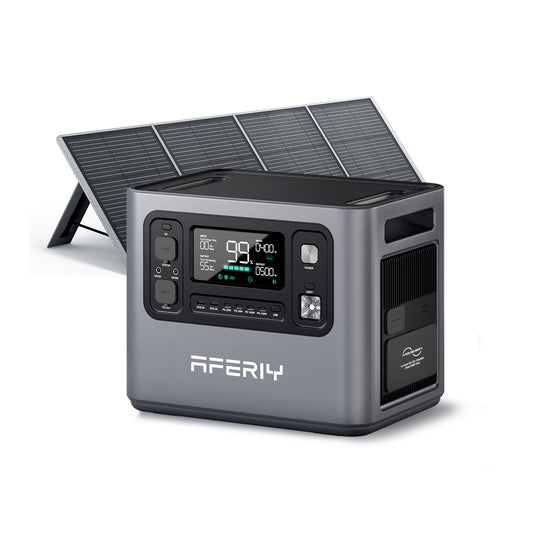
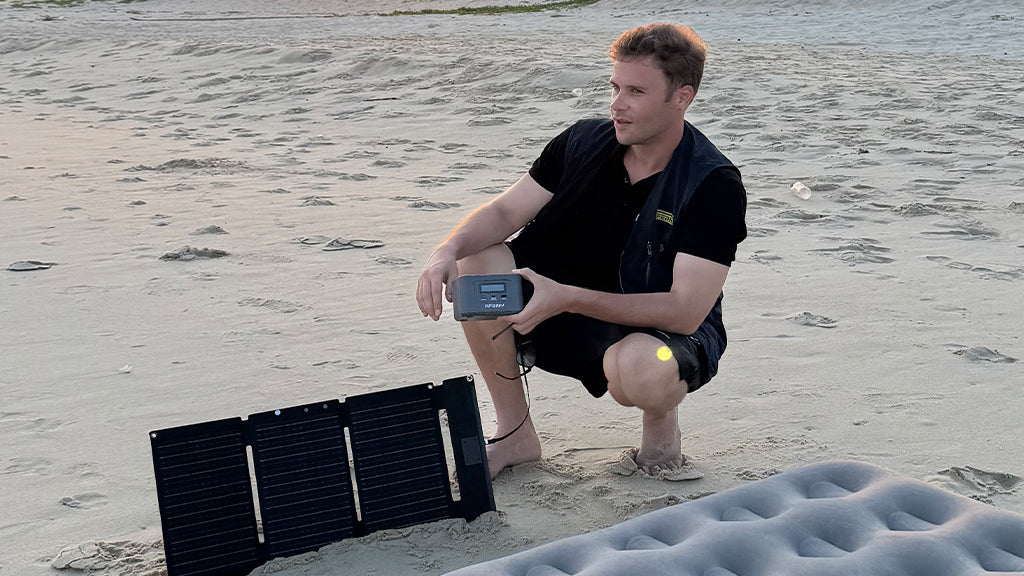
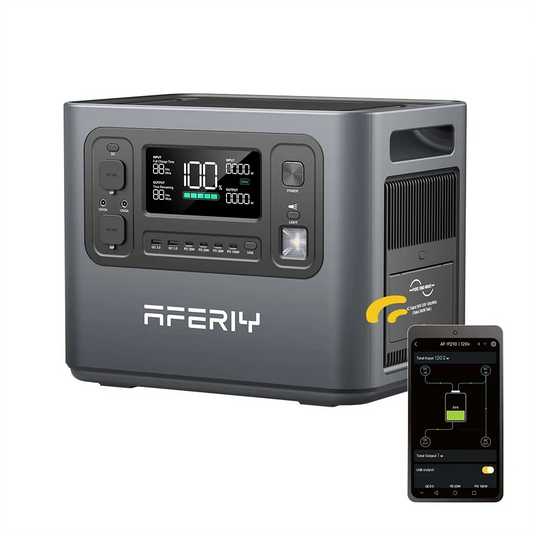
For RV users who need this level of power but want to avoid engine noise, exhaust, and carrying fuel, a battery‑powered system can be a practical alternative. The AFERIY P300 Portable Power Station provides 3,000W of rated output and 2,048Wh of battery capacity, along with a dedicated NEMA TT‑30 outlet for compatible RV equipment. It can also be recharged through AC power, solar, or a vehicle, making it suitable for RV trips where flexible charging is important.

Power Tools
A 3000‑watt generator can also power many common DIY and jobsite tools, but motor‑driven equipment requires attention to starting watts. Drills, circular saws, reciprocating saws, and similar tools may operate within a 3000‑watt generator’s capacity, but their startup demand can be considerably higher than their normal operating power.
A single power tool may work comfortably within the available output, while operating two demanding tools simultaneously can push the total load much closer to the generator’s limit. The same issue occurs when a power tool is started while another motor‑driven appliance, such as a refrigerator or compressor, is already operating.
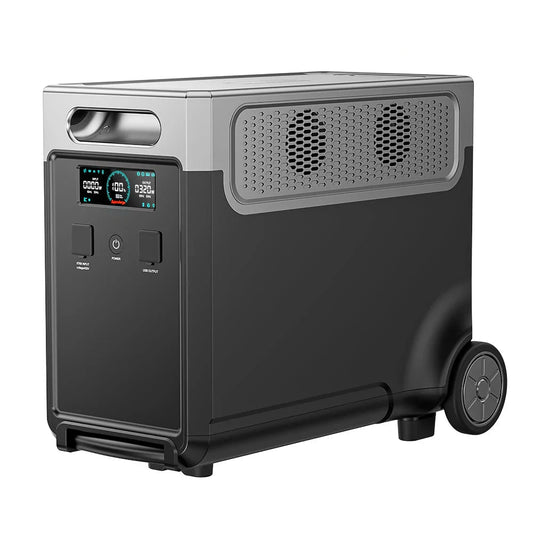
If your work routinely involves several high‑demand tools or equipment with substantial startup surges, a generator with additional output capacity may be a better choice. The AFERIY P310 Portable Power Station, for example, provides 3600W of rated output and 3840Wh of battery capacity, giving users more power headroom than a 3000W‑class system.

Ultimately, what can you run on a 3000‑watt generator depends on the combination of equipment rather than any single appliance. Adding up running watts, allowing for starting surges, and avoiding simultaneous high‑power loads are the three most important considerations when determining whether a 3000‑watt system is suitable for your needs.
What Can a 3000‑Watt Generator NOT Run?
A 3000‑watt generator is generally not intended to power an entire house with every major electrical appliance operating at once. Large central air‑conditioning systems, electric water heaters, electric dryers, large electric ranges, heavy‑duty welders, and some large pumps can require more power than a 3000W unit can continuously provide.
Even when an appliance’s running wattage appears close to the generator’s limit, its startup demand can make the combination impractical. For example, an air conditioner may operate within the available output once it is running but require a much higher surge when its compressor starts.
The same limitation applies when several heating appliances are used together. A microwave, electric kettle, coffee maker, and space heater can consume most of a 3000W generator’s available output before a refrigerator or other motor‑driven appliance is taken into account.
How to Use a 3000‑Watt Generator Safely
Safety depends heavily on the type of generator. Fuel‑powered portable generators should never be operated inside a home, garage, basement, shed, or other enclosed or partially enclosed space because their exhaust can contain deadly carbon monoxide. The U.S. Consumer Product Safety Commission recommends operating portable generators outdoors at least 20 feet from the house and directing exhaust away from windows, doors, and vents.
Overloading is another important concern. Start with the appliances you actually need, check their running and starting requirements, and avoid adding high‑power equipment when the generator is already close to its rated output. Extension cords should also be properly rated for the connected load and intended outdoor use.
Battery‑powered systems have different operating considerations, but their rated output and connected‑load limits still matter. Whether you use a fuel generator or a rechargeable power station, understanding the equipment’s specifications is essential before connecting demanding appliances.
Conclusion
A 3000‑watt generator can handle many everyday loads for home backup, RV travel, camping, and DIY work, including refrigerators, electronics, kitchen appliances, selected air conditioners, and power tools. The key is to consider both running watts and starting watts when deciding which appliances can operate together.
If you’re asking, what can you run on a 3000‑watt generator, start with the appliances you need most and calculate their combined power requirements. For users looking for a battery‑powered alternative in this range, the AFERIY P300 delivers 3,000W of rated output and 2,048Wh of capacity, with expandable storage up to 10,240Wh.
Ultimately, choosing the right system comes down to the power your appliances require and how long you need to keep them running.
 Free shipping from US local warehouse