











What Is Plug-In Solar and How Does It Work?
Solar power is no longer limited to large rooftop systems. Plug-in solar offers a smaller and more flexible way to generate electricity from sunlight, making it an option for homes, apartments, balconies, patios, and other spaces with good sun exposure. But what is plug-in solar, and how does it work? This guide explains how plug-in solar works, what equipment it uses, where it can be used, and what to consider before choosing a system.

What Is Plug-In Solar?
Plug-in solar, sometimes called balcony solar or plug-and-play solar, is a compact solar setup that can connect to a suitable household circuit rather than requiring a conventional rooftop installation. A typical system may include one or more solar panels, a microinverter, mounting hardware, and the necessary cables and connection equipment.
The basic idea is straightforward: the panels generate electricity from sunlight, and that electricity is converted into the type of AC power used by household appliances. When the system is producing electricity while your home is consuming power, the solar generation can offset some of the electricity you would otherwise draw from the utility.
For someone living in an apartment, for example, a sunny balcony or patio may provide a practical location for a small solar setup. A homeowner with a shaded or unsuitable roof may also consider a smaller ground-, wall-, or fence-mounted system where permitted.
Plug-in solar is different from a traditional rooftop solar installation in both scale and connection method. Rooftop systems are generally designed to produce much more electricity and are connected as part of the home’s electrical system. Plug-in systems are smaller and designed around simpler connections, but they also have more limited power output.
How Does Plug-In Solar Work?
So, how does plug in solar work once sunlight reaches the panels? The process can be broken down into a few basic steps.
1. Solar Panels Generate DC Electricity
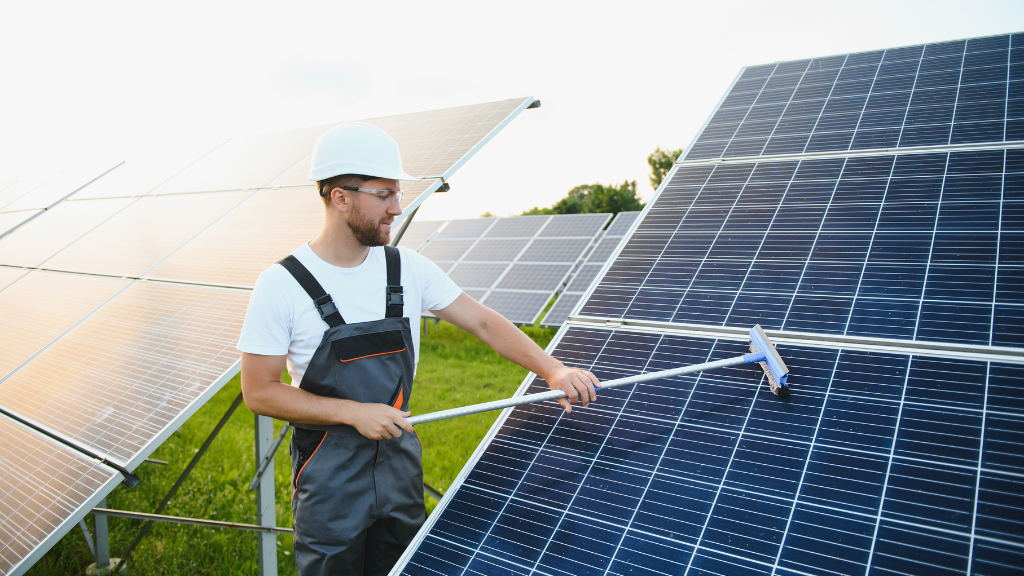
Solar panels use photovoltaic cells to convert sunlight into direct current (DC) electricity. The amount of electricity produced changes throughout the day depending on sunlight, shading, panel orientation, weather, and other conditions.
2. A Microinverter Converts DC to AC
Household appliances in the U.S. use alternating current (AC), so the electricity produced by the panels cannot simply be sent directly to a household outlet. A microinverter converts the panels’ DC electricity into AC electricity and synchronizes its output with the home’s electrical system.
This component is one of the most important parts of a plug-in solar setup because it allows the solar energy to be used alongside electricity supplied by the utility.
3. Solar Electricity Enters the Home
The converted AC electricity is delivered through the system’s appropriate connection to the home’s electrical circuit. From there, the electricity becomes available to loads that are operating in the home.
For example, imagine that your refrigerator, Wi-Fi router, lights, and other electronics are using electricity during a sunny afternoon. If the solar system is producing power at the same time, that generation can offset part of the home’s electricity demand.
4. The Grid Supplies Any Remaining Power
Plug-in solar does not need to produce enough electricity to run everything in the house.
If your home is using more electricity than the solar system is producing, the utility grid supplies the difference. If the solar system is producing more than your home is using, what happens to the excess depends on the system configuration and applicable utility rules.
One important point is that a standard grid-connected plug-in solar system should not be treated as a backup generator. Grid-connected inverters are generally designed to stop supplying power when the utility grid goes down, preventing unsafe back feeding during an outage.
What Are the Main Components of a Plug-In Solar System?
Although systems vary, most plug-in solar setups revolve around a few key components:
| Component | Main Function |
|---|---|
| Solar panels | Convert sunlight into DC electricity |
| Microinverter | Converts DC electricity into AC power |
| Mounting system | Holds the panels in a suitable position |
| Cables and connection equipment | Connect the system components and home |
| Optional battery | Stores solar energy for later use |
The solar panels determine how much sunlight the system can capture, while the inverter determines how that electricity is converted for household use. Mounting also matters more than it may seem. A panel placed in heavy shade may produce far less electricity than the same panel in an unobstructed, well-oriented location.
A battery is optional rather than a required part of a basic plug-in solar system. Adding storage changes how the system can be used because solar energy can be saved and used later instead of being limited to the hours when the panels are producing electricity.
Where Can You Use Plug-In Solar?
Plug-in solar is particularly useful where traditional rooftop solar is difficult or impractical.
Balconies: Apartment and condo residents may have access to a sunny balcony even when they cannot install a rooftop system.
Patios and decks: Homeowners can sometimes use outdoor areas with good sun exposure for a small solar setup.
Yards and fences: Ground-mounted or fence-mounted panels can work where there is sufficient sunlight and the installation is allowed.
The best location is not necessarily the most convenient one. Look for an area with several hours of direct sunlight and minimal shading from trees, neighboring buildings, railings, or other structures. You should also consider how far the panels are from the appropriate electrical connection and whether the mounting method is permitted on your property.
What Are the Benefits and Limitations of Plug-In Solar?
Plug-in solar’s biggest advantage is accessibility. A smaller system can make solar power an option for people who may not be ready—or able—to install a full rooftop system.
It can also require less structural work and may be easier to relocate. This makes it particularly attractive to renters and apartment residents. Instead of committing to a large home improvement project, users can start with a smaller amount of solar generation.
However, the smaller size is also the main limitation.
A plug-in system generally produces much less electricity than a full residential rooftop system. It is better suited to offsetting part of daytime electricity consumption than powering an entire home. Solar production also varies with weather and sunlight, so output will not remain constant throughout the day.
Another important limitation is energy storage. Without a battery, electricity generated during the day is generally used as it is produced. If your main goal is to keep a refrigerator, medical equipment, communications equipment, or other essential devices running during a blackout, a battery-based backup system may be more appropriate.
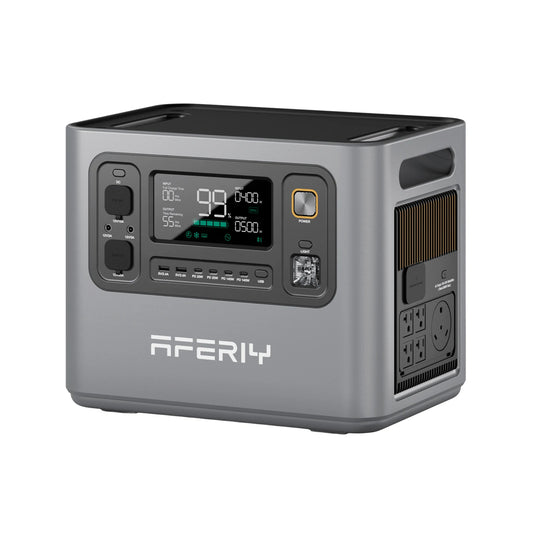
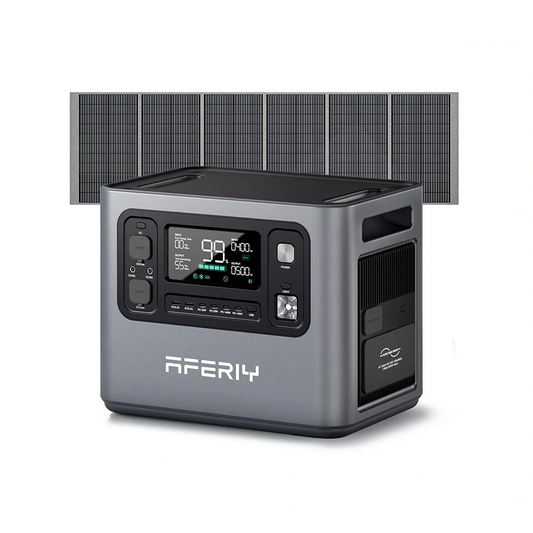
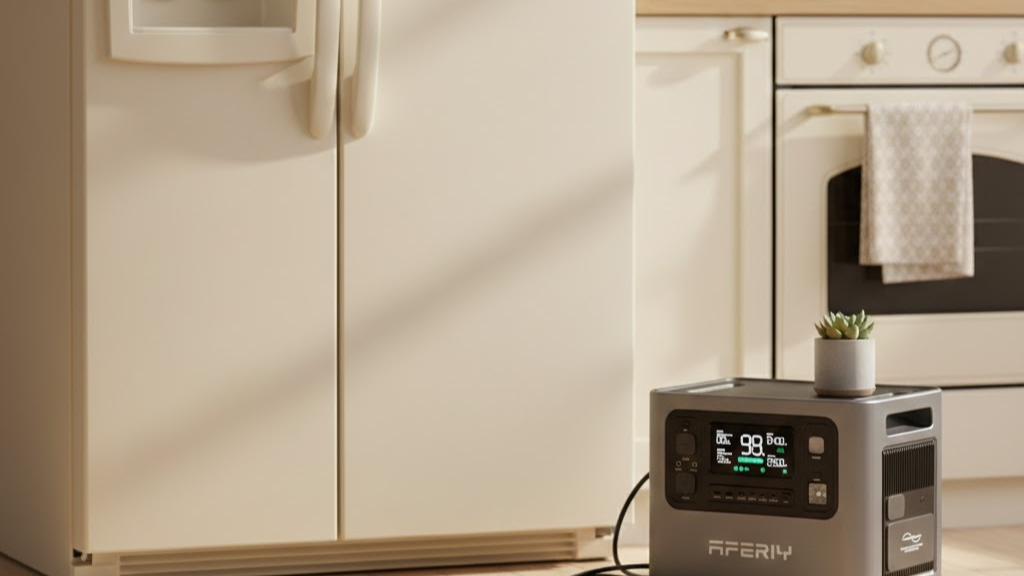
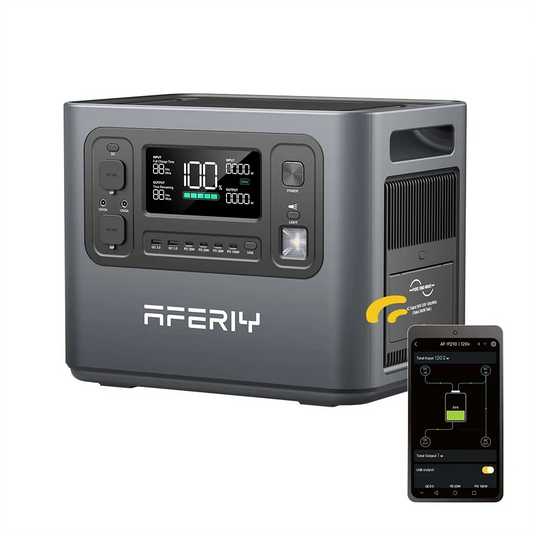
For example, a portable power station such as the AFERIY P300 Portable Power Station can store energy rather than requiring it to be consumed at the moment it is generated. The P300 has a 2,048Wh battery capacity, 3,000W AC output, and supports up to 1,200W of solar input. That makes this type of system more relevant for situations where stored solar energy is needed later, such as overnight use, camping, or home backup.

Is Plug-In Solar Legal and Safe in the U.S.?
Is plug-in solar legal in the U.S.? It depends on where you live. As of 2026, Utah, Colorado, Connecticut, Maine, Maryland, New Hampshire, Vermont, and Virginia have passed legislation enabling plug-in solar, with specific requirements for eligible systems.
Rules can still vary by state, utility, property, and system. If your state is not on this list, plug-in solar may be subject to existing permitting or interconnection requirements rather than being automatically prohibited. Check local requirements before connecting a grid-tied system.
Safety is also important. Use equipment designed for plug-in solar, follow the manufacturer’s instructions, and make sure the electrical connection and circuit are suitable for the system. Avoid improvised wiring or modifications that could bypass normal electrical protections.
Plug-In Solar vs. Rooftop Solar vs. Solar Generator
Plug-in solar, rooftop solar, and solar generators all use solar energy, but they serve different purposes. The biggest difference is whether solar power is used directly, integrated into a home’s electrical system, or stored in a battery for later use.
| Feature | Plug-In Solar | Rooftop Solar | Solar Generator |
|---|---|---|---|
| Main purpose | Offset daytime electricity use | Generate household solar power | Generate and store solar energy |
| Roof required | No | Usually | No |
| Battery required | No | No | Yes |
| Backup during outage | Not by itself | Not automatically | Yes, depending on setup |
| Portability | Relatively high | Low | High |
| Best suited for | Small-scale solar generation | Larger residential energy needs | Backup and portable power |
Plug-in solar is mainly intended to supplement your home’s electricity during the day. It can be useful when you want a smaller solar setup without installing a full rooftop system.
Rooftop solar is a larger, more permanent solution designed to generate more electricity for a home. It generally makes more sense when you own the property and want solar to play a larger role in your household energy supply.
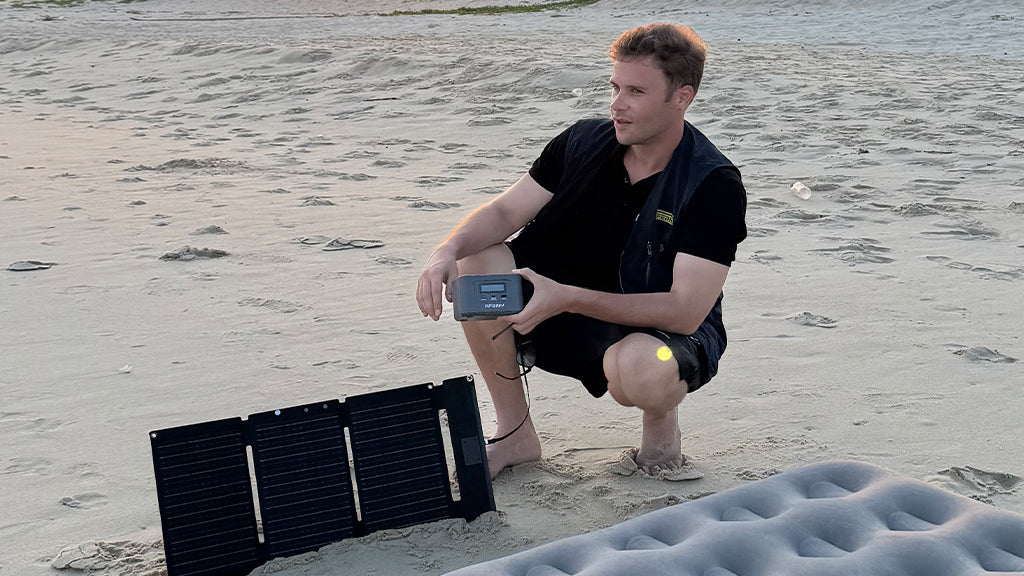
A solar generator takes a different approach by combining solar panels with a portable power station. Instead of using solar electricity only as it is generated, the battery stores energy for later use. This makes it useful for backup power, outdoor activities, and situations where electricity is needed after the sun goes down.
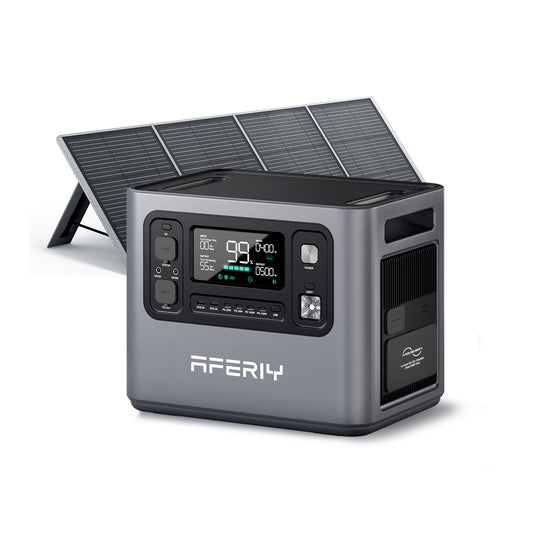
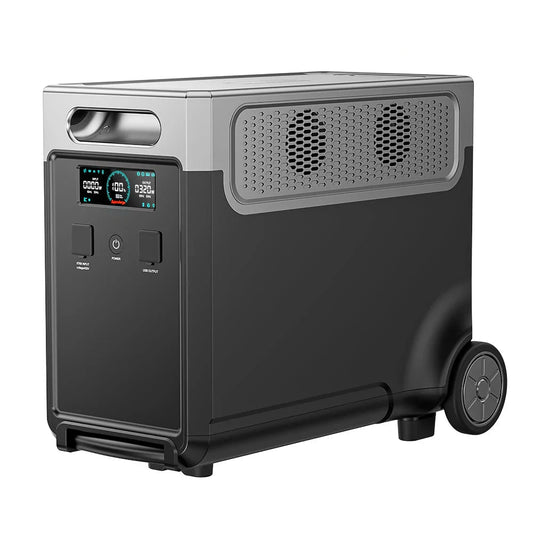
For example, AFERIY P180 Pro Solar Generator Kit combines the P180 Pro portable power station with compatible solar panels. The power station provides 1,800W of AC output and 1,024Wh of battery capacity, with expansion options up to 5,120Wh. It can be recharged through solar power and used later when the panels are no longer producing electricity.

The best option depends on what you need from solar power. Plug-in solar focuses on daytime energy use, rooftop solar focuses on larger-scale home generation, while a solar generator adds battery storage and portability.
FAQs
Can you plug solar panels directly into a wall outlet?
A purpose-built plug-in solar system may be designed to connect to an appropriate household circuit, but that does not mean any solar panel can simply be plugged into a wall outlet. The inverter, connection method, electrical circuit, and local requirements all matter.
Does plug-in solar work during a power outage?
A typical grid-connected plug-in solar system does not provide power during a grid outage. Its inverter is designed to shut down when utility power is unavailable. A battery-based backup system is a different configuration.
Is plug-in solar worth it for an apartment?
It can be useful for apartment or condo residents who have a suitable sunny space and are allowed to install the equipment. However, the relatively small system size means it should be viewed as a way to offset some electricity use rather than replace grid power completely.
Does plug-in solar need a battery?
No. A basic plug-in solar system can operate without battery storage. A battery becomes useful when you want to save solar energy for nighttime use or backup power.
How much electricity can plug-in solar produce?
There is no single output figure for every system. Production depends on panel wattage, sunlight, shading, orientation, weather, and the system’s inverter and connection limits. A small system will generally produce much less electricity than a full rooftop installation.
Conclusion
Plug-in solar is a small-scale solar system that generates electricity from sunlight and supplies it to a home through an appropriate electrical connection. Its basic operation is simple: solar panels produce DC electricity, a microinverter converts it to AC power, and the system helps offset electricity drawn from the grid. For U.S. households considering plug-in solar, understanding its capabilities, limitations, and local requirements is key to deciding whether this type of solar system fits their needs.
 Free shipping from US local warehouse