











Balcony Solar: A Complete Guide for Beginners
For many Americans, solar power means rooftop panels and a larger installation. But renters, apartment residents, and homeowners without suitable roof space may not have that option. Balcony solar offers a smaller alternative, using compact panels in spaces such as balconies, patios, or decks. It can provide some of the benefits of solar without a full rooftop system. This guide covers what balcony solar is, how it works, what you need, how much it can generate, and whether it makes sense for your home.

What Is Balcony Solar and How Does It Work?
So, what is balcony solar? It is a small solar power system designed for balconies, patios, decks, and other limited outdoor spaces. Unlike a conventional rooftop system, it is designed to work with a home’s existing electrical system and can be used on a much smaller scale.
So, how does balcony solar work? Sunlight is converted into electricity by the solar system, which is then converted into the type of electricity used by household appliances. The power enters the home’s electrical circuit and helps meet the electricity demand at that moment, reducing how much power needs to come from the utility grid. If the home needs more electricity than the solar system is producing, the grid supplies the difference. For example, on a sunny afternoon, solar power can help cover the electricity being used by a refrigerator, router, lights, or computer. Without battery storage, the system mainly provides power while it is generating electricity. With compatible storage, unused solar energy can be saved for later use.
What Do You Need for a Balcony Solar System?
A basic balcony solar system typically needs solar panels, a microinverter, secure mounting, and a suitable electrical connection.
Solar Panels
Solar panels capture sunlight and determine how much electricity the system can produce. For a balcony, available space and sunlight are just as important as panel wattage. Shading from nearby buildings, trees, or railings can significantly reduce production.
Microinverter
The microinverter converts the panels’ DC electricity into AC electricity that household appliances can use. For a grid-connected system, the equipment should meet the applicable safety and certification requirements in your area.
Mounting Hardware
Panels need secure mounting that can withstand outdoor conditions such as wind and rain. The mounting method should be suitable for the balcony, deck, wall, or other structure where the panels are installed.
Electrical Connection
Plug-in solar sends electricity into a home’s electrical circuit, so the connection must meet applicable electrical and utility requirements. A standard household outlet does not automatically mean that a plug-in solar system can be connected safely or legally.
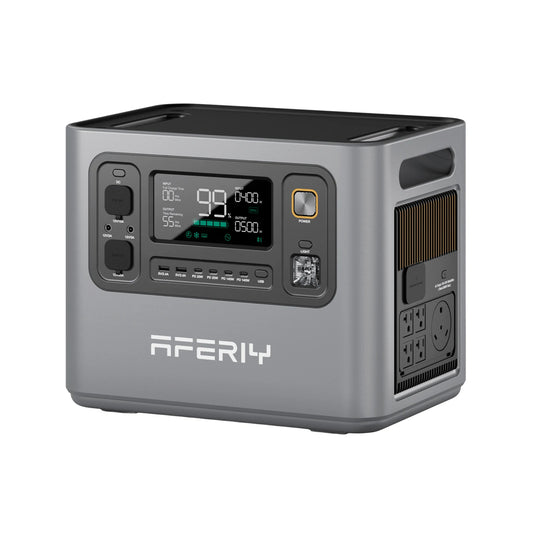
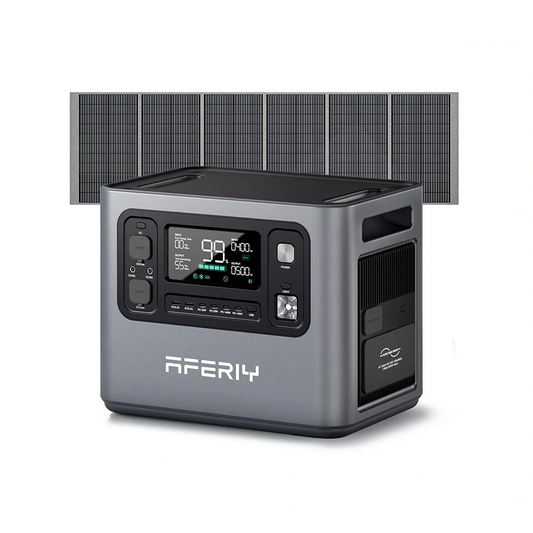
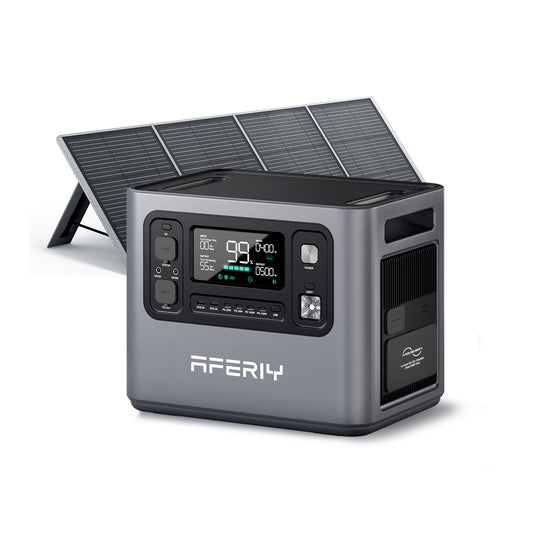
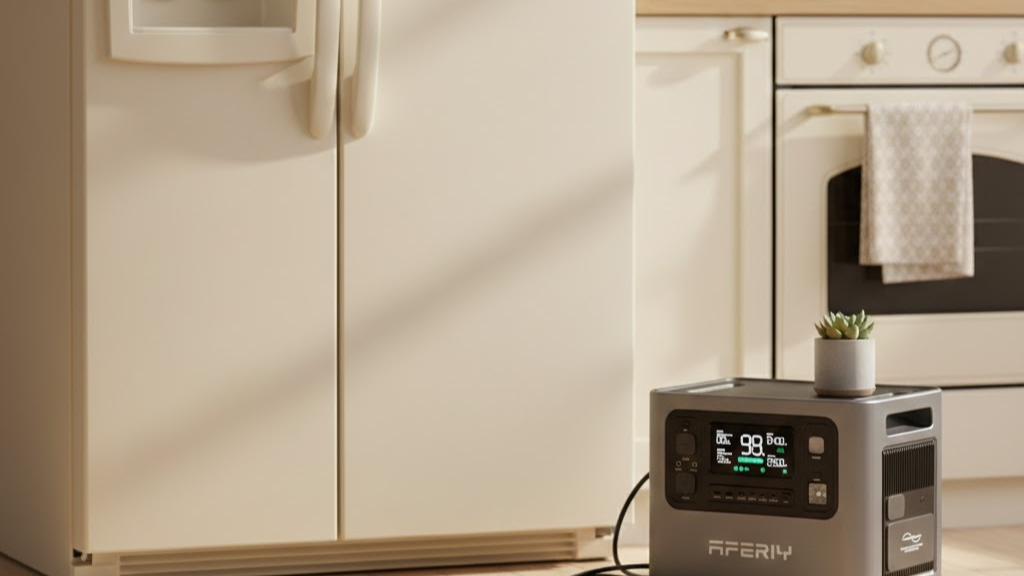
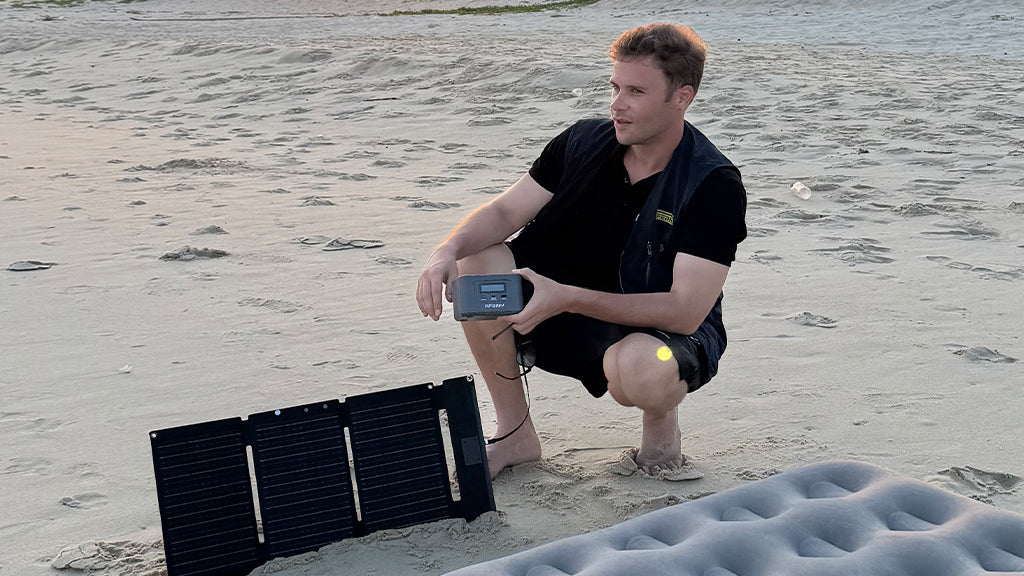
If your property does not allow this type of installation or you do not have a suitable electrical setup, a solar generator offers a different approach. Instead of feeding electricity into your home’s wiring, it stores solar energy in a portable battery that can power your devices directly. For example, the AFERIY Nomad1800 P180 Solar Generator Kit combines a 1,024Wh portable power station with solar charging of up to 500W. It can be useful when you want to collect solar energy and use it later without connecting the system to your home’s electrical circuit. This is a different setup from plug-in balcony solar: the panels charge the power station, and the stored energy is then used through its outlets or USB ports.

Is Balcony Solar Legal and Safe in the US?
Balcony solar is not governed by one nationwide rule in the United States. As of September 2026, Utah, Maine, Virginia, Colorado, Maryland, Vermont, New Hampshire, and Connecticut have passed legislation addressing plug-in solar, with different effective dates and system requirements. New Jersey has also passed legislation, with key provisions taking effect in 2027. Because the rules vary by state, a system that is permitted in one state may not yet be available under the same conditions in another. Before installing one, check your state’s current requirements, utility rules, and any landlord, HOA, or local building restrictions.
Safety is equally important. Use properly certified equipment, follow the manufacturer’s installation instructions, and make sure panels and cables are securely installed and protected from weather or physical damage. UL released UL 3700 in December 2025 as a certification standard for plug-in photovoltaic systems. For renters, balcony solar can provide an alternative to conventional rooftop solar, but landlord permission and local requirements may still apply, particularly if the installation involves changes to the building’s electrical wiring.
How Much Energy Can Balcony Solar Generate?
There is no single number for how much electricity a balcony solar system can produce. Most plug-in systems are in the 400–800W range, and an 800W system may generate roughly 70–110 kWh per month, depending on its location and sunlight exposure. This is an estimate, not a guaranteed output. An 800W system does not produce 800W continuously. Actual output varies with sunlight, weather, panel orientation and tilt, shading, and system losses. Two balconies with the same system can therefore produce very different amounts of electricity.
How much of that electricity you use also matters. Daytime loads such as a refrigerator, computer, or air conditioner can use solar power as it is generated, while battery storage can shift unused energy to the evening.
How Much Does Balcony Solar Cost and Save?
Cost varies by system size, equipment, mounting, and local installation requirements. Current estimates for many 400–800W plug-in solar systems are around $500–$1,500, while EnergySage estimates potential electricity savings of roughly $15–$50 per month. Actual savings depend on sunlight, electricity rates, system output, and how much electricity you use during the day. A sunny balcony with high electricity rates and substantial daytime electricity use may provide greater savings than a shaded balcony with lower electricity rates. Installation and compliance costs should also be considered when estimating the overall value of a system.
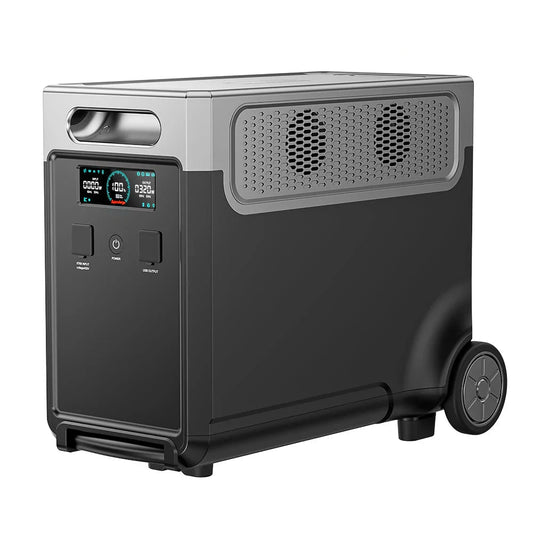
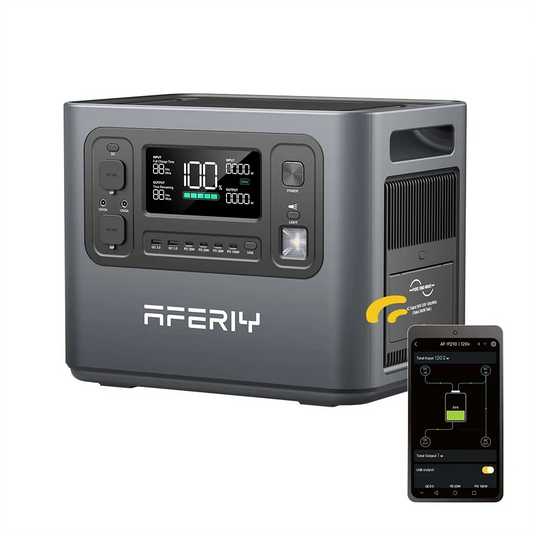
It is also important to distinguish solar generation from energy storage. Balcony solar mainly produces electricity while the sun is available, while a battery stores energy for later use. If you also want backup power after sunset or during an outage, a portable power station can provide more flexibility. For example, the AFERIY P300 Portable Power Station provides 2,048Wh of capacity, 3,000W of AC output, and up to 1,200W of solar input, with expandable capacity up to 10,240Wh. This makes it more suitable for situations where solar energy needs to be stored for longer periods or used to power multiple essential appliances during an outage. A portable power station works differently from plug-in balcony solar: solar panels charge the battery, which then powers your devices. A balcony microinverter should not be connected to a power station’s AC input unless the setup is specifically designed and approved for that configuration.

Is Balcony Solar Right for You?
Balcony solar can be a practical option if you have a sunny balcony, patio, or deck but cannot install conventional rooftop solar. It can be particularly useful for renters and apartment residents, as well as homeowners with limited roof space, provided local rules and property requirements allow it. However, a heavily shaded space or limited room for panels can reduce its usefulness. It is also not intended to replace a full residential solar system or provide whole-home backup.
If you mainly want to reduce daytime electricity use, a small plug-in system may be enough. If you need power after sunset or during outages, adding compatible battery storage may make more sense. For homeowners with a suitable roof, conventional rooftop solar can support a much larger system and generate considerably more electricity. Balcony solar is better suited to situations where a smaller, more flexible system fits the available space and the way you use electricity.
FAQs
Can balcony solar power an entire home?
Usually not. Balcony solar systems are much smaller than typical rooftop systems, so they are better suited to offsetting part of a home’s electricity use rather than powering an entire house. A typical rooftop system is often several kilowatts larger than a plug-in system.
Can balcony solar work during a power outage?
A typical grid-connected balcony solar system will shut down when the grid goes out. This prevents electricity from being sent back into the grid while utility workers are repairing power lines. To keep appliances running during an outage, you generally need compatible battery storage or another backup power system.
Can renters use balcony solar?
Renters may be able to use balcony solar, but the requirements depend on the state, property, and system configuration. Even where state laws allow plug-in solar, renters should check their lease and confirm any landlord or building requirements before installation.
Does balcony solar need a battery?
No. A battery is not required for a basic solar setup. Without storage, solar electricity is mainly used as it is generated. A battery becomes useful when you want to save solar energy for nighttime use or backup power.
Can you plug balcony solar into any outlet?
No. You should not assume that any solar panel or inverter can be connected to any household outlet. The complete system needs to be designed and certified for the intended connection, and the applicable electrical, utility, and property requirements still need to be met.
Is balcony solar worth it?
It can be worthwhile when the system receives good sunlight, electricity prices are relatively high, and the household uses a meaningful amount of electricity during the day. A shaded balcony or a home with very little daytime electricity use may see less benefit.
Conclusion
Balcony solar offers a smaller, more flexible way to generate solar power when rooftop solar is not practical. Its value depends on factors such as sunlight, available space, electricity use, and local requirements. For daytime electricity savings, a compact plug-in system may be enough. If evening use or outage backup is also important, adding compatible battery storage can make solar energy more useful. Ultimately, balcony solar works best when the system matches both the available space and the home’s actual energy needs.
 Free shipping from US local warehouse