











High-Capacity Portable Power Station: Everything You Need to Know Before Buying
Imagine the scene. A nasty winter storm rolls in. The grid fails, leaving your entire house pitch black. Or maybe you just parked the RV at a bucket-list off-grid site. You reach for the induction cooktop or charge your laptop for work, and—nothing. You have no power. We used to rely on loud, gas-guzzling generators for this kind of work. Not anymore. The technology changed overnight. Enter the high-capacity portable power station.
Whether you’re looking to safeguard your home against unexpected blackouts, power a mobile lifestyle, or build a reliable solar power station in your backyard, these modern battery beasts are the ultimate solution. But with so many specs, wattages, and brands flooding the market, making the right choice can feel overwhelming. Let's break down everything you genuinely need to know before investing.
What Is a High-Capacity Portable Power Station?
Think of a high-capacity portable power station as a giant, incredibly smart rechargeable battery. You probably have a small power bank for your phone. These are the same basic idea, just on steroids. They pack enough punch to run heavy appliances. We're talking refrigerators, window AC units, microwaves, and power tools. Industry folks generally apply the "high-capacity" label to anything holding over 2,000 Watt-hours (Wh) of juice.
These boxes don't magically create electricity out of thin air unless you plug in solar panels. They just store energy. You keep it on standby until you need it.
How Does a Portable Power Station Work?
It feels like magic. Honestly, it comes down to brilliant engineering. Three main parts do all the heavy lifting inside the case:
-
The Battery Pack: The actual heart of the machine. Manufacturers build these using Lithium-ion or LiFePO4 (Lithium Iron Phosphate) cells. They store Direct Current (DC) power.
-
The Inverter: Most stuff in your house runs on Alternating Current (AC). The inverter takes that stored DC power and flips it into clean AC power so your devices don't fry.
-
The Charge Controller: You need a traffic cop for the electricity entering the battery during a recharge. The controller prevents the cells from overcharging. This matters most when you hook up wild, fluctuating power from solar panels.
Benefits of a High-Capacity Portable Power Station
Gas generators are on the way out. Why are people making the switch?
-
Zero Emissions and Safe for Indoors: You burn absolutely zero fuel. No carbon monoxide means you can safely run the whole rig right next to your living room couch or inside a tent.
-
Whisper Quiet: Say goodbye to engine rattle. The loudest thing you hear is a tiny cooling fan spinning up when you push the system hard.
-
Plug-and-Play Simplicity: Nobody likes yanking a pull cord ten times in the freezing rain. You don't have to change the oil. You just push a button. Power flows instantly.
-
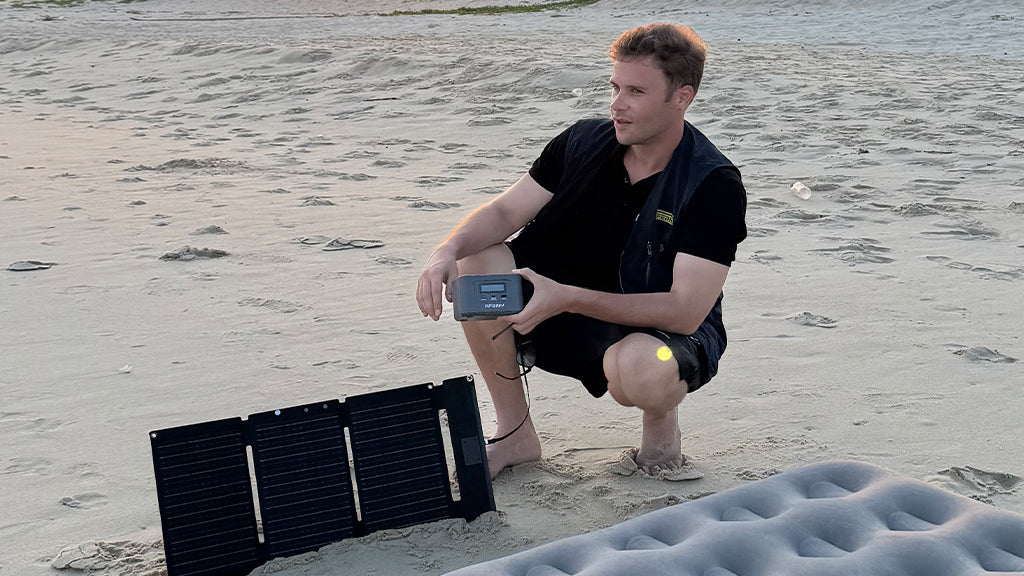
Renewable Energy Ready: Attach a few solar panels to the unit. Boom. You just built an off-grid solar power station that gives you free electricity as long as the sun shines.
Key Features to Look for Before Buying
Ignore the flashy price tags for a second. Read the spec sheet. You want a unit that won't die on you when things get rough, so hunt for these specific details:
-
Battery Chemistry (LiFePO4 is King): Older units run on basic Lithium-ion. You want LiFePO4 (Lithium Iron Phosphate). Why? They boast a ridiculous lifespan. You can often drain and recharge them 3,000 times before they even start to degrade. They run cooler and carry far less fire risk, too.
-
Pure Sine Wave Inverter: This guarantees the AC power leaving the station matches the smooth power coming out of your home's wall outlets. Sensitive gear like laptops and CPAP machines will absolutely malfunction without it.
-
Surge (Peak) Wattage: Anything with a motor takes a massive gulp of power just to turn on. An air conditioner or a big fridge needs a hard kick. Make sure the station's "surge" rating clears that startup spike.
-
Fast Recharging: A giant battery becomes a giant paperweight if it takes 72 hours to recharge. Find models that suck down AC wall power fast—ideally under two hours—and handle heavy solar input.
How to Choose the Right Capacity for Your Needs
Capacity (Watt-hours or Wh) tells you how long you can run your gear. Output (Watts or W) tells you what you can actually plug in.
Let's size a unit for your specific situation. Do a quick energy audit first. Jot down the essential items you plan to run simultaneously. Say you want to power a 50W mini-fridge and a 50W laptop. That draws 100 Watts every hour. Grab a 2000Wh station? Divide the total capacity by your hourly draw: 2000Wh / 100W = 20 hours. Keep real-world physics in mind, though. The inverter eats about 10-15% of that power just doing its job, bringing your actual runtime closer to 17 hours.
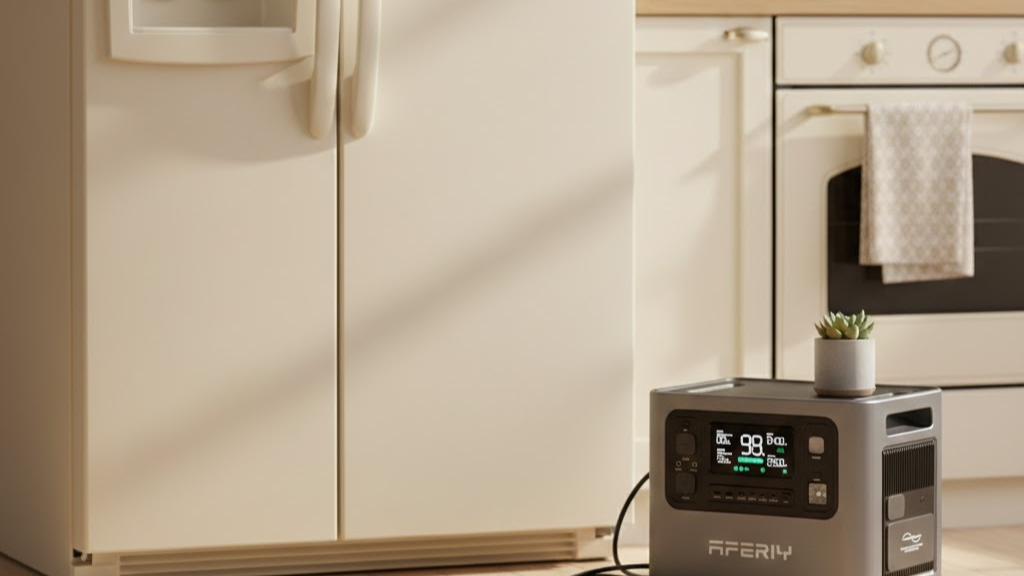
A 1000Wh box handles phone charging and fans just fine. Want to keep the kitchen fridge icy, watch the news on a flat screen, and brew coffee during a three-day blackout? Start shopping in the 3000Wh+ tier. A 3000-watt solar generator can typically run essential appliances for several hours, depending on your total power consumption.
Best High-Capacity Portable Power Station 2026
Battery tech evolves at breakneck speed. 2026 handed us some remarkably efficient, rugged machines. Check out the absolute best options hitting the shelves right now, broken down by what actually matters.
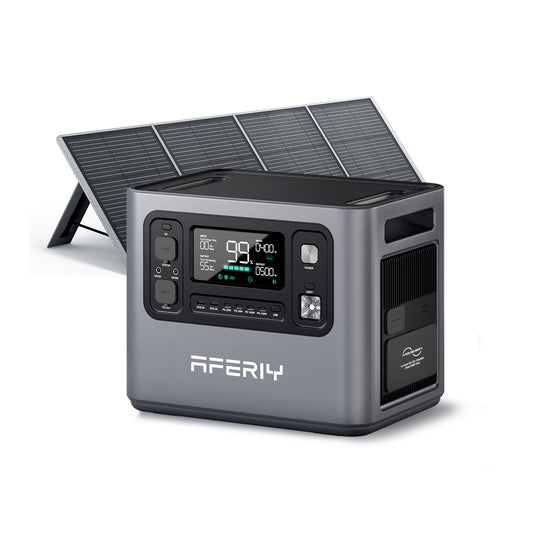
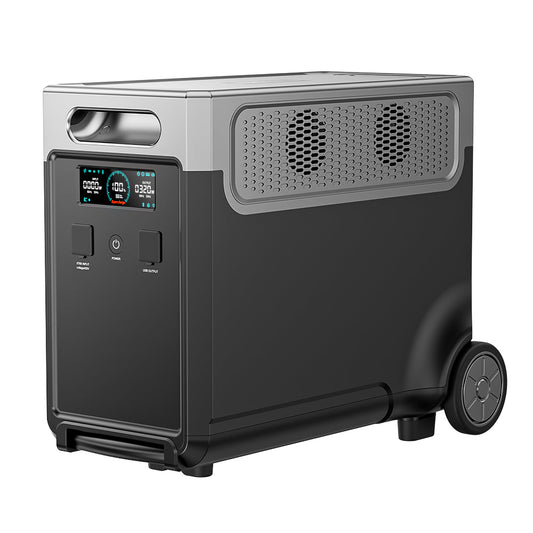
AFERIY P310 Portable Power Station
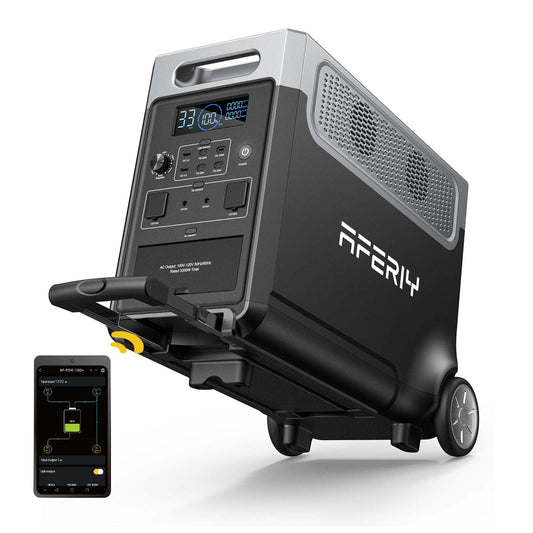
AFERIY has gained significant attention this year with the Aferiy P310 portable power station, offering a powerful solution for heavy RV living and serious home backup.
Performance Specs:
-
Capacity: ~3600Wh
-
Battery Chemistry: LiFePO4
Key Advantages:
-
Massive Scalability & Smart App: Start with 3840Wh and daisy-chain up to two extra batteries to reach a massive 11,520Wh for multi-day grid failures. You can manage your exact power draw, adjust charging speeds (from 300W to 1500W), and monitor battery health remotely via the smart app.
-
Ultra-Fast Charge & High Solar Input: Recharges to 99% from a wall outlet in just 1.5 hours. For permanent off-grid setups, it supports a staggering 2000W maximum solar input, making it an absolute beast for harvesting free energy.
-
Lightning-Fast UPS: Switchover happens in under 10 milliseconds. If the grid drops, your plugged-in desktop computer or CPAP machine never even flickers.

AFERIY P280 Portable Power Station
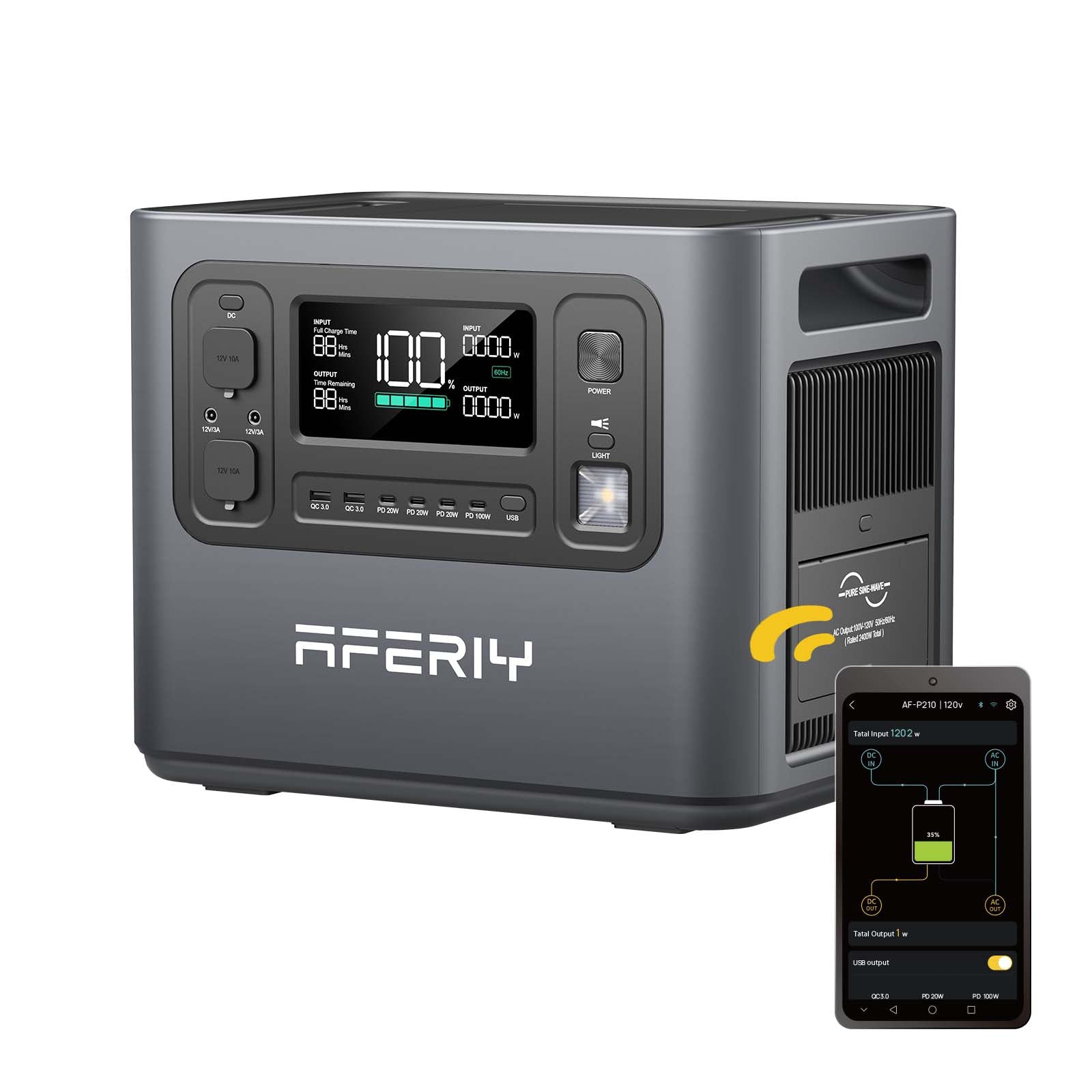
Maybe the P310 takes up too much space in your trunk. The AFERIY P280 portable power station hits the absolute sweet spot. You get serious power without breaking your back to lift it.
Performance Specs:
-
Capacity: ~2400Wh
-
Battery Chemistry: LiFePO4
Key Advantages:
-
Scalable Portability: Lightweight enough for van lifers, yet heavily expandable. You can link up to 4 extra batteries to push your total capacity to 10,240Wh as your off-grid energy needs grow.
-
Rapid Dual Charging: Features blistering-fast 1800W AC wall charging that hits 80% in just 55 minutes. Paired with a 1200W dual solar input, it gets you back on the road sooner.
-
Intuitive App Control: Monitor real-time solar generation, turn ports on or off, and track your consumption directly from your phone screen.
OUPES Mega 3 3072Wh Power Station
OUPES designed the Mega 3 to keep houses running when disasters hit. This unit works like a dog, pushing enough continuous wattage to run heavy garage saws or keep a dark kitchen fully alive.
Performance Specs:
-
Capacity: ~3072Wh
-
Battery Chemistry: LiFePO4
Key Advantages:
-
Seamless Expansion: Need more power down the road? You can easily chain extra OUPES battery packs to double or triple your reserve.
-
Intuitive Interface: The screen layout makes total sense. You never have to guess how much runtime you have left.
Anker SOLIX F3000 (Expandable 6kWh)
Anker basically owns the premium market these days with their SOLIX lineup. You essentially build a custom whole-home backup system that grows as your needs change.
Performance Specs:
-
Capacity: ~3000Wh
-
Battery Chemistry: LiFePO4
Key Advantages:
-
Crazy Scalability: You can daisy-chain batteries to push the total capacity to a wild 6000Wh (6kWh).
-
Smart Home Integration: You open the Anker smartphone app and instantly see your power draw, battery health, and settings from anywhere.
Nature’s Generator Lithium 3600 (3072Wh)
Nature's Generator built their entire reputation on green energy. They finally brought their classic design into the modern LiFePO4 era. They built it like a tank.
Performance Specs:
-
Capacity: 3072Wh
-
Battery Chemistry: LiFePO4
Key Advantages:
-
Dual Charging Inputs: This company specifically designed this model to accept both wind turbines and solar panels simultaneously.
-
Bomb-Proof Construction: It lacks flashy touch screens, but delivers raw, dependable energy. Buy this one for a remote hunting cabin.
Comparison Table
|
Model |
Est. Capacity |
Weight |
Battery Type |
Best For |
Expandable? |
Est. Price |
|
AFERIY P310 |
~3600Wh |
~95 lbs (43 kg) |
LiFePO4 |
Heavy-duty home backup / RVs |
Yes |
~$1,699 |
|
AFERIY P280 |
~2400Wh |
~55 lbs (25 kg) |
LiFePO4 |
Van life & extended camping |
Yes |
~$1,399 |
|
OUPES Mega 3 |
3072Wh |
~75 lbs (34 kg) |
LiFePO4 |
Reliable home resilience |
Yes |
~$1,599 |
|
Anker SOLIX F3000 |
3000Wh+ |
~80 lbs (36 kg) |
LiFePO4 |
Smart home integration |
Yes (Up to 6kWh) |
~$2,599 |
|
Nature’s Gen 3600 |
3072Wh |
~90 lbs (40 kg) |
LiFePO4 |
True off-grid / Cabin life |
Yes |
~$1,199 |
Common Mistakes to Avoid When Buying
People mess up all the time when shopping for these. Let's keep you from making expensive errors.
-
Confusing W and Wh: Get this straight in your head right now. Watts (W) represent the horsepower. Watt-hours (Wh) represent the size of the gas tank. Never buy a station purely because the box screams "3000W" if the internal battery only holds 1000Wh. It will die fast.
-
Underestimating Surge Power: Say your portable AC needs 1200W while running. Great. But what if the compressor needs 2500W just to kick on? A power station capping out at a 2000W surge simply won't start it. Check the sticker on your appliances.
-
Ignoring Portability: Marketing teams throw the word "portable" around casually. A 3000Wh battery block easily tips the scales at 80 pounds. Plan on dragging it around a campsite? Buy one with sturdy wheels or downsize your expectations.

Conclusion
You can no longer think of a high-capacity portable power station as just a fancy camping gadget. Homeowners rely on them for peace of mind, while renters use them to ensure power security. The key is to focus on your actual needs—consider which appliances you plan to run, calculate the required wattage, and prioritize reliable battery technology like LiFePO4. Make the right choice, and you’ll enjoy quiet, dependable power for years to come.
FAQ
Why Combine a Portable Power Station with Solar Panels?
Hook up a solar panel, and you completely change the game. The battery transforms into a self-sufficient solar power station. We are talking infinite electricity. The grid goes down for a week? No problem. Run your fridge off the battery overnight. Let the sun refill the battery the next morning. You create an endless loop of free power.
How long does a 3000W power station last?
That entirely depends on your habits. Plug a tiny 100W television into a 3000Wh battery, and it plays movies for roughly 25 hours (remember the 15% inverter tax). Plug a 1500W electric space heater into that exact same battery? You drain it dead in two hours flat.
Will a 3000-Watt Solar Generator Run a House?
Will a 3000-Watt Solar Generator Run a House? You can run the bare essentials. You cannot run the whole house at the same time. A 3000W output easily handles a full-sized kitchen fridge, a few lights, laptops, and the internet router all at once. Try firing up your central AC, an electric clothes dryer, or an oven, though? The station will instantly overload and shut down.
Can I run my portable generator for 24 hours?
Running a traditional gas generator for an entire day turns into a nightmare of refilling tanks and listening to endless engine drone. Battery power changes the rules. Yes, you can leave these units running non-stop. Plenty of people hook them up to medical gear or home computer servers, leaving them on 24/7 as dedicated backup systems.
 Free shipping from US local warehouse