











What Can a 7500-Watt Generator Run?
In case of power outages or if you are working in a location without electricity, the generator can be your best friend. The 7500-watt generator is ideal for home and job site needs and is one of the most versatile sizes. It’s powerful enough to keep your crucial devices running, and compact enough to be portable. In this article, we will discuss how long a 7500-watt generator can run and what it is able to power before introducing a few alternate methods for portable power.
What Is a 7500-Watt Generator?
A 7500-watt generator delivers 62.5 amps at 120 volts or 31.25 amps at 240 volts, providing enough power to run essential household appliances and job-site equipment. At 50% load, it typically runs for about 10–12 hours on a 6–8 gallon fuel tank, while at full load, the runtime decreases to approximately 6–8 hours. With this capacity, it can reliably power refrigerators, microwaves, air conditioning units, sump pumps, and multiple power tools, making it a versatile solution for backup power or worksite use.
How Many Amps Does It Produce?
A 7500–watt generator is able to provide 7,500 watts of electrical power. A lot of household and professional uses will fall into this mid-to-high-range power level. But how do we know how many amps that is?
To determine this, we use a simple formula:
Watts ÷ Volts = Amps
-
At 120 volts, a 7500-watt generator generates about 62.5 amps
-
At 240 volts, a 7500-watt generator generates about 31.25 amps
Most generators of this size run both 120V and 240V, which allows some versatility depending on what type of devices or appliances you need to power.
With this amount of power, you can run several tools, kitchen appliances, or even the necessities for a small home during a power outage.
Running Watts vs Starting Watts
Many 7500-watt generators actually provide:
-
7500 running watts
-
9000+ starting watts
Starting watts are needed when appliances first turn on — especially refrigerators and air conditioners. Always calculate the total starting wattage before connecting devices.
What Equipment Can Be Run on a 7500-Watt Generator?
With a 7500-watt generator, it is possible to power heavy tools and multiple household appliances at the same time. However, it is critical to monitor the total wattage used concurrently.
Everyday Home Appliances You Can Power
-
Refrigerator – 600 to 800 watts
-
Freezer – 500 to 700 watts
-
Microwave Oven – 1000 to 1500 watts
-
Electric Stove – 1500 to 3000 watts
-
Dishwasher – 1200 to 1500 watts
-
Washing Machine – 500 to 1200 watts
-
Clothes Dryer – 1800 to 5000 watts
-
Window Air Conditioner – 1000 to 1500 watts
-
Heater – 1500 watts
-
Television, Lights, Fans – typically low wattage (60-600 watts)
Power Tools and Outdoor Equipment
-
Electric Drill – 600 to 800 watts
-
Circular Saw – 1200 to 1800 watts
-
Air Compressor – 1000 to 2000 watts
-
Electric Grill or Smoker – 1200 to 2000 watts
-
Chainsaw – 1500 to 2000 watts
It’s worth noting that some equipment, like refrigerators and air conditioners, has a higher starting wattage compared to its running wattage. Always make sure to check the labels on your appliances for specific power requirements before connecting them.

How Long Does a 7500-Watt Generator Last?
-
Fuel Tank Size
-
Type of Fuel Used
-
The Load Placed on the Generator
-
7500-watt generator with a 6-to-8-gallon tank running at a 50% load will yield 10 to 12 hours of runtime.
-
At full capacity, run time is typically 6 to 8 hours.
Regular maintenance is also required, which includes changing the oil, cleaning or replacing air filters, and properly storing the generator when not in use. A well-maintained portable or standby generator provides years of reliable service.
Are There Other Portable Power Station Options?
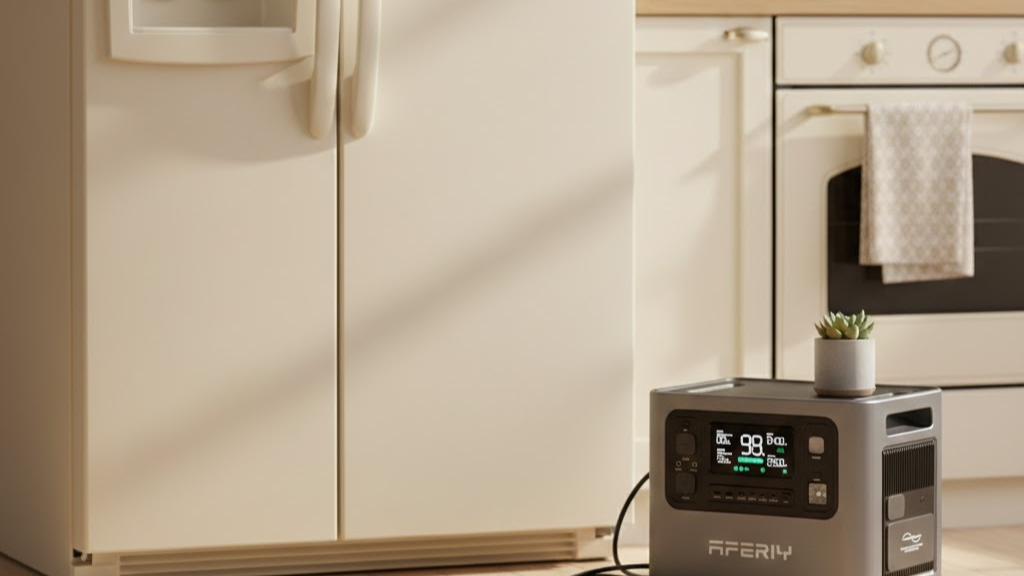
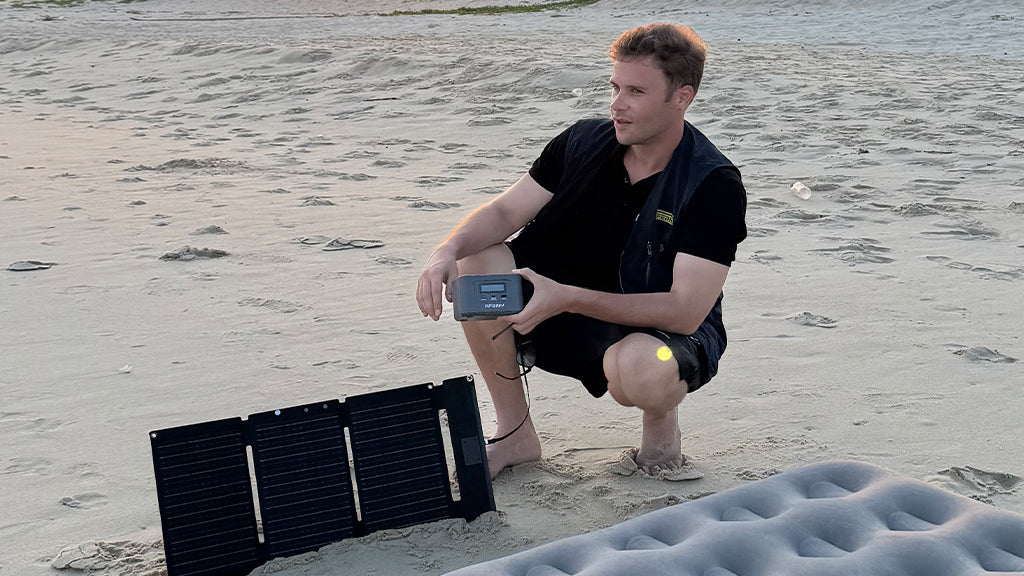
Gas Generators have their advantages and disadvantages. They can be quite loud and require a consistent supply of gas. For quieter, cleaner, and more portable options, power stations that run on stored battery power are a great alternative. These can be charged using wall and car outlets, or even solar panels.
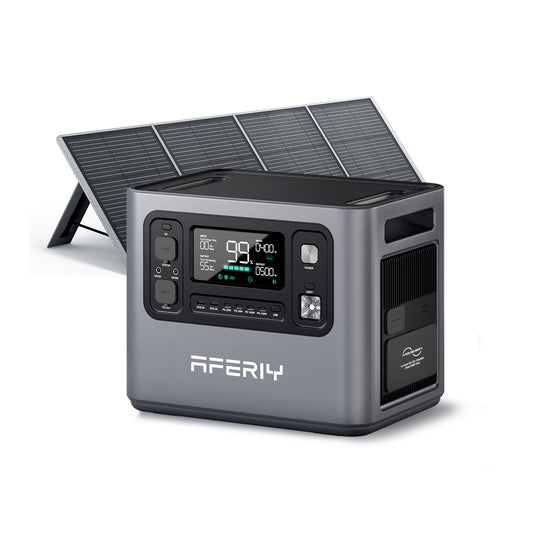
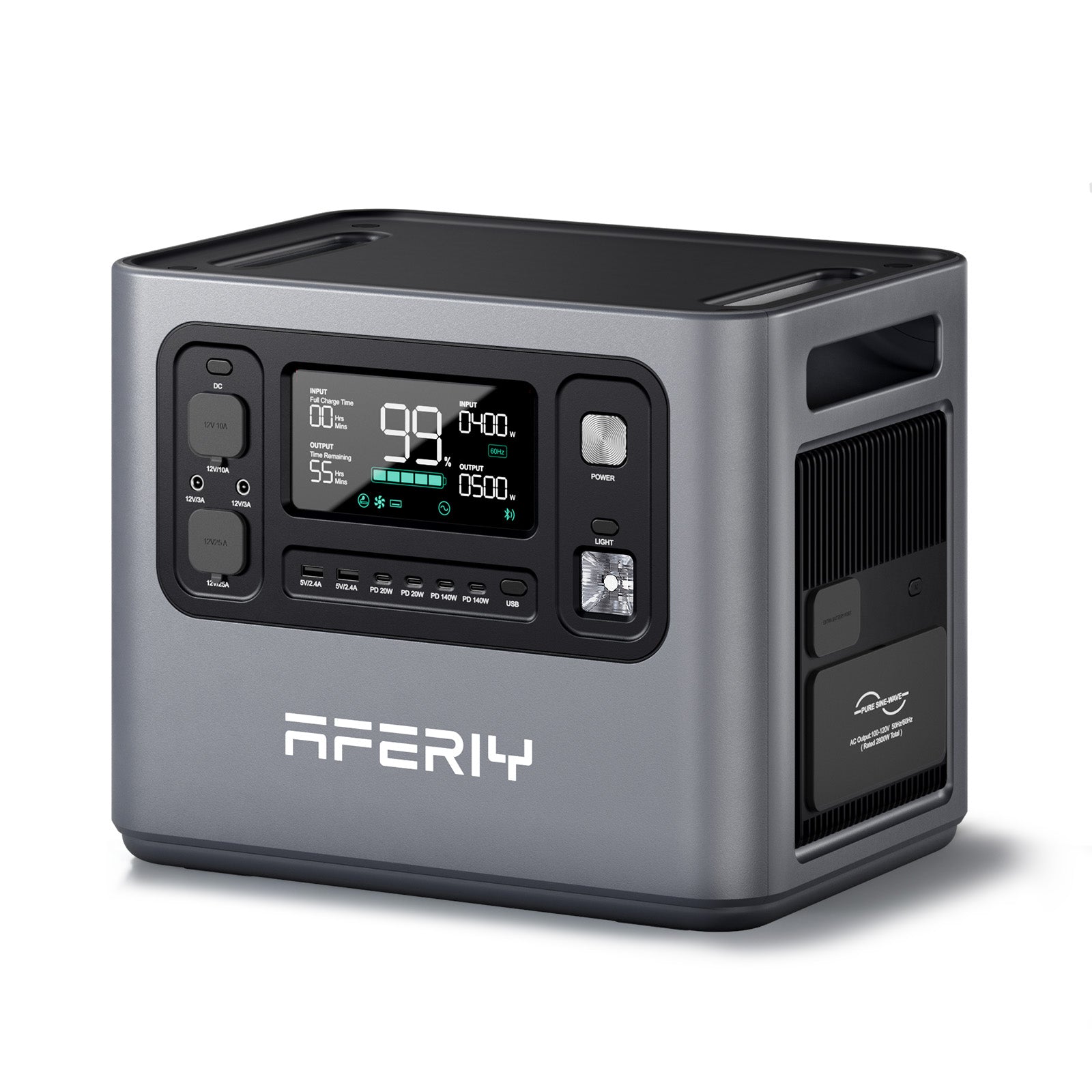
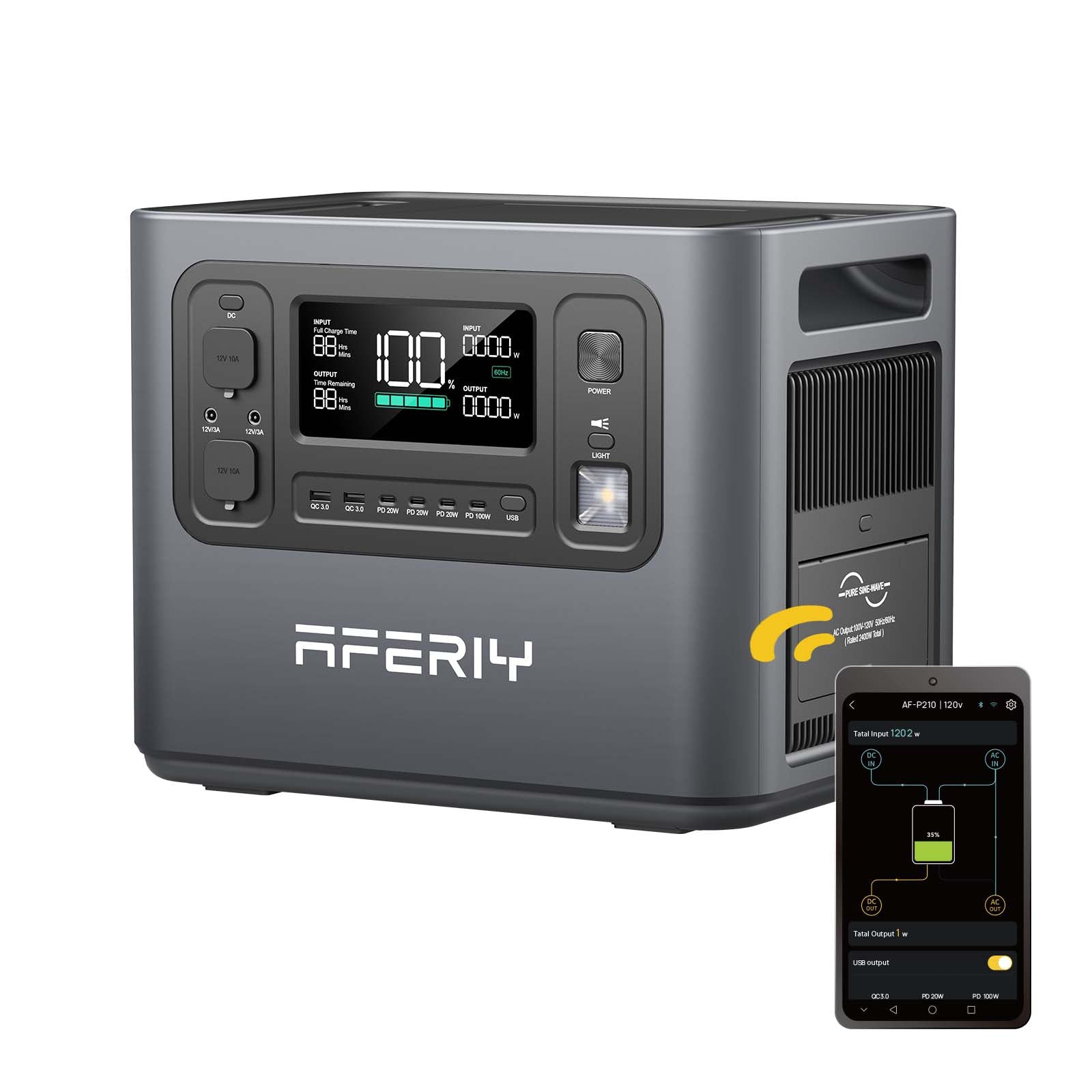
AFERIY P210 Portable Power Station
The AFERIY P210 Portable Power Station is one of the most powerful portable power stations, offering features such as a 2400W pure sine wave inverter and providing 2048Wh storage capacity. This allows it to run heavy appliances and multiple devices simultaneously, which is useful for providing electricity outdoors or in emergencies.
This model is built with a LiFePO4 battery, which guarantees more than 4000 life cycles to 85% of its capacity. It supports 4 methods of charging with an AC outlet, solar panel, car charger, or a combination of AC and solar, which is AFERIY designed for quicker recharging.
Charging with AC provides a 0 to 100% recharge in 2 hours. This model provides coverage for a range of devices with 500W MPPT solar input and 16 output ports, such as USB, DC, and AC. MPPT charging is a type of efficient solar charging. This model also features a built-in UPS battery backup to protect devices during outages as well as Bluetooth app control for monitoring and operating the battery.

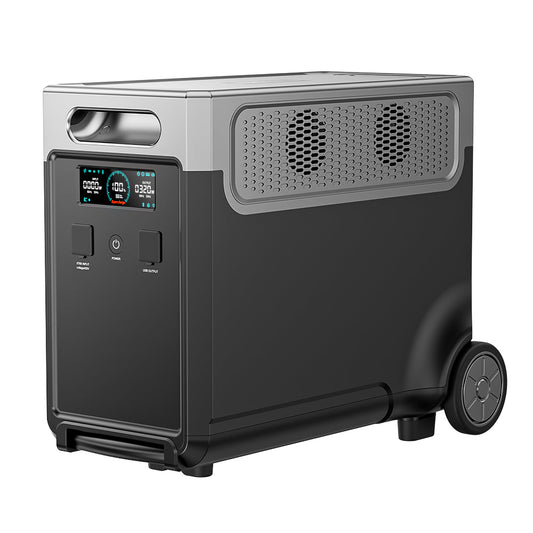
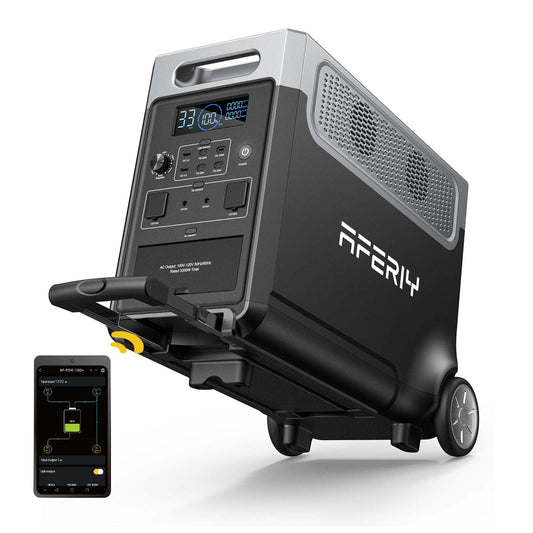
AFERIY P310 Portable Power Station
The AFERIY P310 Portable Power Station is an advanced-grade backup power supply designed for portable use. It has a high discharge of 3600W pure sine wave output and comes with a large capacity of 3840Wh, which can be expanded up to 11520Wh with two more batteries. Its LiFePO4 battery enables it to keep 80% of its capacity after 4000 cycles with a lifespan of up to 11 years.
The AFERIY P310 comes with a Battery Management System (BMS) and offers 24/7 safety monitoring. With a 10ms switchover time, the P310 also works as a home UPS, providing seamless power to your devices during blackouts. It's also capable of receiving a maximum of 2000W solar input and 1500W AC input with adjustable charge levels. Using a combination of AC and solar power, 80% charge can be achieved in one hour.
Backed by a 7-year warranty, the device can be monitored and controlled via an app, ensuring long-term and reliable energy investment.
Conclusion
A 7500-watt generator serves as a dependable backup generator for people who require a strong and reliable source of power. It can power most household appliances and tools, thus it’s ideal for job sites, power outages, or remote cabins. Once properly set up, you can relax knowing that essential devices will remain powered up and won’t go offline.
However, for individuals looking for something more portable, quieter, and more eco-friendly, the AFERIY P210 and AFERIY P310 Portable Power Stations are wonderful substitutes. They are silent and do not require fuel, providing clean power ideal for traveling, home emergencies, or other daily outdoor activities.
If you want to take things a step further and are looking to reduce your carbon footprint, AFERIY provides solar generator options. You can combine their power stations with solar panels to build your own portable solar power plant to take with you anywhere or have it set up at home.
Explore your options with AFERIY and find the setup that fits you best—be it fuel-powered or fully solar-powered.
FAQ
What size generator do I need?
Generator size depends on whether you need to power essential items (3,000–5,000W) or a whole house (15,000–30,000W). Small homes/RVing often need 3,000–5,000W; medium homes usually require 5,500–10,000W for basic circuits and10,000–15,000W for central A/C.
What size generator to run a house?
To run a whole house, a generator typically needs to be between 15,000 and 30,000 watts (15-30 kW), though 10-20 kW is often sufficient for basic essential power. For smaller homes (1,000–1,500 sq ft), a 7.5–12.5 kW generator works, while larger homes (2,500+ sq ft) generally require 22–30 kW+.
Will a 7kW generator run a house?
For a small home or apartment, a generator with a capacity of 3,000 to 7,000 watts (3 to 7 kW) is usually enough to power essential items during an outage.
Will a 2000-watt solar generator run a refrigerator?
Yes, for basic needs. A 2000-watt solar generator can power essentials like lights, a mini fridge, phone chargers, and a laptop. However, it may not handle heating systems, large fridges, or high-wattage appliances. It works best for minimal setups or as a backup.
How many watts does it take to run a refrigerator?
How many watts does it take to run a refrigerator? A standard household refrigerator typically requires 300 to 800 watts to operate, with an average, modern, Energy Star-rated fridge consuming around 100–200 watts of running power. While the compressor is running, it may use higher wattage, but it rarely operates at maximum capacity 24/7.
 Free shipping from US local warehouse