












What Can a 7500-Watt Generator Run? Complete Guide
In case of a power outage or when working at a location without grid electricity, a generator can provide reliable backup power. A 7,500-watt generator can run many household appliances and job-site tools, but the exact combination depends on the appliances' running and starting wattage.
In this article, we'll explain what a 7,500-watt generator can run, how to determine whether you can use multiple appliances at the same time, how long a generator may run, and what to consider when choosing a portable power alternative.
What Can a 7500-Watt Generator Run?
A 7,500-watt generator can power a wide range of household appliances and job-site equipment, making it a practical option for home backup, outdoor use, and construction work. The appliances you can run simultaneously depend on their combined running watts and the additional power required when motor-driven equipment starts.
The following examples show the types of equipment a 7,500-watt generator can typically handle in different situations.
For Home Backup
During a power outage, the priority is usually to keep essential appliances and household systems running. A 7,500-watt generator provides enough capacity for several common loads at once, including refrigeration, lighting, communications, and water pumps.
| Appliance | Running Watts | Starting Watts |
|---|---|---|
| Refrigerator / freezer | 700–800W | 1,600–2,200W |
| Sump pump | 800–1,050W | 1,200–2,200W |
| Washing machine | Around 1,150W | Around 2,250W |
| Television | 100–500W | Usually minimal |
| Computer | 200–800W | Usually minimal |
| LED lights | 10–100W each | Usually minimal |
| Wi-Fi router | 10–20W | Usually minimal |
These appliances generally represent manageable loads for a 7,500-watt generator. However, you still need to consider startup power from equipment such as refrigerators, sump pumps, and washing machines when several appliances are operating together.
For Cooling and Heating
Temperature control can become one of the larger power demands during an outage. A 7,500-watt generator can handle many smaller heating and cooling appliances, but air conditioners with compressors can require significantly more power when starting.
| Appliance | Running Watts | Starting Watts |
|---|---|---|
| Window AC, 10,000 BTU | Around 1,200W | Around 1,800–3,600W |
| Window AC, 12,000 BTU | Around 1,200–1,500W | Around 2,200–3,500W |
| Furnace blower, 1/3–1/2 HP | 700–800W | 1,300–2,350W |
| Electric space heater | Around 1,500W | Usually none |
A window air conditioner is generally a practical load for a 7,500-watt generator. Larger central air-conditioning systems require more careful planning because both their running and starting power can be considerably higher. Check the AC's nameplate or manufacturer's specifications before relying on a 7,500-watt generator for this type of equipment.
For Kitchen Appliances
Many kitchen appliances use between several hundred and a few thousand watts, so a 7,500-watt generator can power several of them depending on what else is connected. Lower-power appliances can usually be combined with essential household loads, while high-wattage heating appliances can quickly use a large portion of the generator's capacity.
| Appliance | Running Watts | Starting Watts |
|---|---|---|
| Microwave oven | Around 1,000W | Usually none |
| Coffee maker | Around 1,000–1,500W | Usually none |
| Toaster | Around 850W | Usually none |
| Dishwasher | Around 1,500W | May require additional power |
| Electric stove, single burner | Around 1,500W | Usually none |
| Electric water heater | Around 4,000W | Usually none |
For example, a microwave or coffee maker can generally be used alongside a refrigerator and other essential loads. An electric water heater or stove requires much more power, so running several high-wattage kitchen appliances at the same time may exceed the generator's available capacity.
For Laundry
Laundry equipment has a wide range of power requirements. A washing machine is relatively easy for a 7,500-watt generator to accommodate, while an electric clothes dryer can consume most of the generator's continuous output.
| Appliance | Running Watts | Starting Watts |
|---|---|---|
| Washing machine | Around 1,150W | Around 2,250W |
| Electric clothes dryer | Around 5,400W | Around 1,350W |
| Gas clothes dryer | Around 700W | Around 1,800W |
| Electric iron | Around 1,200W | Usually none |
Because an electric dryer can draw more than 5,000 watts while operating, it leaves relatively little capacity for other appliances. If you need to use a dryer during an outage, it is generally better to avoid running other high-power loads at the same time.
For Construction and Job Sites
A 7,500-watt generator is also well suited to many construction and DIY applications. It can provide enough power for individual high-demand tools or several smaller tools, depending on their combined running and starting requirements.
| Tool | Running Watts | Starting Watts |
|---|---|---|
| Electric drill, 1/2 HP | Around 1,000W | Around 1,000W |
| Circular saw, 7 1/4-inch | Around 1,500W | Around 1,500W |
| Miter saw, 10-inch | Around 1,800W | Around 1,800W |
| Table saw, 10-inch | Around 2,000W | Around 2,000W |
| Air compressor, 1–1.5 HP | 1,500–2,500W | 2,500–3,000W |
| Reciprocating saw | Around 960W | Around 960–1,040W |
A 7,500-watt generator can therefore handle many common job-site tools, but it is important to avoid starting several motor-driven tools simultaneously. For demanding equipment, check the tool's rated and starting wattage before adding it to the load.
How Much Can You Run at Once?
The total power requirement matters more than the number of appliances. A 7,500-watt generator may run several smaller devices together, but adding one high-power appliance can significantly change the total load.
For example, a possible home backup setup could include:
-
Refrigerator — 700W
-
Sump pump — 800W
-
Microwave — 1,000W
-
TV and computer — 500W
-
Window AC — 1,200W
-
Lights — 300W
The combined running load is approximately 4,500W, leaving about 3,000W of continuous capacity on a generator rated for 7,500 running watts.
However, some of these appliances require additional power when starting. The refrigerator, sump pump, and air conditioner may all create a temporary surge, so the generator's starting-watt rating must also be sufficient for the equipment you plan to operate.
For the most accurate calculation, check the nameplate or owner's manual of each appliance and use its actual running and starting wattage rather than relying solely on typical values.
How Many Amps Does a 7500-Watt Generator Produce?
To estimate the current output, use this simple formula:
Watts ÷ Volts = Amps
For a 7,500-watt generator:
- At 120V: 7,500W ÷ 120V = 62.5A
- At 240V: 7,500W ÷ 240V = 31.25A
For example, Champion's 7,500W generator is rated for 62.5A at 120V and 31.3A at 240V, which matches these calculations.
Keep in mind that these numbers describe the generator's total rated output. The amount of current you can draw from a specific outlet depends on the outlet's own amperage rating.

How Long Does a 7500-Watt Generator Last?
How long a 7,500-watt generator can run depends mainly on its fuel tank size, fuel type, fuel efficiency, and electrical load. Because generators in this power range have different engine and tank designs, there is no single runtime that applies to every model.
In general, a gasoline-powered 7,500-watt generator with a 6–8 gallon fuel tank can typically run for around 8–12 hours at a 50% load, although the actual runtime varies by model.
The load also makes a significant difference. A generator running a few essential appliances will generally use less fuel than one operating close to its full 7,500-watt capacity. As the load increases, fuel consumption generally increases and runtime decreases.
For the most accurate estimate, check the manufacturer's rated runtime at the specific load you expect to use.
Are There Other Portable Power Station Options?
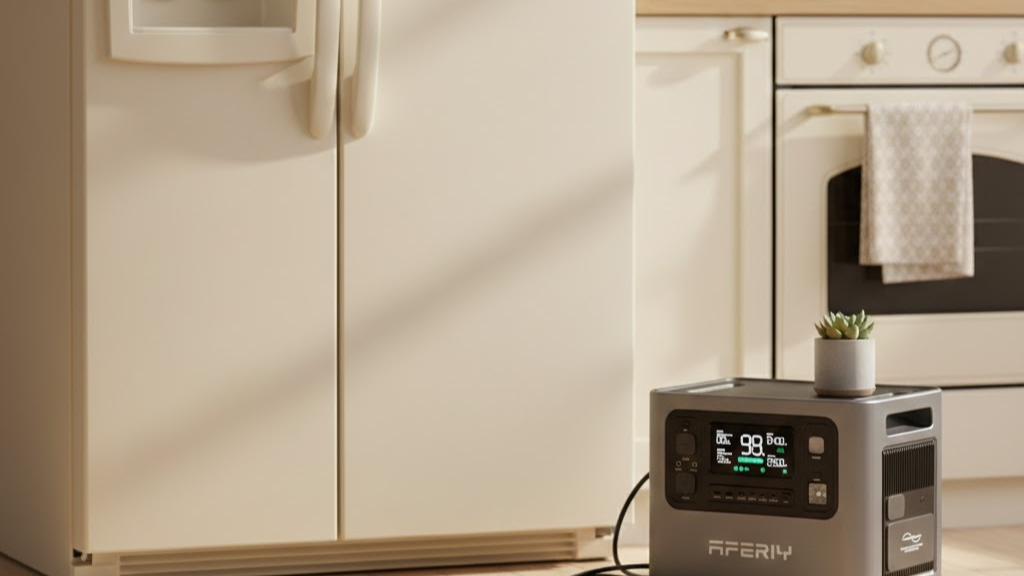
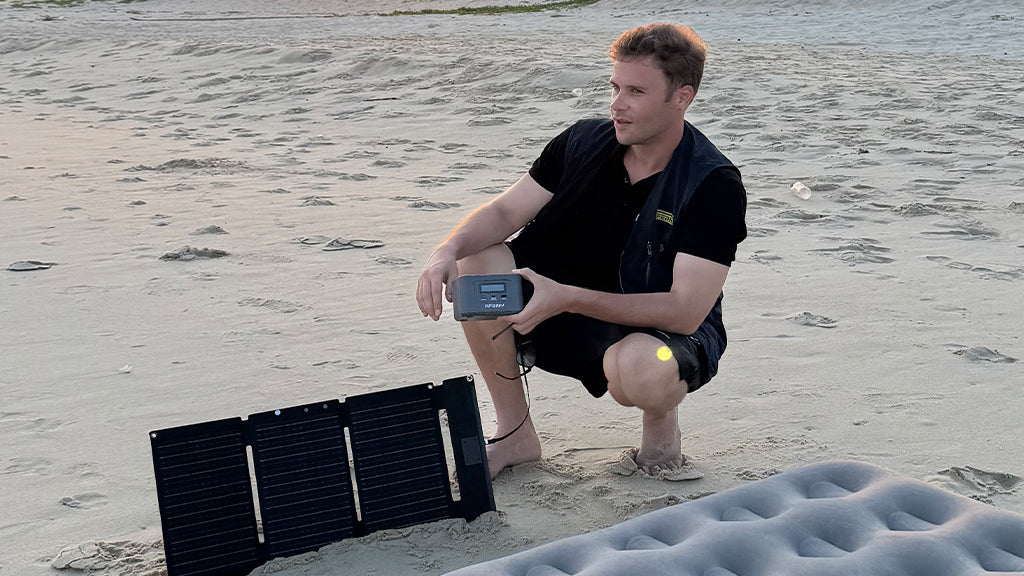
A 7,500-watt generator is a powerful option for running multiple appliances and tools, but some situations call for a different type of power source. For camping, outdoor work, travel, or home backup, a portable power station can provide convenient, quiet, and fuel-free power without the need to store or refuel gasoline.
Portable power stations store electricity in a battery and can be recharged from an AC outlet, a vehicle, or solar panels. For users who want a flexible backup setup, models with higher output and expandable battery capacity can provide power for a wider range of everyday appliances and equipment.
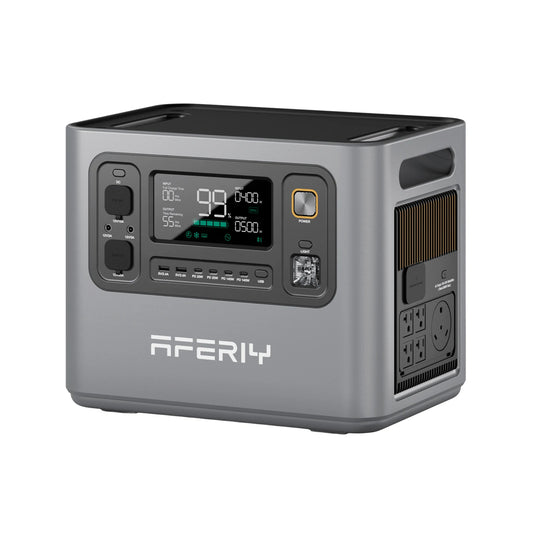
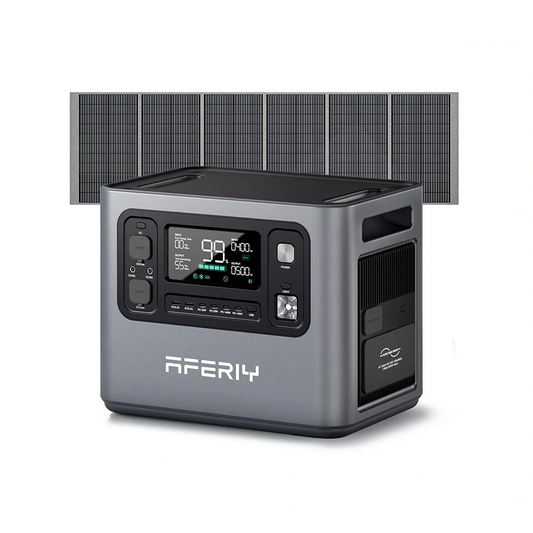
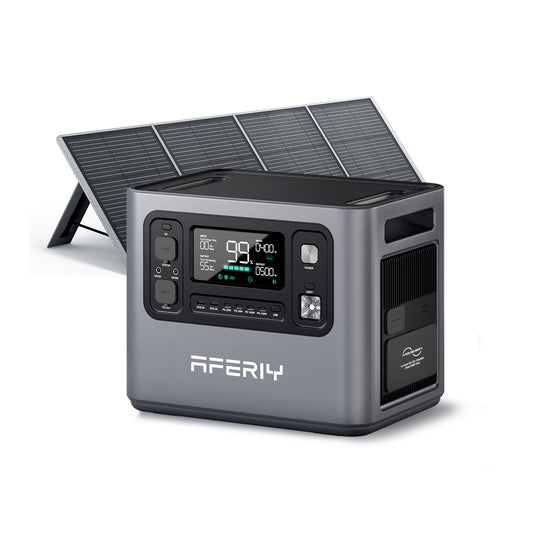
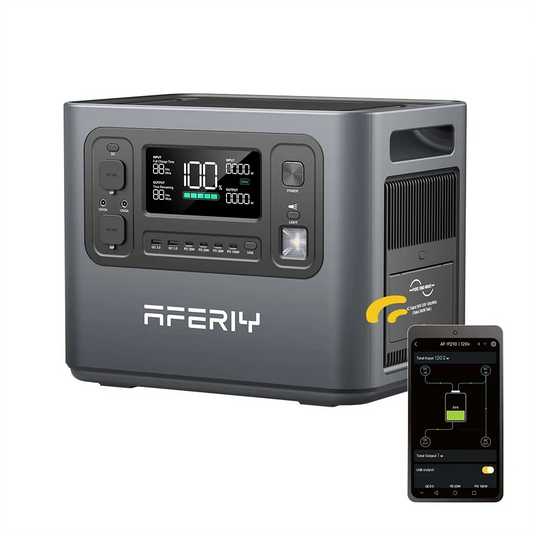
AFERIY Haven3000 P300 Portable Power Station
The AFERIY Haven3000 P300 Portable Power Station combines 3,000W of rated output with 2,048Wh of battery capacity, expandable up to 10,240Wh. It supports AC, car, and solar charging, with up to 1,200W of solar input, making it well suited to home backup, camping, RV use, and outdoor activities.
Its 3,000W output provides enough power for many everyday appliances and equipment, while the expandable battery capacity gives you more flexibility when additional energy storage is needed.

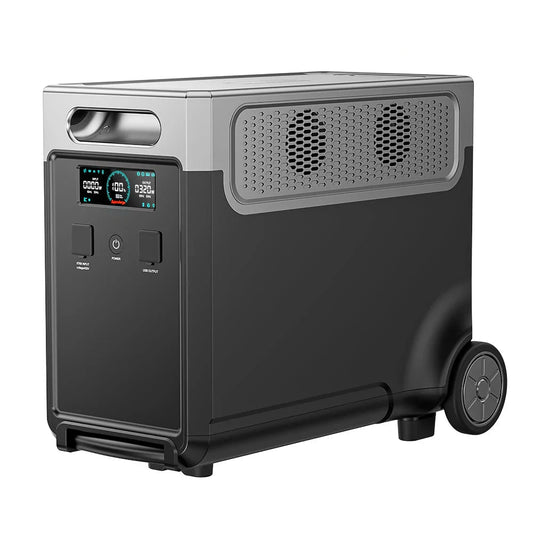
AFERIY Haven3600 P310 Portable Power Station
For users who need more output and stored energy, the AFERIY Haven3600 P310 Portable Power Station offers 3,600W of rated output and 3,840Wh of battery capacity, expandable up to 11,520Wh. It supports up to 2,000W of solar input and can accept AC and solar power simultaneously for faster recharging.
With its higher output and larger expandable capacity, the P310 is well suited to heavier appliances, home backup, outdoor work, and longer-duration power needs.
For those looking for an alternative to a fuel-powered generator, these portable power stations offer a convenient way to keep essential equipment powered while adding the flexibility of battery storage and solar charging.

FAQ
What can a 7500-watt generator run at the same time?
A 7,500-watt generator can typically run several essential appliances at the same time, such as a refrigerator, freezer, lights, TV, Wi-Fi router, microwave, sump pump, and washing machine. It can also power some window air conditioners and common power tools. The exact combination depends on the total running watts and the starting requirements of motor-driven equipment.
Will a 7500-watt generator run a refrigerator and air conditioner?
Yes. A 7,500-watt generator can generally run a refrigerator and a window air conditioner together, provided their combined running and starting requirements stay within the generator's ratings. Larger central air-conditioning systems require more careful sizing because their compressors can have substantially higher starting power.
Will a 7500-watt generator run a whole house?
A 7,500-watt generator can provide essential power for many homes, but it may not run every appliance at the same time. Refrigeration, lighting, electronics, pumps, and selected kitchen appliances can generally be combined within the available capacity. Large central AC systems, electric water heaters, electric dryers, and electric ranges can use a significant portion of the generator's output.
Will a 7500-watt generator run a 2000-square-foot house?
A 7,500-watt generator can be suitable for essential loads in a 2,000-square-foot home, but the home's size alone does not determine the required generator capacity. The actual appliances, heating and cooling systems, and their running and starting wattage are more important when determining whether a 7,500-watt generator is sufficient.
Conclusion
A 7,500-watt generator can handle a wide range of household appliances, essential systems, and job-site tools. Refrigerators, sump pumps, microwaves, lights, electronics, selected air conditioners, and power tools can be used together as long as their combined running and starting requirements stay within the generator's ratings.
When choosing what to run, check the actual wattage of each appliance and account for the extra power required by motor-driven equipment at startup. This helps you make the most of the generator's available capacity.
For users who prefer quiet, fuel-free power, a portable power station can be another option for home backup, camping, RV use, and outdoor activities.
 Free shipping from US local warehouse