











Be Ready Campaign: Prepare for 72-Hour Emergencies
Launched on October 22, 2026, the UK government’s Be Ready Campaign encourages households to prepare for up to three days of disruption to essential services, including electricity, water, phone networks and the internet.
Although the campaign focuses on the UK, its message is relevant to US households facing hurricanes, wildfires, winter storms and other emergencies that can disrupt utilities and access to everyday supplies. Preparing in advance means having essential supplies, a household emergency plan and a reliable way to maintain basic power needs when the grid goes down.

What Is the UK’s Be Ready Campaign?
The Be Ready Campaign is a UK government initiative launched on October 22, 2026. It is the first stage of a three-year effort to help households prepare for temporary disruptions to everyday services.
The government’s advice focuses on two main actions: keeping three days of bottled water and non-perishable food at home, and signing up for the Priority Services Register if eligible. The register helps utility providers identify customers who may need additional support during interruptions to electricity, gas or water services.
The official checklist also covers lighting, warmth, communication, medication, important documents, baby supplies and pet food. Households are encouraged to build their supplies gradually rather than buy everything at once.
The three-day preparation target is also useful beyond the UK. In the United States, Ready.gov recommends keeping at least three days of water and non-perishable food in an emergency supply kit. The exact requirements vary by household and location, but the underlying principle is similar: prepare for a period when stores, utilities or transportation may not be readily available.
For US households, the next step is to apply that principle to local risks, whether that means hurricane season along the Gulf Coast, wildfire-related outages in the West or winter storms in northern states.
What Should You Include in a 72-Hour Emergency Kit?
Start with the essentials your household would need if you had to stay home for three days. Ready.gov recommends at least one gallon of water per person per day for drinking and sanitation. For a family of four, that means at least 12 gallons for three days. Additional water may be needed for cooking, hygiene and individual medical requirements.
A practical emergency kit should include:
Water and Food: Store drinking water and shelf-stable foods that do not require refrigeration. Canned meals, dried fruit, nuts and ready-to-eat snacks are useful options. Keep a manual can opener with canned food.
Lighting and Batteries: Keep flashlights, battery-powered lanterns, headlamps and spare batteries in an accessible location. Flashlights are generally safer than candles during a power outage.
Communication Supplies: Prepare a battery-powered or hand-crank weather radio, a charged power bank and compatible charging cables. Write down important phone numbers in case your phone becomes unavailable.
Medical and Hygiene Supplies: Include a first aid kit, prescription medications, hand sanitizer, wet wipes, toiletries and any medical supplies used regularly by household members.
Documents and Cash: Keep copies of identification, insurance information, medical details and emergency contacts in a waterproof folder. Some cash in small denominations can also be useful if electronic payments or ATMs are unavailable.
Family and Pet Essentials: Add baby formula, diapers, children’s supplies, pet food, bottled water and necessary medications for pets. Account for the needs of older adults and anyone who depends on powered medical equipment.
Choose foods your household already eats so supplies can be rotated through regular grocery shopping. If possible, keep the kit together in a place everyone can find without searching through several rooms.
How Can 72 Hours Without Essential Services Affect Your Home?
A disruption lasting three days can affect several parts of household life at once. Electricity may be the most visible problem, but water, communications and transportation can also become unreliable.
Power and Food Storage
Refrigerators, freezers, heating systems, air conditioners and many cooking appliances depend on electricity. According to the CDC, an unopened refrigerator can keep food safe for up to four hours during a power outage. A full freezer can maintain safe temperatures for about 48 hours, compared with approximately 24 hours for a half-full freezer.
Keep refrigerator and freezer doors closed as much as possible. Appliance thermometers can help you check whether food remains at a safe temperature. If the outage continues beyond these periods, follow CDC food safety guidance rather than relying on appearance or smell.
Water and Sanitation
An electricity disruption can affect water systems, particularly in areas that rely on electric pumps or treatment infrastructure. Flooding and damaged pipes can also affect water quality.
Store drinking water in advance and follow local boil-water or water-use advisories. Keep basic hygiene supplies available, including hand sanitizer, wet wipes and disposable bags.
Communication and Information
A power outage can leave phones, routers and other communication equipment without power. Even with a charged phone, mobile networks or home internet services may become unavailable.
A battery-powered or hand-crank radio provides another way to receive emergency updates. Keep local emergency contacts and important information on paper rather than relying entirely on digital access.
Heating, Cooling and Medical Needs
During extreme heat or cold, losing air conditioning or heating can create serious risks. Households that rely on powered medical devices or refrigerated medications should arrange backup options before an outage occurs.
If your home becomes unsafe because of temperature, flooding or another hazard, follow local emergency instructions and move to a safer location when advised.
How Can You Keep Essential Devices Running During an Emergency?
A power bank can keep a phone charged, but longer outages may require a backup solution with more capacity and AC output. The appropriate setup depends on which devices matter most to your household and how long you expect to use them.
Power Banks for Phones and Small Electronics
Power banks are convenient for smartphones, tablets and other compatible USB devices. They are compact and easy to include in an emergency kit.
However, they have limited stored energy and cannot directly support most household appliances. For a household that needs to power several devices, a larger battery-based solution may be more practical.
Portable Power Stations for Household Backup
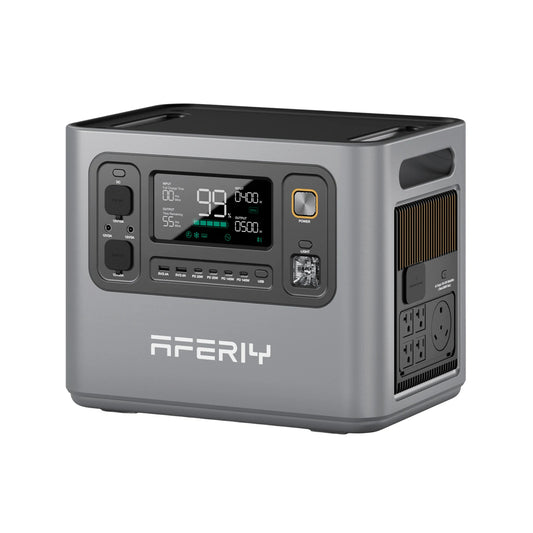
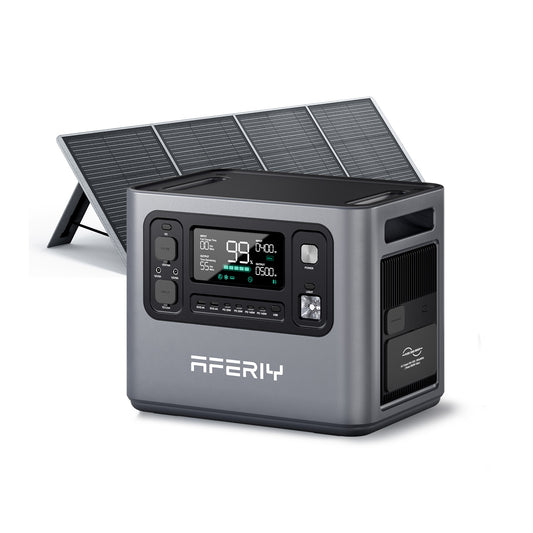
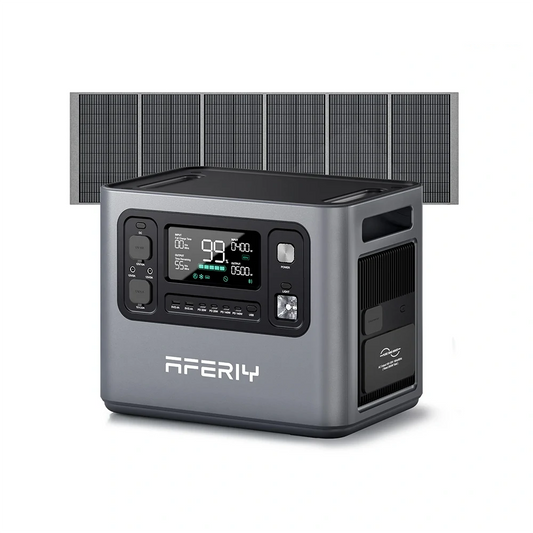
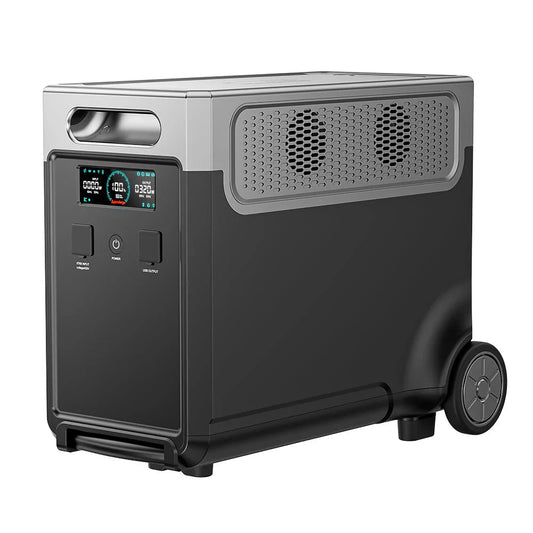
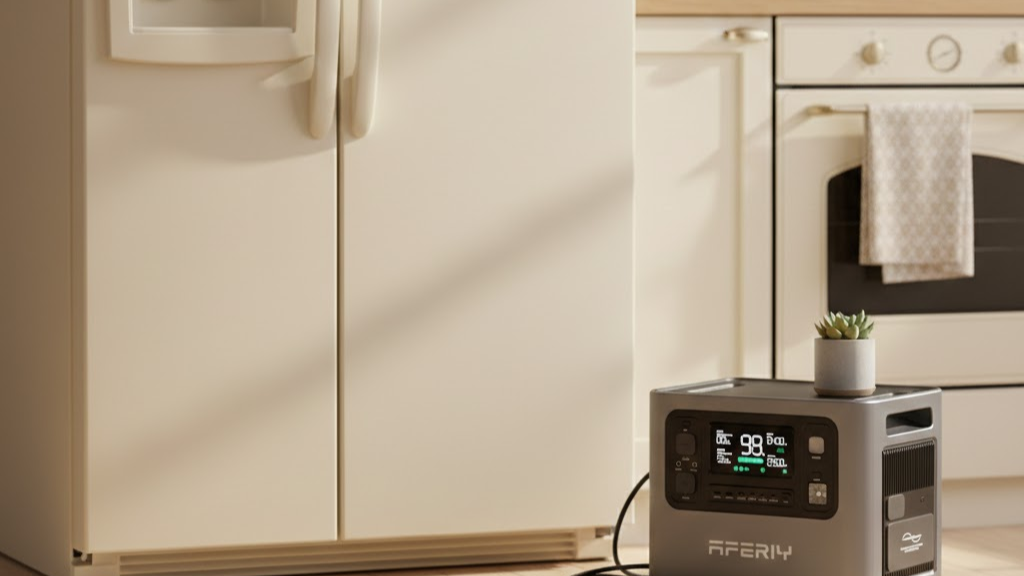
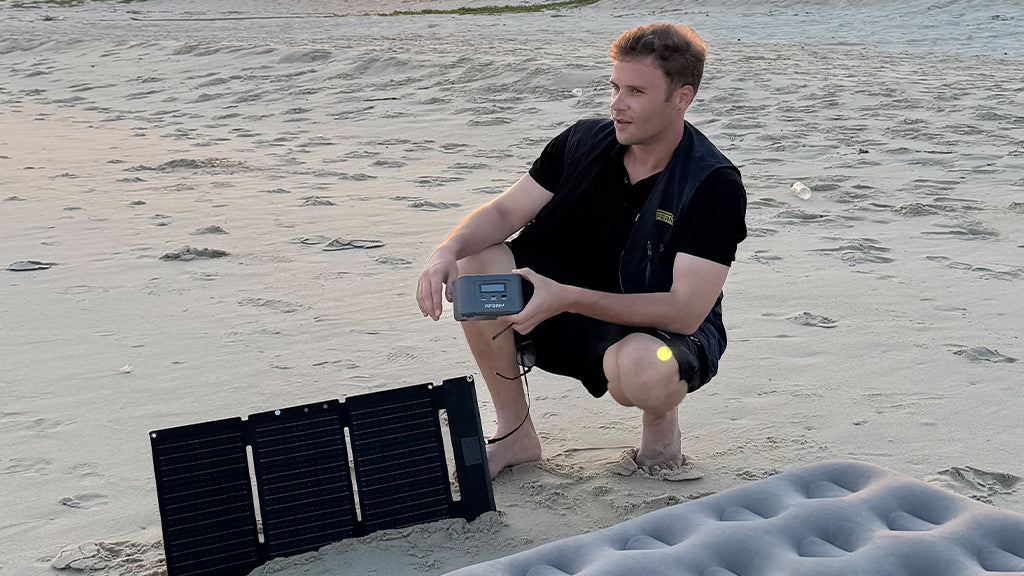
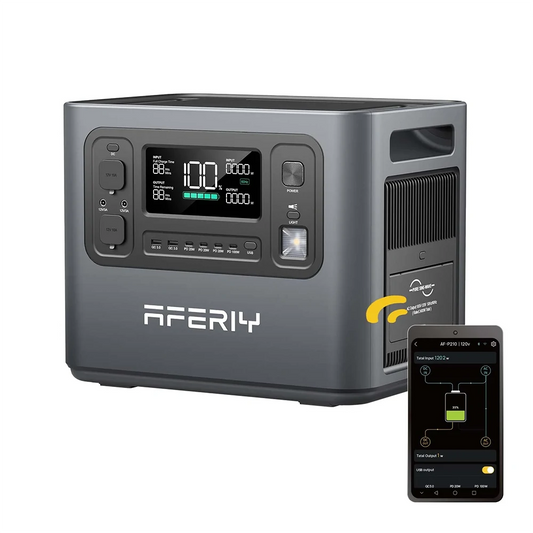
For households looking to maintain power during an extended outage, the AFERIY P300 Portable Power Station offers 3000W of continuous output and 2048Wh of LiFePO₄ battery capacity. It can support compatible household appliances such as refrigerators, fans, laptops and lighting. Its battery capacity can also be expanded to 10,240Wh, while up to 1200W of solar input provides another charging option when grid electricity is unavailable.

When choosing a backup power setup, consider both the wattage of your appliances and how long you need to run them. For example, a 60W laptop operating for five hours requires approximately 300Wh before conversion losses. Appliances with motors or compressors may also require additional startup power, so check their requirements against the portable power station’s rated output. Matching these figures to the P300’s output and available battery capacity will help you plan a more suitable household backup setup.
How to Create a Household Emergency Plan
Supplies are easier to use when everyone knows where they are and what to do. A household emergency plan does not need to be complicated, but it should cover a few practical decisions.
First, identify the hazards most likely to affect your area. Local emergency management websites can provide information about hurricane, flood, wildfire and severe weather risks.
Next, decide how family members will communicate if phone service becomes unreliable. Choose a meeting point, identify an out-of-area contact and keep important phone numbers on paper.
Make sure everyone knows where the emergency kit, flashlights, medications and backup power equipment are stored. If someone in the household uses powered medical equipment, speak with their healthcare provider or equipment supplier about backup arrangements and expected power requirements.
Households with pets should also plan for transportation, food and medication. If evacuation becomes necessary, follow instructions from local authorities rather than attempting to remain at home.
Keep Your Emergency Supplies Ready
An emergency kit is only useful if its contents are ready when needed. Check food and medication expiration dates, replace used supplies and test flashlights, radios and charging equipment regularly.
The UK Be Ready Campaign recommends checking household supplies every six months. This is a useful routine for US households too. Use the opportunity to recharge power banks and portable power stations, review your emergency contacts and update supplies when family needs change.
You do not need to prepare for every possible disaster at once. Start with water, food, medication and communication, then address the power requirements that matter most to your household. A few practical preparations can make a prolonged disruption easier to manage.
FAQs
1. How Often Should You Review Your Emergency Plan?
Review your plan at least twice a year and update it when household needs change. Check emergency contacts, supplies and evacuation arrangements.
2. What Should You Take When Evacuating During an Emergency?
Take essential medications, identification, important documents, emergency supplies and necessary items for children or pets. Follow local evacuation instructions and use designated safe routes.
3. How Should You Prepare Pets for an Emergency?
Prepare pet food, water, medications, vaccination records, identification and a suitable carrier. Identify pet-friendly shelters or alternative accommodation before an emergency.
4. Do Solar Panels Work During a Power Outage?
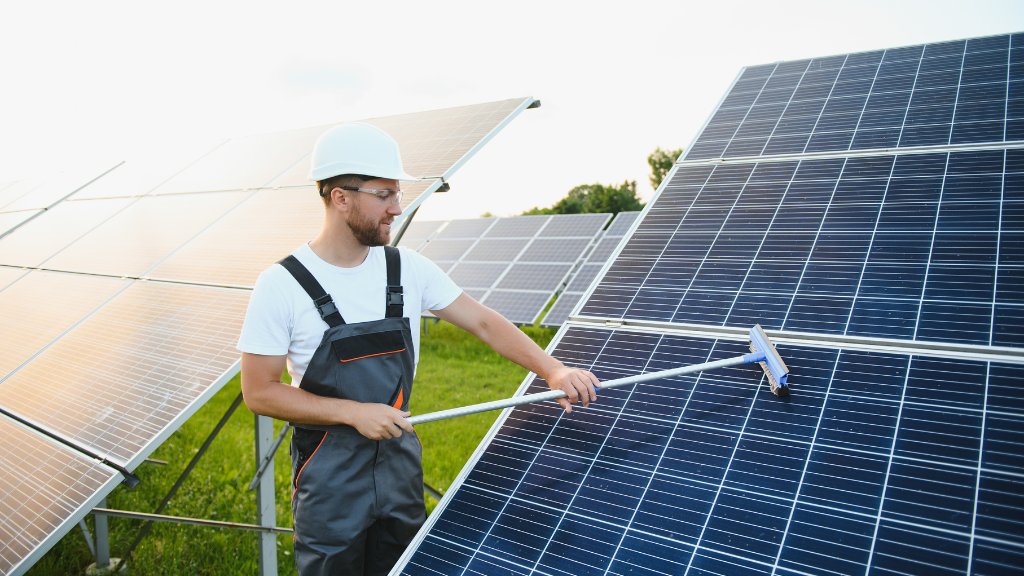
Standard grid-tied solar systems may shut down during an outage unless they have compatible backup equipment and battery storage. A portable power station paired with compatible solar panels offers another way to recharge when sunlight is available.
Conclusion
The UK’s Be Ready Campaign highlights the importance of preparing for unexpected disruptions. Keeping essential supplies ready and planning for backup power can help your household manage severe weather and extended outages. The AFERIY P300 Portable Power Station offers an additional way to keep essential devices running when grid electricity is unavailable.
 Free shipping from US local warehouse