












Central Air Conditioner Electricity Consumption: How Much Power Does It Use?
As summer heat intensifies, central air conditioning has shifted from a fancy upgrade to a basic survival tool for modern homeowners. You might be sketching out a blueprinted floor plan or finally swapping out a dying HVAC clunker. Either way, one nagging thought usually wins out: how much will this beast add to my monthly overhead?
Sure, central AC offers that crisp, uniform chill that window units just can't match. But that comfort hits your wallet hard. If you grasp the gritty details of how these machines swallow electricity, you can protect your bank account and pick greener paths for the planet. I’m going to strip down the mystery of power draw, show you how to crunch your own numbers, and highlight some clever tricks to gut those bills using the latest energy tech.
How Much Electricity Does a Central Air Conditioner Use?
The power consumption of a central air conditioner is measured in Watts (W) or Kilowatts (kW). On average, a central AC unit for a standard residential home (approx. 2,000 sq. ft.) uses between 3,000 and 5,000 watts per hour when the compressor is running.
However, AC units are often categorized by "Tons." In the context of HVAC, a "ton" measures the cooling capacity (the ability to remove heat), not the weight of the machine.
-
1 Ton of cooling is equivalent to 12,000 BTUs (British Thermal Units) per hour.
-
Typically, a 3-ton unit (sufficient for many average homes) consumes about 3,500 watts (3.5 kW) per hour of continuous operation.
It is important to note that your AC doesn't run at 100% capacity 24/7. It cycles on and off based on the thermostat settings. On a blistering summer afternoon, it may run for 40–50 minutes of every hour, significantly increasing total daily consumption.
Window air conditioners typically use between 500 and 1,500 watts per hour, depending on their size and cooling capacity, making them far less power-hungry than central systems. Because of this, they are often easier to run on limited power sources for localized cooling.

How to Calculate Central AC Electricity Consumption
Calculating your specific electricity usage is straightforward if you have access to your unit’s technical specifications and your local utility rates. Follow this simple formula:
1. Identify the Wattage
Look at the "Nameplate" on your outdoor condenser unit. It will list the voltage and amperage. You can calculate wattage using:
Watts=Amps×Volts
2. Calculate Kilowatt-Hours (kWh)
Since electricity is billed by the kWh, convert your watts to kilowatts and multiply by the hours of usage:
kWh=(Watts×Hours of Use) / 1,000
Understanding these numbers also helps you decide whether investing in a battery power station could reduce your peak-hour electricity costs.
3. Estimate the Cost
Finally, multiply the kWh by your local electricity rate (found on your utility bill):
Total Cost=kWh×Price per kWh
Example: If you have a 4,000W unit that runs for 8 hours a day, and your rate is $0.15 per kWh:
-
4,000 × 8 = 32,000 \Watt-hours
-
32,000 / 1,000 = 32 kWh per day
-
32 × 0.15 = $4.80 per day(approx. $144 per month).
Factors That Affect Central Air Conditioner Electricity Consumption
Several variables dictate whether your AC is an energy hog or a balanced performer:
-
SEER Rating Efficiency matters most. The Seasonal Energy Efficiency Ratio (SEER) calculates cooling output against every single watt consumed. Older units often limp along at a SEER of 10. Modern ones hit 20. Higher numbers slash bills. Buy better.
-
Home Insulation Watch your windows. Poorly sealed frames or thin attic insulation let crisp air bleed into the neighborhood. This forces your AC to labor through grueling, never-ending cycles just to maintain a steady temperature. Drafts kill budgets. Seal the leaks.
-
Thermostat Settings Precision saves money. Every single degree you drop that dial spikes your power draw by 5%. Small adjustments yield massive savings. Keep it reasonable. Why pay for a freezer?
-
Climate and Humidity Geography dictates costs. In swampy regions, the AC must aggressively "squeeze" moisture out of the air before you feel any relief. This process pulls immense juice from the grid. Wet air is heavy. Humidity hurts.
-
Maintenance Neglect ruins hardware. Clogged filters and grime-coated coils effectively choke the system. This slashes efficiency by a full 15% because the machine cannot breathe. Clean the coils. Dust equals debt. Maintenance pays.

How Much Does It Cost to Run a Central Air Conditioner?
While wattage gives you the technical side, the "bottom line" depends on your lifestyle and local utility rates. In 2026, with average U.S. electricity rates hovering around $0.17 per kWh, the costs can vary significantly based on how hard your system works.
1. Monthly Cost by Usage Intensity
For a standard 3-ton unit (approx. 3,500W), your monthly bill will fluctuate based on daily run times:
-
Moderate Use (6 hrs/day): Typical for mild summer days. Cost: ~$107/month.
-
Heavy Use (9 hrs/day): Common during mid-summer heat. Cost: ~$161/month.
-
Extreme Use (15 hrs/day): Constant running during severe heatwaves. Cost: ~$268/month.
2. Comparison: Unit Size vs. Monthly Expense
The larger your home, the more cooling capacity (tonnage) required, which directly scales your energy bill.
|
Unit Size (Tonnage) |
Cooling Capacity |
Est. Hourly Cost |
Monthly Cost (8 hrs/day) |
|
2 Tons |
24,000 BTU |
$0.41 |
$98 |
|
3 Tons |
36,000 BTU |
$0.61 |
$147 |
|
4 Tons |
48,000 BTU |
$0.82 |
$196 |
|
5 Tons |
60,000 BTU |
$1.02 |
$245 |
> Based on 15 SEER efficiency at $0.17/kWh.
Knowing how to save money on your electric bill starts with understanding when and how your AC consumes the most power. Small adjustments to usage habits can lead to noticeable long-term savings.
How to Reduce Central AC Electricity Consumption
Reducing your AC costs doesn't mean you have to suffer in the heat. By integrating smart habits and modern technology, you can achieve a comfortable home with a much lower carbon footprint.

Store Energy During Off-Peak Hours
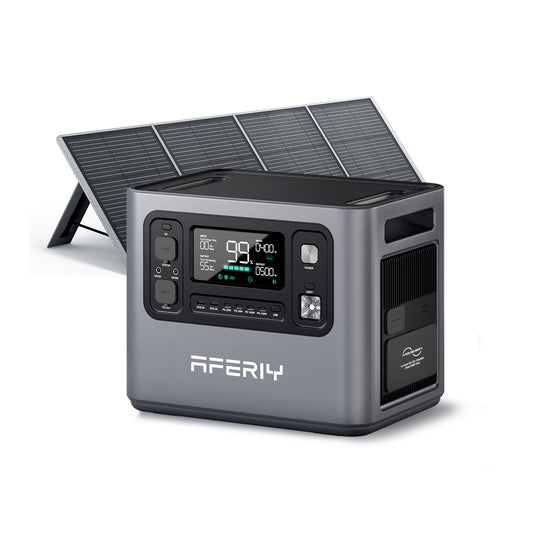
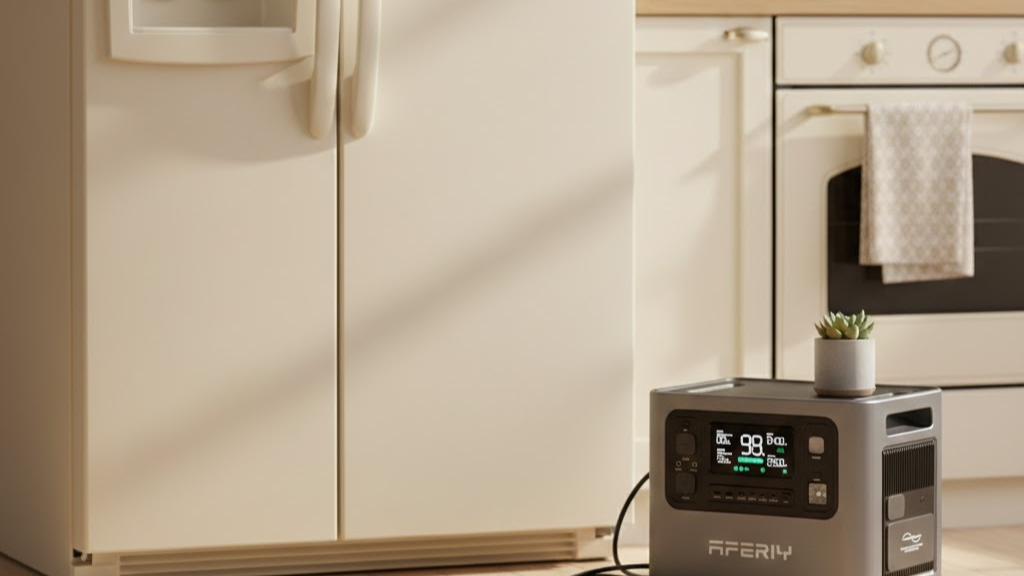
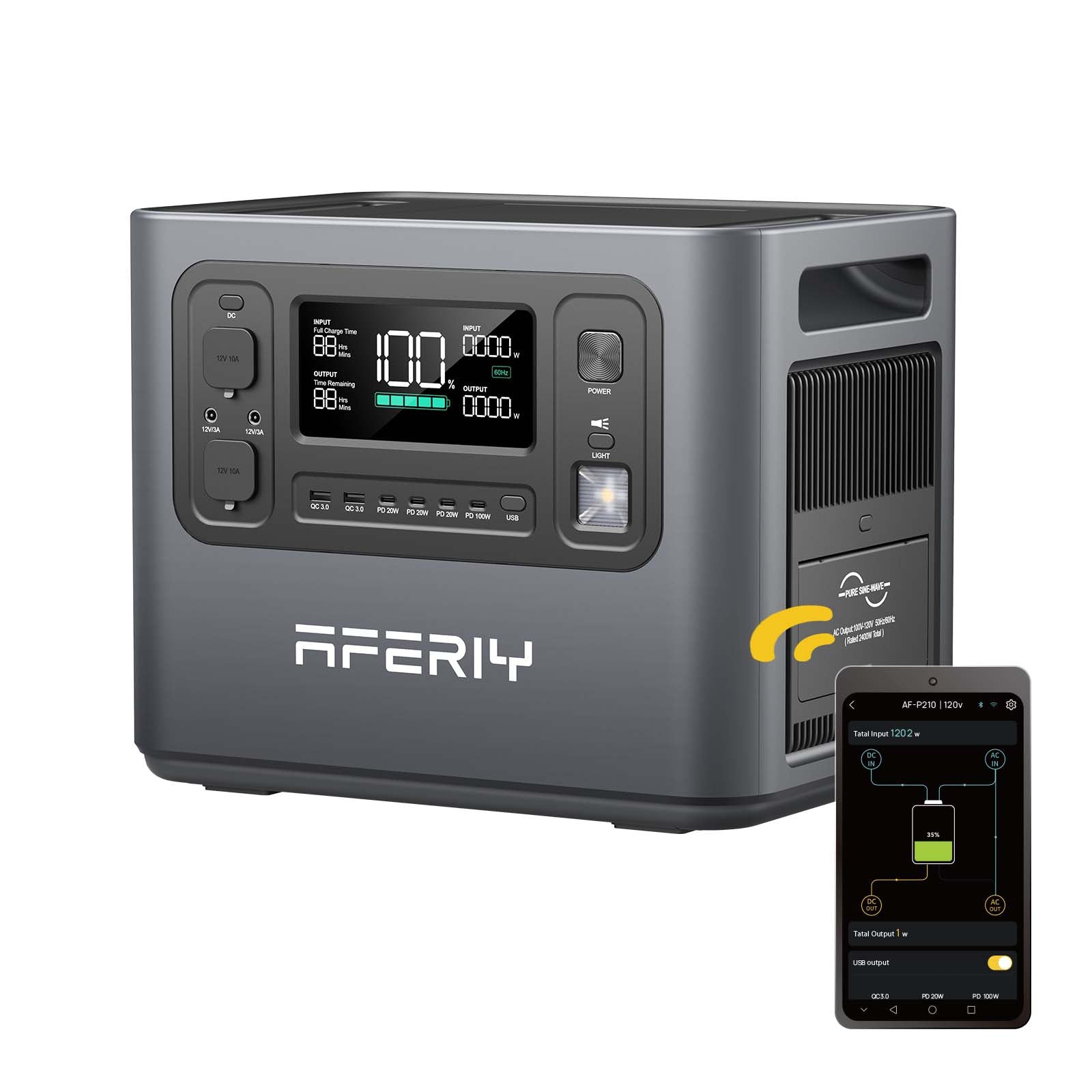
Many power companies use "Time-of-Use" pricing. They jack up the rates when everyone gets home from work and cranks the AC. You can beat the system by storing energy when it's cheap. We often suggest the Aferiy P280 Portable Power Station for this. Charge it overnight when rates bottom out, then use it to power fans or smaller electronics during the expensive afternoon peaks. While it won't run a whole-house 5-ton unit forever, it’s a great way to shave off peak-hour demand.
Backup Power During Outages
Heatwaves often lead to grid instability and blackouts. When the central AC goes down, the temperature inside a home can skyrocket to dangerous levels within hours.
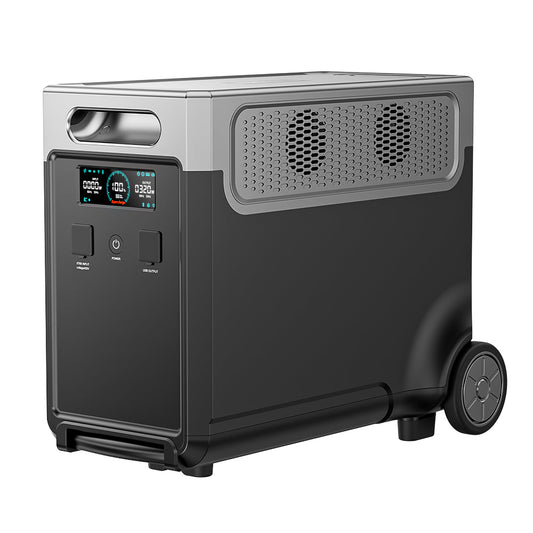
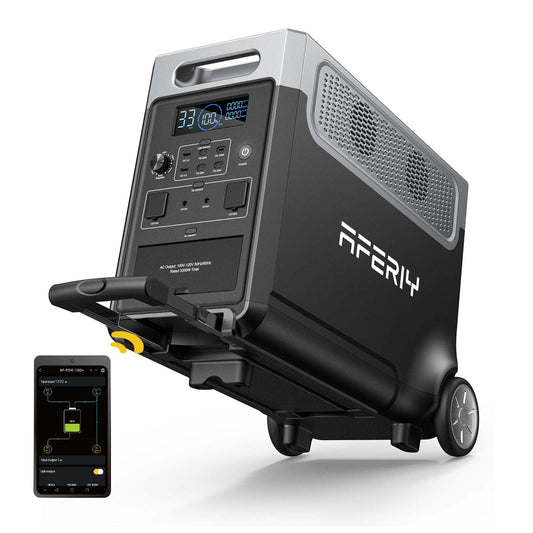
A reliable home battery backup system becomes essential in these situations. The Aferiy P310 Portable Power Station is an ideal solution for emergency backup. With its high capacity and robust output, it can power portable AC units, fans, and essential medical equipment, ensuring your family stays safe and cool until the grid is restored.
Work with Solar Panels
The most effective way to eliminate AC costs is to go "off-grid" with solar power. Central AC units run the most when the sun is at its brightest—which is exactly when solar panels are most productive.
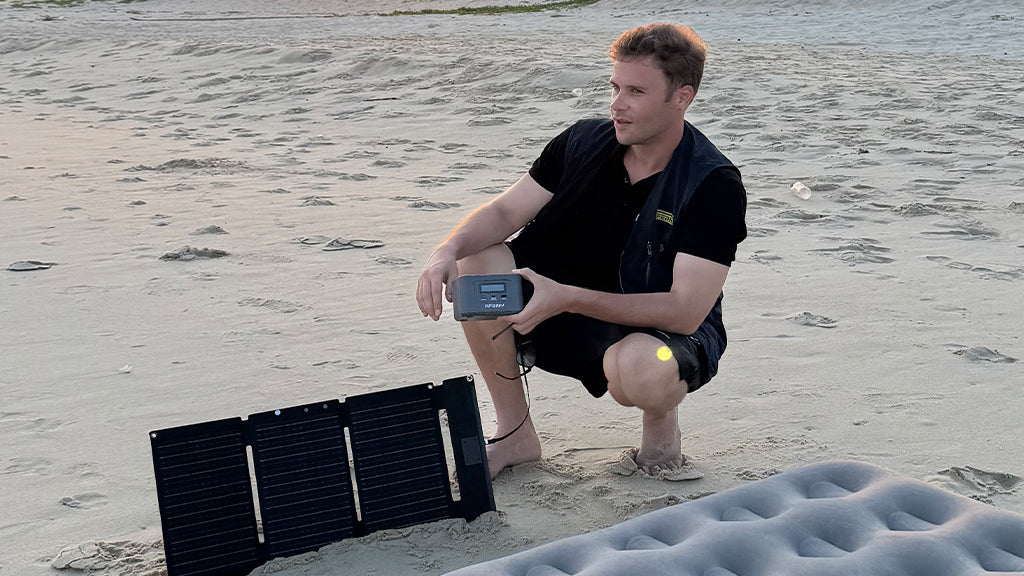
Since AC demand peaks right when the sun is brightest, solar is the perfect partner. If you hook up an AFERIY AF-S400A1 400W Portable Solar Panel to your P310, you’re creating a closed loop of free energy. By scaling up your panel count, you can effectively offset your cooling costs to nearly zero.
Conclusion
Getting a handle on your AC's power draw is the first move toward taking control of your home's economy. These machines are thirsty for power, but you hold the remote. By running the math, keeping your hardware clean, and leaning on tools like Aferiy solar generators, you can keep your home icy without the sticker shock. Smart power management is the future; why pay more than you have to?
FAQs
What can a 2000W portable power station run?
A 2000W portable power station is quite versatile. It can easily run a full-sized refrigerator, a microwave, a coffee maker, or a circular saw. Regarding cooling, it can power a portable air conditioner (8,000–12,000 BTU) or a window AC unit for several hours, making it an excellent companion for localized cooling during outages.
Can 3000 watts power a house?
It covers the basics. You can keep the lights on, the Wi-Fi humming, and the fridge cold. However, it usually won't kick-start a central AC and a water heater simultaneously. Central units need a massive "surge" of power to start, which often exceeds 3,000W unless you've installed a soft-start kit.
How Many Watts Does It Take To Run Your House?
The average American home uses about 1,200 watts (1.2 kW) per hour as a baseline (lights, fridge, electronics). However, during "peak" times when the central AC, dishwasher, or clothes dryer is running, that demand can spike to 5,000–10,000 watts. To be fully self-sufficient or run a whole-home backup, you typically need a system capable of handling a 10kW to 15kW peak load.
 Free shipping from US local warehouse