











Do Solar Panels Need Direct Sunlight
Our question for today, “Do solar panels need direct sunlight?” is asked by homeowners, traveling people, and every other person who considers using renewable energy. To address it directly with no extra fanfare: no, solar panels don’t need direct sunlight to function. Panels are able to produce power even in cloudy or partially shady conditions, but direct sunlight is still the most favorable state to achieve the maximum energy production; however tremendously solar technology has tremendously improved.
The following blog post attempts to further discuss the functionality of solar panels, the importance of direct sunlight, and the optimization of solar performance in different climates. Let’s dig in.
How Do Solar Panels Work
Essentially, solar panels harness the photovoltaic effect, where photons from the sun smack into semiconductor materials mostly made of silicon, knocking electrons loose and sparking a current.
Layered like a sandwich with positive and negative sides, those photovoltaic cells create what’s called an electric field; when sunlight energizes the electrons, photovoltaic cells generate direct current, which you and I use and store.
But the process doesn’t stop here yet. To make appliances run, the direct current we gathered has to go through an inverter, then the current will be grid-friendly and ready for your home outlets.
The brighter and more concentrated the sunlight, the greater the amount of electricity that the panels will be able to produce. Solar energy does not depend on heat but on light, which is why panels can consistently produce power even in cold climates. As a matter of fact, efficiency may even be enhanced by lower temperatures.

Does a Solar Panel Need Direct Sunlight
The answer is nope, they don’t. Solar panels don’t shut down completely without direct sunlight, if that’s what you were wondering.
Solar panels can still generate power from indirect or diffused light, like on cloudy days or in partial shade. That said, direct sun is still their most ideal condition of operation, as their power production efficiency is drastically improved when this condition is met.
Solar panels capture photons from any visible light, not just beaming rays straight from the sun. Even under overcast conditions or light rain, they’ll produce some amount of electricity, although the output might drop to 10% to 25% of peak levels. Artificial lights work too, yet they’re way dimmer than the sun, so don’t expect much power production from a desk lamp.
For best results, aim for four to six hours of direct exposure daily; this number varies by location, panel type, and angle. Shade from trees or buildings will hurt performance, but modern setups often include technologies to minimize losses.
Factors Affecting Solar Panel Performance
The performance of solar panels is determined by many external variables. Cloud coverage, shades created by trees or buildings, dust accumulation, and sun angle all can have serious effects on power generation. The weather also contributes to this, with shorter winter days generating less energy. The selection of the appropriate technology is even more significant to those who live in low-sunlight areas.
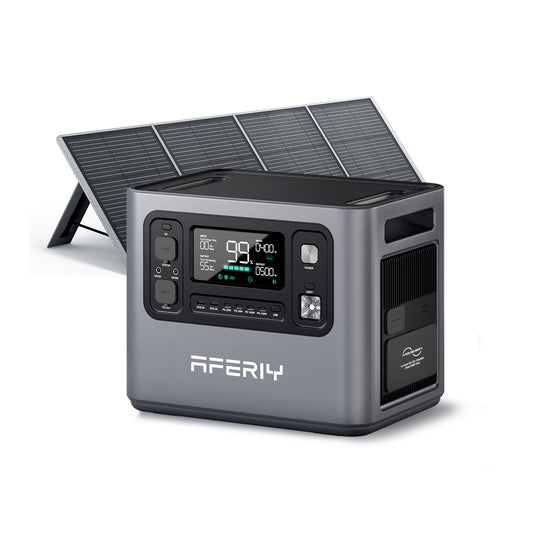
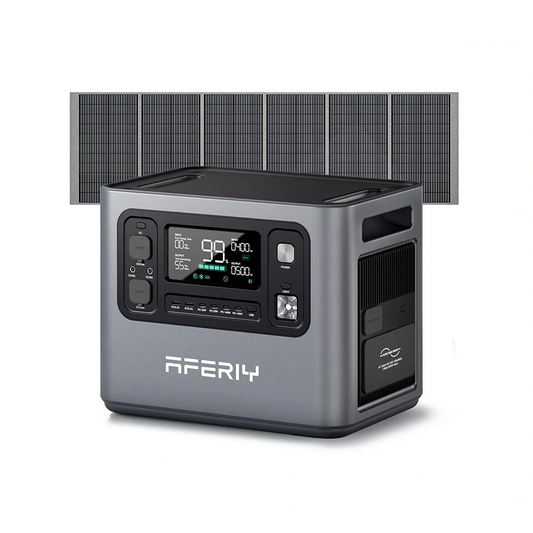
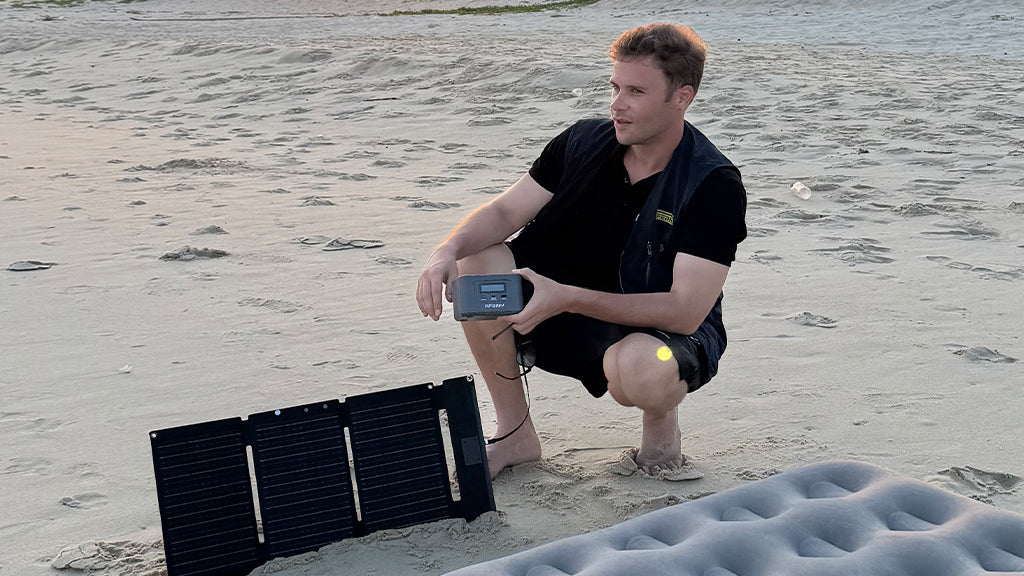
Solar panels that have high efficiency have enhanced performance under low-light conditions. As an example, the AFERIY AF-S400A1 400W Portable Solar Panel has monocrystalline cells, resulting in high conversion efficiency. It also has excellent low-irradiance responsiveness, which is ideal for camping and cloudy areas while also opening the door to emergency power reliefs. It is a practical option to use in the outdoors and in everyday life due to its foldable design and IP67 level of waterproofing.

Solar Panels in Different Climates
Solar panels can operate in a very broad spectrum of climates, yet there are some general variations to be mindful of. In hot climates, the efficiency of the panels can be lower since the performance of PV cells can be impacted by excessive heat. Nevertheless, these panels can generate a lot of energy during strong sunlight. At lower temperatures, panels can be used more effectively as the temperature of the panels is more conducive to electricity.
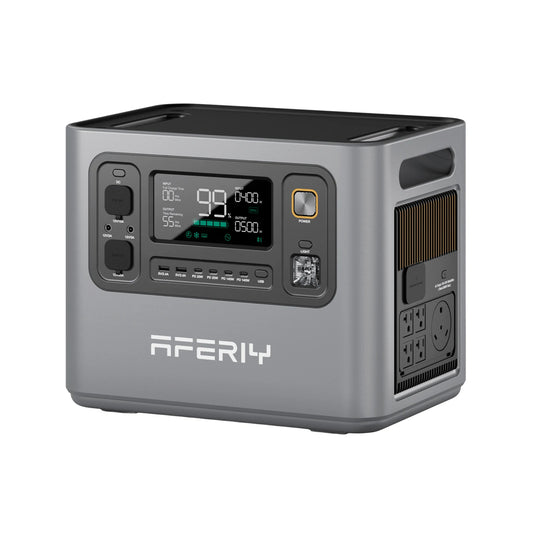
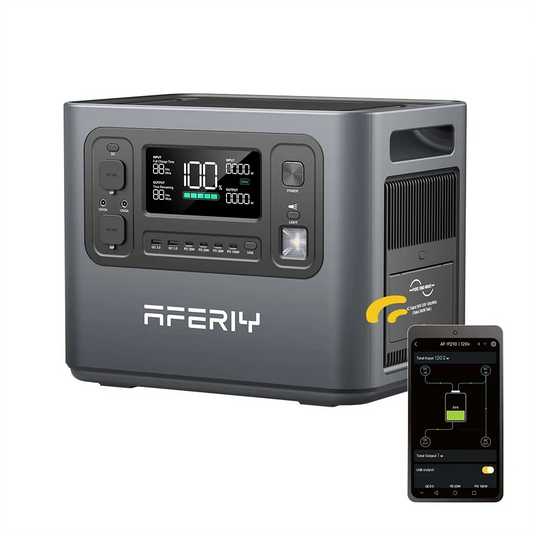
In areas where there are high amounts of clouds, rain, or snow, a combination of solar panels and a good-quality solar generator helps in providing an uninterrupted power supply. The Aferiy P280 Solar Generator is a powerful backup, 2800W, high-capacity battery, equipped with numerous AC and DC outlets. The P280 can store excess energy when sunlight is in short supply, to support nighttime power usage or during an emergency. With a maximum solar input of 1200W combined with the lightning-fast 1800W AC charging, you can expect its batteries to be charged up within an hour.
All this renders the whole system more dependable in varied weather patterns, especially when paired with a home battery backup for increased reliability.
How to Maximize Solar Panel Efficiency
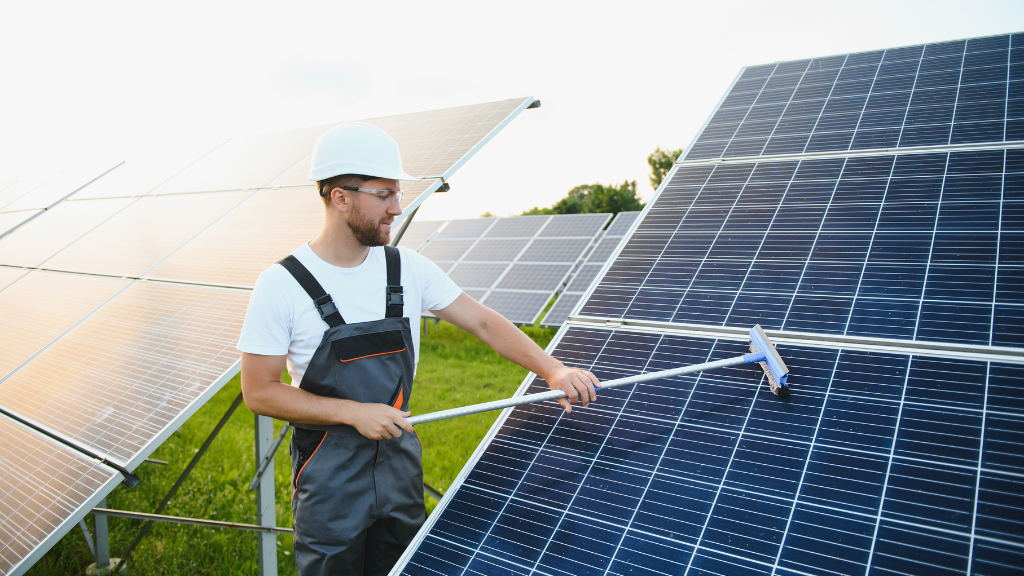
There are some effective measures that may be used to make any solar system more efficient. The panels should be cleaned on a regular basis to keep off dust, bird droppings, and other pollutants that block sunlight. Optimal tilt and direction (i.e., having panels face the sun at midday) in most areas is also performance-enhancing. Numerous homeowners change direction with the change of the seasons to receive more sunlight.
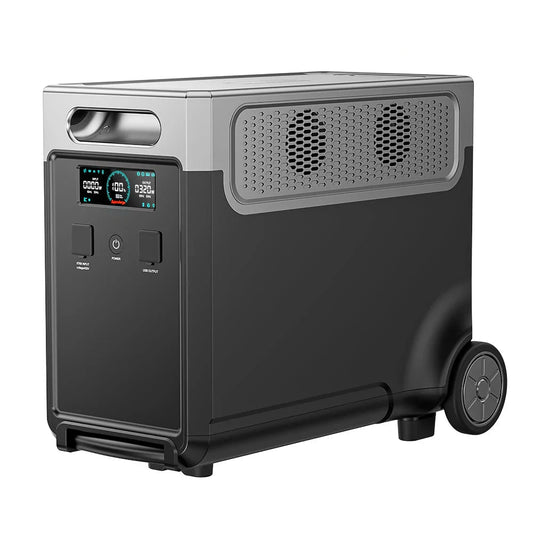
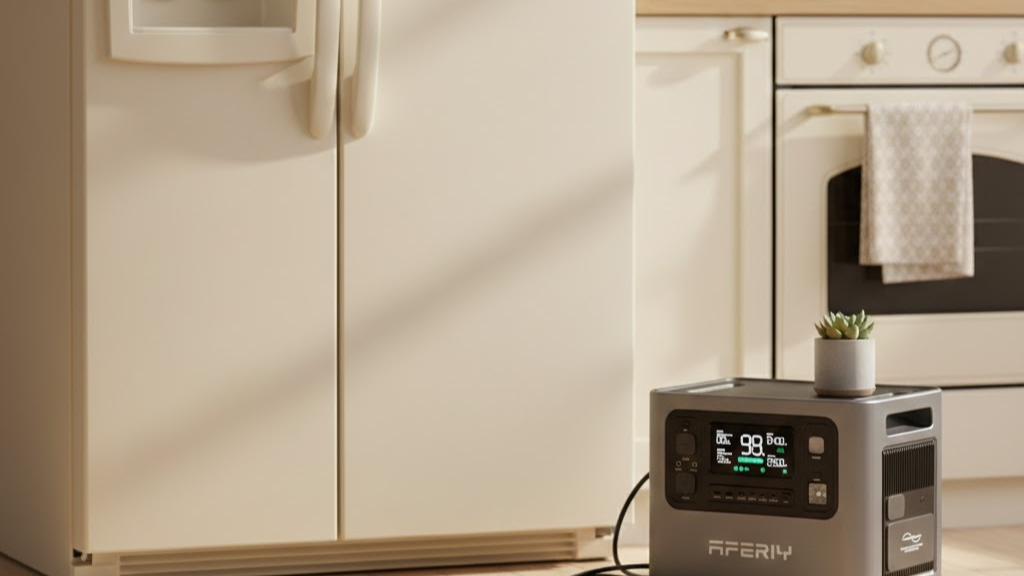
Another primary consideration in terms of maximizing efficiency is energy storage. Connecting panels to a reliable power station means that excess power is not wasted and is stored for future use. An excellent option is the Aferiy P310 Solar Generator. It has a 3600W output, fast charging, and extended battery life. The massive 3840Wh per unit capacity can easily be charged from zero to full with its equally impressive 2200W AC input and 2000W solar input in less than 2 hours. This generator is used to store the energy during the strong sunlight hours to be used at night or during rainy days. Additionally, a 7500-watt generator can run a wide variety of appliances and power equipment, such as refrigerators, lights, and air conditioners. This makes it a versatile choice for both household and outdoor energy needs.
FAQ
Do Solar Panels Work in the Shade?
Yes, but output is reduced. The production of panels can be 10-25 percent of the normal production, depending on the degree of shading.
Do Solar Panels Work in the Rain?
Yes, they work too with diffused light. Rain is also helpful in washing dust off the surface so that performance improves later.
How Many Solar Panels Does It Take to Run a House?
The average home will have 12-20 panels, which will depend on the panel wattage, energy consumption, and geographic location.
What Is the 20% Rule for Solar Panels?
It means that it guarantees an extra 20% system capacity to cover losses caused by shading, inverter inefficiency, and seasonal variations.
How Many Solar Panels Does It Take to Run a House?
Solar panels vary in energy output depending on their size, efficiency, and the amount of sunlight they receive. On average, a single panel can generate between 250 and 400 watts per hour under ideal conditions. This energy production can be influenced by factors like location, panel orientation, and the time of year.
Conclusion
To conclude, the answer to the question “do solar panels need direct sunlight?” is quite clear. Even though direct sunlight provides the highest efficiency, solar panels can also be used under indirect or low-light conditions. High-performance panels and good quality generators of current times contribute to the stability of the power supply, no matter what the climate is. To achieve higher performance, it is possible to combine solutions such as the AFERIY AF-S400A1 400W Portable Solar Panel, the Aferiy P280, or the Aferiy P210 to create a stable, versatile system of solar energy.
The choice of the appropriate equipment and maximization of installations allow any user in any climate to enjoy reliable and affordable solar power even when the sun rays are not present at all times.
 Free shipping from US local warehouse