











What Are Solar Panels Made Of?
Whether you have ever asked yourself the question: What are solar panels made of? You are not alone. Solar power has now saturated the rooftops, RVs, campsites, and backyard systems, and knowing how a panel is built, it is much easier to select the correct in-house or off-grid panel.
With these materials, their construction, and an understanding of how light is converted into working electricity, you will be able to make better decisions and squeeze the maximum out of your system. And in case you want to consider some portable ones, the suggestions below will guide you in the right direction.
What Materials Are Solar Panels Made Of
The solar panels mostly use monocrystalline or polycrystalline silicon solar cells. These are placed between the EVA encapsulants and covered by the external layers, like tempered glass or the ETF film. The frame is made of aluminum, which is generally strong and stable. The electricity is directed to your devices or power station by a junction box and a wiring system.
Additionally, there are other portable versions, such as the AFERIY AF-S400A1 400W Portable Solar Panel and the AFERIY AF-S200A1 200W Portable Solar Panel, that use ETFE instead of glass. This helps to save weight, enhance the transmission of light, prevent the effects of UV damage, and withstand the impact of heat and moisture. The output is a panel that is lighter to move around, more adaptable in the outdoor setting, and long-lasting.
How Are Solar Panels Made?
Manufacturers begin with the purification of silicon and shaping it into ingots. These ingots are cut into thin wafers and treated and wired up into cell strings. The cells are mounted and enclosed in a grid and covered with encapsulant layers and laminated at high temperatures.
Rigid panels are tempered with glass in the front and an aluminum frame. ETFE is used in portable panels to provide strength without weight. After laminating, a junction box, cabling, and weather-resistant finishing touches are added to the panel, and then voltage, efficiency, and durability tests are done.
How Do Solar Panels Work?
Once you know what materials solar panels are made of, it’s important to understand how they work. The solar cells absorb sunlight, trigger the circulation of electrons, and generate DC electricity. The DC power can be utilized to either charge products or provide power to a portable power station, which stores this power and transforms it into AC power.
Monocrystalline silicon, one type of silicon used for solar panels, is able to effectively utilize low light and, therefore, you will get good energy even when the sun is not shining at its full potential. In fact, while solar panels of this type can provide power even with limited sunlight, a generator, like a 7500-watt model, can handle a wide variety of appliances, including larger devices that require more wattage.
What Are the Different Types of Solar Panels?
After basic knowledge of solar panels, let’s look at the three dominant types in the market. Each has its advantages based on the nature of the setup.
Monocrystalline panels
They are the most efficient and most effective in low light. They are produced based on one crystal structure, hence are more expensive but perform better. Both AFERIY 400W and 200W are monocrystalline cell-based models with an efficiency of 23%.
Polycrystalline panels
They are less expensive but moderately less efficient. They are suitable for home installations but are not as well-liked for compact or portable usage.
Thin-film panels
They are portable and versatile, yet not as efficient. They are suitable for specialty installation, but do not suit when you require high output in a limited space.
In terms of reliable operation off the grid, monocrystalline is the best choice.
How to Choose the Right Solar Panels for My Home?
The panel that is suitable for your setup is determined by energy requirements, available space, and the way it should be used. If you're also considering an off-grid solution, a 3000-watt solar generator might not run an entire house, but it can certainly handle essential appliances like lights and a refrigerator for a significant amount of time.

AFERIY AF-S400A1 400W Portable Solar Panel
The AF-S400A1 400W Portable Solar Panel is a serious powerhouse in a smaller size. Developed using monocrystalline silicon cells, which have an efficiency of 23 %, it can harness the sunlight even in dim or indirect sunlight. The ETFE laminated surface is superior to traditional glass in terms of heat, abrasion, and UV. It has a foldable, one-piece design that means it is easy to carry, and adjustable kickstands provide a way to find the ideal angle within a few seconds.
It has USB-A, USB-C PD3.0, and DC outputs, which imply that you may charge laptops, phones, tablets, cameras, or even plug directly into a power station. It is IP65 waterproof and can withstand outdoor conditions. This panel can supply the power required by serious power requirements, such as high wattage, when you are on a road trip, camping, or in case of a home power outage.
AFERIY AF-S200A1 200W Portable Solar Panel
The AF-S200A1 200W Portable Solar Panel has the same 23% monocrystalline efficiency, but is lighter and smaller, something that suits individuals who need portability the most. It is only 5.6 kg, which is small enough to be carried and has a pouch to store cables. The kickstand can be adjusted to get the most out of the sun, and the 5 output ports (USB-A, USB-C, DC5521, MC4-Anderson) allow you to add as many devices as possible simultaneously.
The construction is made out of ETF and has an IP65 rating to ensure that the product will last in bad weather, and it is compatible with all AFERIY power stations. Its powerful option is a weekend travel, backyard work, or effective off-grid charging.
How to Use Solar Panels?
Position your panel at a 90° angle to the sun and ensure it is not shaded, as well as ensuring that your devices directly connect to USB/Type-C ports or to a solar generator.
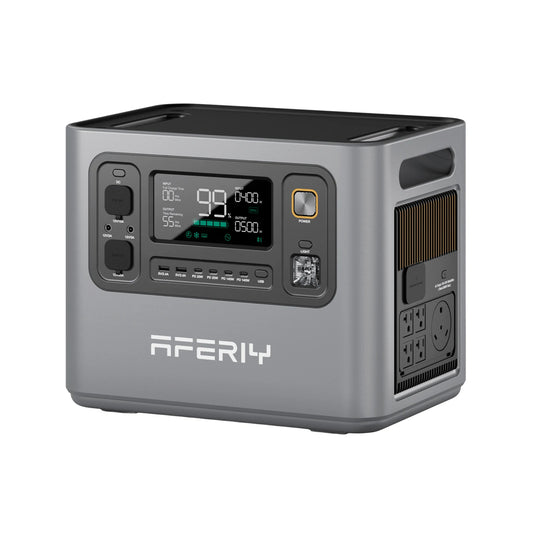
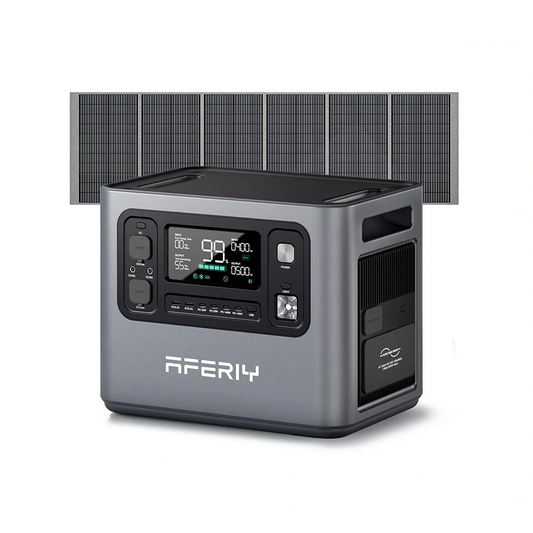
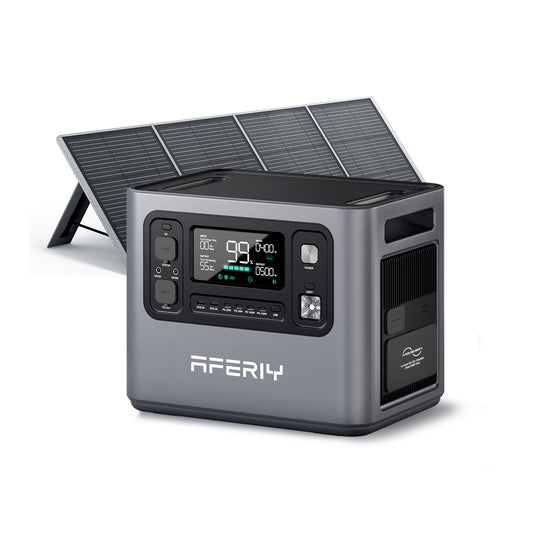
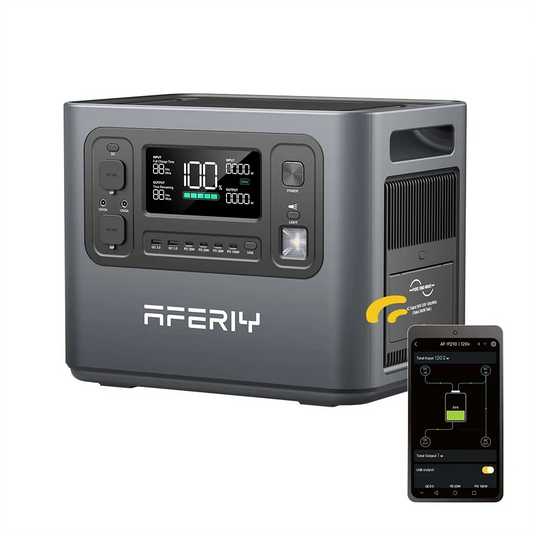
To get uninterrupted power during the day, you need to use the panel with a solar generator like the AFERIY P280 Portable Power Station. It stores extra charge, safeguards equipment, supplies AC power, and provides you with a night backup reserve.
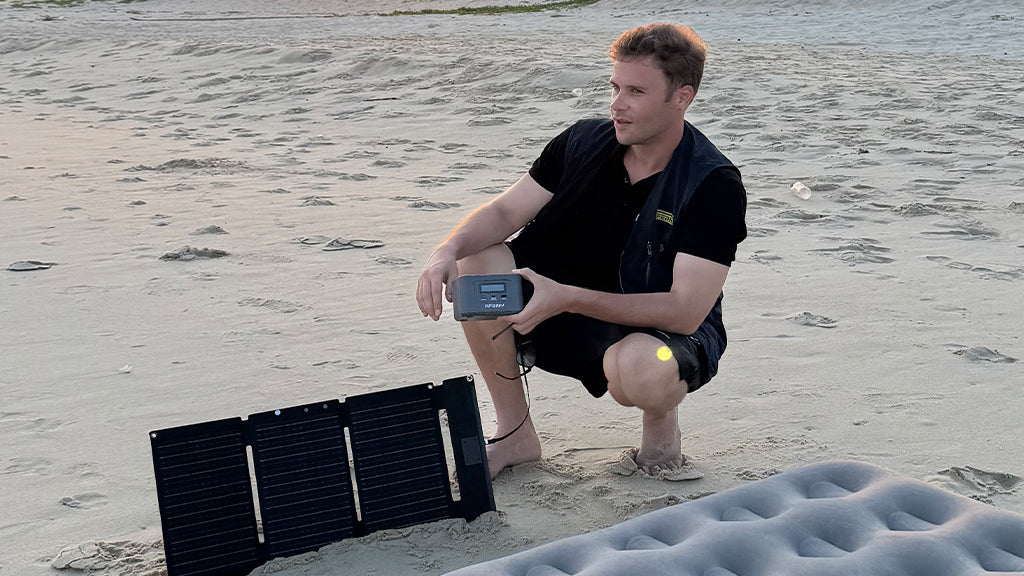
The AF-S400A1 and AF-S200A1 are both easy to use: just unfold, angle toward the sun, connect your devices, and start charging.

FAQ
Are solar panels waterproof?
The majority of portable models are weatherproof. The AFERIY panels are IP65, i.e., they can withstand rain and splashes, but prolonged contact with rain is not the best choice.
Can I mix different solar panels when wiring?
Panels that do not have similar voltage or current ratings should not be connected, because they could cause imbalances, consequently reducing efficiency or even damage to the system
Do portable panels reach their full wattage?
Rated wattage is under ideal test conditions. Actually, there are many factors such as shading, dirt, angle, and temperature will affect performance, and the real output is usually 75-80%.
Are AFERIY panels compatible with other brands?
Yes, provided that the voltage, current, and connector match, but it is always advisable to check compatibility before connecting panels from different brands to avoid potential damage.
Does heat reduce efficiency?
Extreme temperatures reduce productivity by a notch. In order to maintain performance, it’s necessary to ensure good airflow around the panels.
Conclusion
You now have a better understanding of what solar panels are made of. And it is now very easy to select the type you want. The materials, particularly monocrystalline cells and resilient coatings such as ETFE, have a significant role in efficiency, life cycle, and portability. Whether you need power to back up your home, go on an RV trip, or live off-grid, models such as the AFERIY 400W and AFERIY 200W offer good performance with convenient, accessible designs.
They both can provide you with reliable renewable energy wherever you need it and are easy to install, durable enough to be used outdoors, and competent enough to keep the necessary devices operational at all times.
 Free shipping from US local warehouse