











How Much Electric Does a Solar Panel Generate?
As energy costs rise and the world shifts toward sustainable living, more homeowners are turning to renewable energy. If you are considering making the switch, the first and most important question you likely have is: How much electricity does a solar panel generate? Understanding the power output of a solar panel is essential for designing a system that meets your daily needs. Whether you want to reduce your monthly utility bills or go completely off-grid with a reliable home backup battery and solar generator, knowing exactly what to expect from your solar investment is the key to success. In this comprehensive guide, we will break down how solar panels work, the average electricity they produce, and how you can maximize their efficiency.
How Solar Panels Generate Electricity
Before diving into the numbers, it helps to understand the basic science behind solar energy. Solar panels are composed of smaller units called photovoltaic (PV) cells, typically made of silicon. When sunlight hits these cells, the photons (particles of light) knock electrons loose from their atoms.
This movement of electrons creates a flow of electricity known as Direct Current (DC). However, most homes and standard appliances run on Alternating Current (AC). To bridge this gap, your solar system includes an inverter, which converts the DC electricity into usable AC electricity. Once converted, this power is ready to turn on your lights, run your refrigerator, or charge your devices.

Average Electricity Output of a Solar Panel
So, what can you realistically expect from a single panel?
Most residential solar panels today are rated somewhere between 300W and 400W, while higher-end models can go beyond 450W.
Under solid conditions—think about 5 hours of strong, direct sunlight—a 400W panel will typically generate:
-
Around 2 kWh per day
-
Roughly 60 kWh per month
One panel alone won’t run an entire home. But once you scale up—say, 15 to 25 panels—you’re in a completely different territory. At that point, you can cover a large portion of your energy usage, sometimes all of it.
The key variable here is still wattage. Higher wattage generally means higher output—but only if conditions support it.
The amount of electricity a single panel produces depends largely on its "wattage rating." Most modern residential solar panels are rated between 300 and 450 watts (W).
To help you visualize the potential of different panel sizes, refer to the table below (assuming an average of 4 peak sun hours per day):
|
Panel Wattage (W) |
Daily Est. Output (kWh) |
Monthly Est. Output (kWh) |
Typical Application |
|
100W |
0.4 kWh |
12 kWh |
Camping, charging phones/lights |
|
200W |
0.8 kWh |
24 kWh |
RVs, small solar generator units |
|
400W |
1.6 kWh |
48 kWh |
Standard residential roof arrays |
|
500W |
2.0 kWh |
60 kWh |
High-efficiency commercial setups |
What Affects Solar Panel Output?
Rated power gives you a baseline. That’s the clean, ideal number manufacturers like to print on the box. Real life? It rarely plays along that neatly. Output shifts, sometimes subtly, sometimes not—depending on a few key variables working together.
Sunlight intensity
Not all daylight is equal. Peak sun hours—when sunlight is strongest—matter far more than total daylight. More peak hours, more output.
You can have a long, bright-looking day and still end up with average production because the light isn’t hitting hard enough. Midday is where the real work happens. That’s when panels earn their keep. Ever notice how output spikes around noon? That’s no coincidence.
Panel efficiency
Some panels simply convert sunlight better than others. Standard ones operate around 17%–20%, while premium options can exceed 22%. That difference becomes noticeable, especially with limited space. Higher-efficiency 400W panels, in particular, allow homeowners to generate more electricity without expanding their roof footprint.
On paper, a few percentage points don’t sound dramatic. In practice, it adds up—quietly but consistently. If your roof space is tight, those extra watts per panel can save you from needing additional hardware. Less clutter, more output. Not a bad trade.
Weather conditions
Cloudy skies reduce output, but they don’t shut it down. Panels still produce energy—just at a lower level, often 10%–25% of normal.
People often assume clouds mean “no power.” Not true. The system keeps working, just at a slower pace. Funny enough, a light rain can actually help by clearing dust off the surface. Of course, heavy snow is a different story—that can block everything until it slides off.
Orientation and tilt
Direction matters. In the Northern Hemisphere, panels should ideally face south. The tilt angle also plays a role. A well-positioned panel captures more sunlight throughout the day.
Get the angle right, and the system feels almost effortless. Get it wrong, and you’re leaving energy on the table every single day. Even small adjustments can shift annual production more than people expect. It’s one of those details that doesn’t look dramatic—but it is.
Temperature
Here’s something people don’t always expect: extreme heat actually reduces efficiency. Panels perform best in bright but cooler conditions.
It sounds counterintuitive, right? More sun should mean more power. But heat builds resistance inside the panel, and output dips slightly. That’s why a clear, cool day often outperforms a scorching one. Sunlight does the job. Heat just tags along—and sometimes gets in the way.
How to Calculate Solar Panel Output
Calculating your estimated solar panel output is relatively straightforward if you know your panel's wattage and your local peak sun hours. The basic formula is:
Panel Wattage × Peak Sun Hours = Daily Watt-Hours
For example, if you have a 350W solar panel and you live in an area that averages 4.5 peak sun hours per day:
350W × 4.5 hours = 1,575 watt-hours (or 1.575 kWh) per day.
To find the annual output, simply multiply that daily figure by 365 days, keeping in mind that actual production will fluctuate between summer and winter.
We use 0.75 to account for real-world losses like wiring resistance and inverter conversion. The table below shows how location (sunlight) changes the math for a standard 400W panel:
|
Sunlight Level |
Peak Sun Hours/Day |
400W Panel Daily Yield |
Estimated Days to Charge Aferiy P280 |
|
Low Sun |
3 Hours |
0.9 kWh |
~1.5 - 2 Days |
|
Average Sun |
5 Hours |
1.5 kWh |
~1 Day |
|
High Sun |
7 Hours |
2.1 kWh |
< 1 Day |
How Much Electricity Does a Solar System Generate?
While a single panel generates 1.5 to 2 kWh per day, a complete residential solar system is designed to power an entire home. An average home system is around 5 to 6 kilowatts (kW) in size, typically consisting of 15 to 20 panels. A system of this size can generate anywhere from 20 to 30 kWh per day, which is generally enough to cover the daily energy usage of an average modern household.
However, solar energy is produced only during the day, peaking at noon when many people are away at work and using minimal electricity. Because of this mismatch between generation and consumption, many users start looking for ways to store and use that energy efficiently. Without storage, excess energy is simply sent back to the grid.
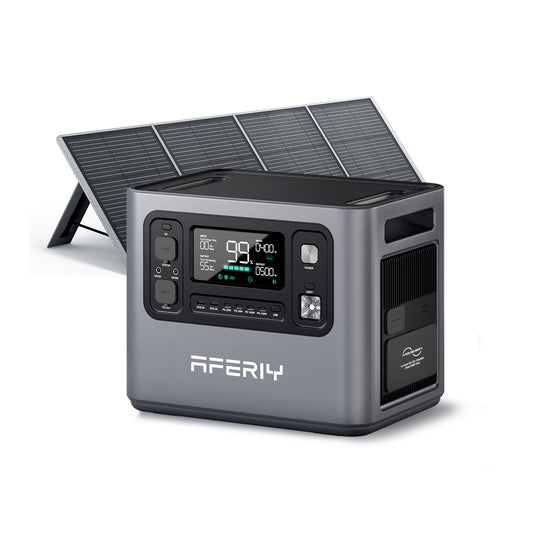
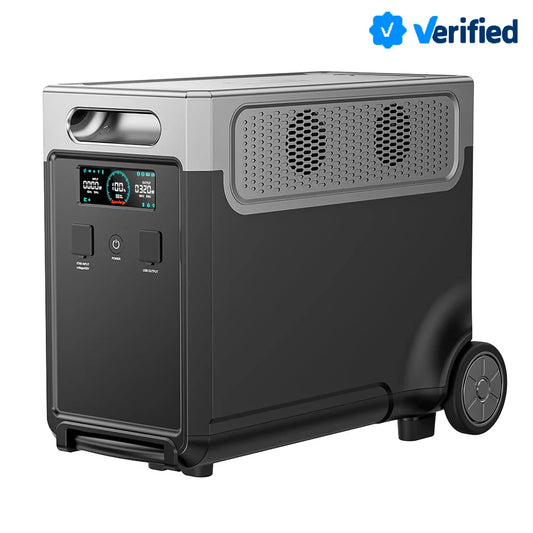
Take the Aferiy P310 solar generator, for example. It’s built for off-grid setups and reliable home backup. During the day, it captures the extra energy your panels produce instead of letting it slip away. At night? It feeds that stored power back into your home. Outage hits? Your essentials keep running without interruption.
With a system like that in place, your solar setup stops being “daytime-only.” It becomes steady. Predictable. Always there when you need it.
Tips to Maximize Solar Panel Efficiency
Investing in solar is a big step, so it makes sense to ensure you are getting every drop of power possible out of your system. Here are the best ways to maximize your electricity generation.
Keep panels clean
Even the best solar panel won’t perform well if the surface is blocked. Dust, pollen, bird droppings, and debris gradually reduce how much sunlight reaches the cells.
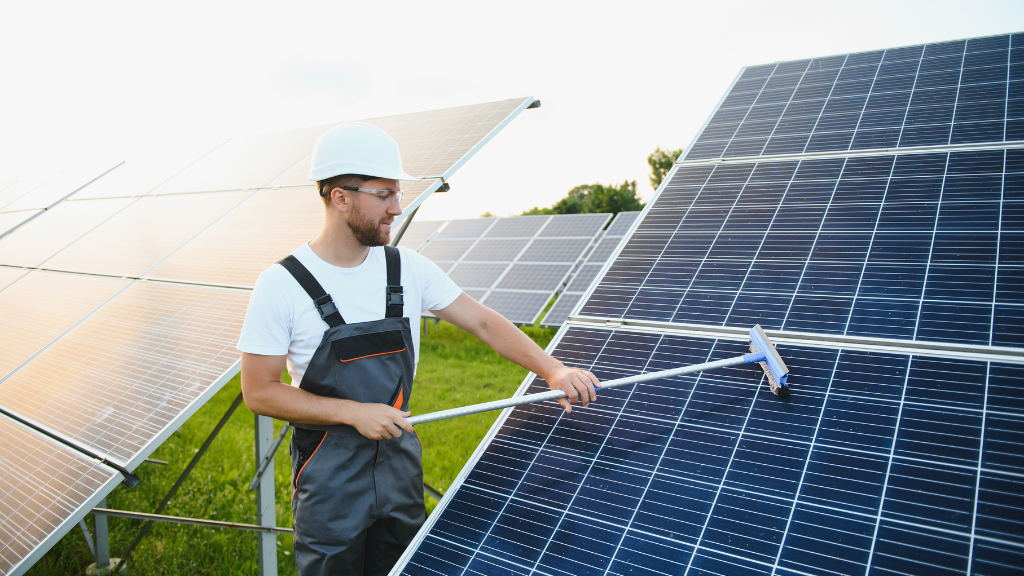
In most cases, cleaning solar panels is simple and doesn’t require specialized tools. A soft brush, clean water, and mild conditions—early morning or late afternoon—are usually enough. Avoid harsh chemicals or abrasive materials, as they can damage the surface.
For areas with heavy dust or frequent storms, regular cleaning can improve output by several percentage points. It’s a small effort, but it keeps your system running closer to its full potential.

Adjust Panel Angle and Direction when possible
If you are installing a ground-mounted system or have adjustable roof mounts, you can change the tilt of your panels seasonally. Tilting them slightly higher in the winter catches the lower sun, while laying them flatter in the summer captures the high midday sun.
Avoid Shade as Much as Possible
Even a small amount of shade on a single panel can disproportionately reduce the output of your entire system if you are using a traditional string inverter. Keep nearby trees trimmed back, and consider the placement of chimneys or satellite dishes when planning your installation to ensure a clear line of sight to the sun all day.
Schedule Regular Maintenance Checks
While solar panels are incredibly durable and have no moving parts, the wiring, inverters, and mounting hardware can experience wear and tear. Having a professional perform a visual and electrical inspection every few years will ensure that your system is operating at peak performance and catch minor issues before they become major power losses.
Pair with an Energy Storage Solution
If you want consistent power—day and night—storage becomes essential.
A system paired with a battery allows you to:
-
Use solar energy after sunset
-
Stay powered during outages
-
Reduce reliance on grid pricing
For off-grid or backup scenarios, something like the Aferiy P310 solar generator stores daytime energy so your home keeps running when the sun isn’t out.
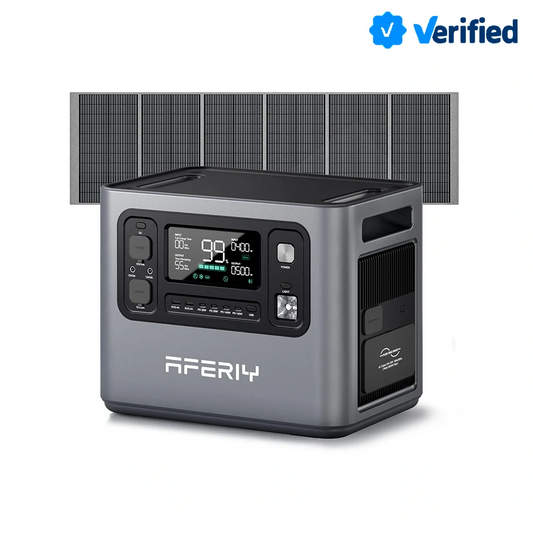
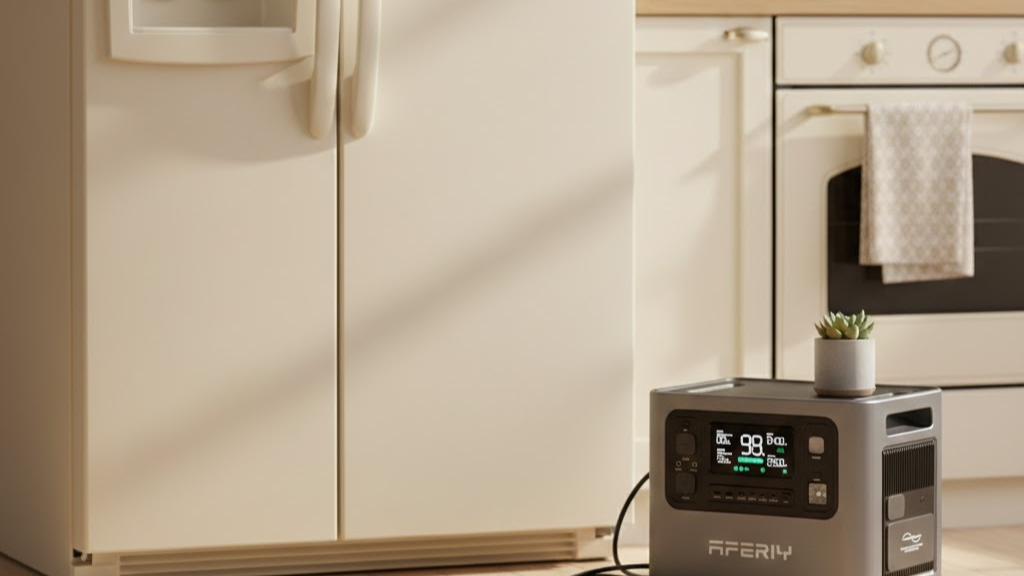
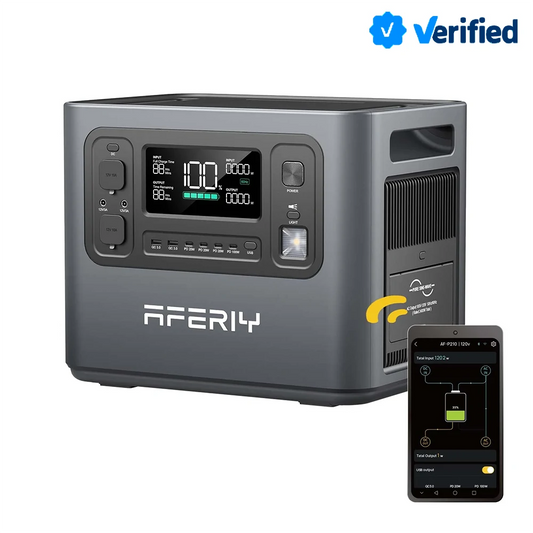
The Aferiy P280 solar generator fits that role nicely. Compact, easy to move, and surprisingly capable, it steps in as a dependable backup battery that stores the energy your panels produce during the day and holds onto it for later use—when the sun dips and your power needs don’t.
Conclusion
So, how much electricity can solar panels generate? The basic output depends on the panel’s power rating. Typically, a standard 400-watt panel produces 1.5 to 2 kilowatt-hours of electricity per day. But actual generation depends on your location, weather conditions, and installation method. If you understand the things that affect how much solar power is made and take steps to make this process more efficient, you can rely less on the traditional grid. And here's the best part: when you team up solar panels with the Aferiy P310 and P280, you can capture, store, and use clean energy on demand.
FAQ
How much power does 1 solar panel produce?
On average, a modern residential solar panel produces between 300 and 400 watts of power under direct sunlight. In terms of daily output, this translates to roughly 1.5 to 2 kilowatt-hours (kWh) of electricity per day, depending on the amount of peak sun hours in your location.
How much electricity does a 400W solar panel generate per day?
Assuming your location receives an average of 5 peak sun hours per day, a 400W solar panel will generate about 2,000 watt-hours, or 2 kWh, of electricity per day. Over a month, this equals approximately 60 kWh.
How many solar panels do I need to run a house?
The exact number depends on your household's daily energy consumption, but the average home requires a 5kW to 6kW solar system. To achieve this, you will generally need between 15 and 20 standard (300W–400W) solar panels to completely cover your daily electricity needs.
Can solar panels run an air conditioner all day?
Yes, solar panels can run an air conditioner, but it requires a significantly large solar array and a substantial home backup battery. Air conditioners consume a massive amount of electricity (often 3,000+ watts continuously). To run one all day—and especially into the evening—your solar system must be large enough to handle the immediate AC load while simultaneously charging your battery storage for nighttime use.
 Free shipping from US local warehouse