












How Many Watts Are in a Megawatt? MW to Watts Conversion
When exploring solar power, backup energy, or large‑scale electricity systems, you may come across terms like watts (W), kilowatts (kW), and megawatts (MW). These units describe different levels of electrical power, from everyday appliances to utility‑scale energy projects.
So, how many watts in a megawatt? The answer is 1,000,000 watts. Understanding this conversion makes it easier to compare solar systems, battery storage, and backup power solutions.

Understanding Watts, Kilowatts, and Megawatts
A watt (W) is the standard unit used to measure electrical power. It describes how much power a device consumes or a system can provide at a specific moment.
For everyday electronics, power ratings are usually measured in watts because their energy requirements are relatively small. A smartphone charger may use around 20–100W, a laptop typically requires tens of watts, while larger appliances such as microwaves, heaters, and power tools may require hundreds or thousands of watts.
As electricity demand increases, using watts alone becomes less practical. Larger units are used to describe bigger power systems. A kilowatt (kW) equals 1,000 watts, while a megawatt (MW) equals 1,000 kilowatts or 1,000,000 watts.
If you are wondering what is a megawatt, it is simply a unit used to measure large amounts of electrical power. Megawatts are commonly used for utility‑scale solar farms, power plants, wind energy projects, and industrial facilities. Residential solar systems and home backup equipment are usually measured in watts or kilowatts because they operate on a much smaller scale.
How Many Watts Are in a Megawatt?
The answer to how many watts are in a megawatt is simple:
1 megawatt (MW) = 1,000,000 watts (W)
A megawatt is a larger unit of power measurement used when describing large‑scale electricity systems. Since 1 kilowatt (kW) equals 1,000 watts, one megawatt is equal to 1,000 kilowatts or one million watts.
The conversion formula is:
Megawatts × 1,000,000 = Watts
For example:
| Megawatts (MW) | Kilowatts (kW) | Watts (W) |
|---|---|---|
| 0.001 MW | 1 kW | 1,000 W |
| 0.01 MW | 10 kW | 10,000 W |
| 0.1 MW | 100 kW | 100,000 W |
| 0.5 MW | 500 kW | 500,000 W |
| 1 MW | 1,000 kW | 1,000,000 W |
| 5 MW | 5,000 kW | 5,000,000 W |
| 10 MW | 10,000 kW | 10,000,000 W |
This conversion helps show the difference between household power equipment and large energy projects. A portable power station rated at 3,000W, for example, can support many home appliances and outdoor devices, but it equals only 0.003 MW. Megawatts are mainly used for much larger applications, such as utility‑scale solar farms, power plants, and industrial energy systems.
How Many Solar Panels Are Needed for 1 Megawatt?
The number of solar panels required for a 1 megawatt (MW) solar system depends on the power output of each panel. Since a 1 MW system equals 1,000,000 watts, the estimated number of panels can be calculated by dividing the total capacity by the wattage of a single panel.
The formula is:
Number of solar panels = 1,000,000W ÷ Solar panel wattage
For example, a solar project using 400W panels would require:
1,000,000W ÷ 400W = approximately 2,500 panels
This is only a theoretical calculation. Actual solar projects also consider factors such as panel efficiency, available installation space, inverter performance, system design, and local sunlight conditions. Higher‑wattage panels may reduce the total number of panels required, while lower‑output panels would require more panels to achieve the same capacity.
Large‑scale solar projects are measured in megawatts because they generate electricity at a scale suitable for commercial facilities, utilities, or multiple customers. By comparison, residential solar systems are generally measured in kilowatts because they are designed to meet the needs of individual homes.
How Many Homes Can 1 Megawatt Power?
1 megawatt (MW) power source can typically provide electricity for hundreds of homes, but the exact number depends on household electricity consumption, location, climate, and how the electricity is used. In many cases, a 1 MW system can support roughly hundreds to around 1,000 homes under average conditions.
To understand why the number varies, it helps to look at how electricity is measured. A megawatt describes the amount of power a system can deliver at a specific moment, while homes consume electricity over time, usually measured in kilowatt‑hours (kWh).
For example, a household in a hot climate with heavy air‑conditioning use may require significantly more electricity than a home in a mild climate with lower energy demand. As a result, the same 1 MW capacity could support fewer homes in areas with higher electricity consumption.
This is why energy companies usually provide estimates rather than a fixed number when explaining how many homes a power project can serve. The actual figure depends on both the system’s output and the energy need of the homes being supplied.
MW vs MWh: Understanding Power and Energy Storage
One of the most common mistakes when comparing energy systems is confusing megawatts (MW) with megawatt‑hours (MWh).
A megawatt (MW) measures power capacity. It shows how much electricity a system can deliver at a specific moment.
A megawatt‑hour (MWh) measures the total amount of electricity generated or stored over time.
For example, a 1 MW system operating at full capacity for one hour would produce 1 MWh of electricity.
This difference is important when looking at battery storage systems. A battery’s power output determines which appliances it can operate, while its energy capacity determines how long it can continue supplying electricity.
For portable power stations, the same principle applies on a smaller scale. Instead of MW and MWh, manufacturers typically use watts and watt‑hours because these units are more suitable for household and outdoor applications.
How Much Battery Storage Does a Home Need?
For most homes, the required battery storage depends on the level of backup you need. A smaller system with around 5–10 kWh of usable capacity may be enough to keep essential devices such as lights, Wi‑Fi routers, phones, and small appliances running during short outages. Homes that need longer backup time or want to support larger appliances often require 10–20 kWh or more of battery storage.
The right battery size depends mainly on what you want to power and how long you need backup electricity. For example, keeping a refrigerator, lighting, and communication devices running requires much less energy than powering high‑demand appliances such as air conditioners, electric heaters, or power tools.
Another important factor is the balance between output power (W) and battery capacity (Wh or kWh). Output power determines whether a system can handle appliances with higher power requirements at the same time, while battery capacity determines how long the system can continue supplying electricity. Choosing the right balance helps prevent buying a system that is either too small for your needs or larger than necessary.
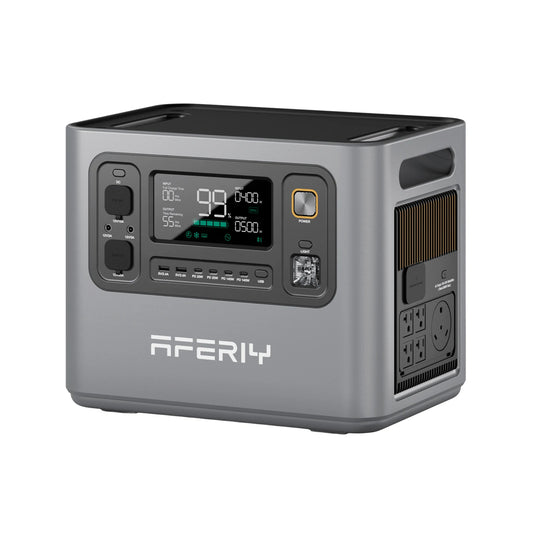
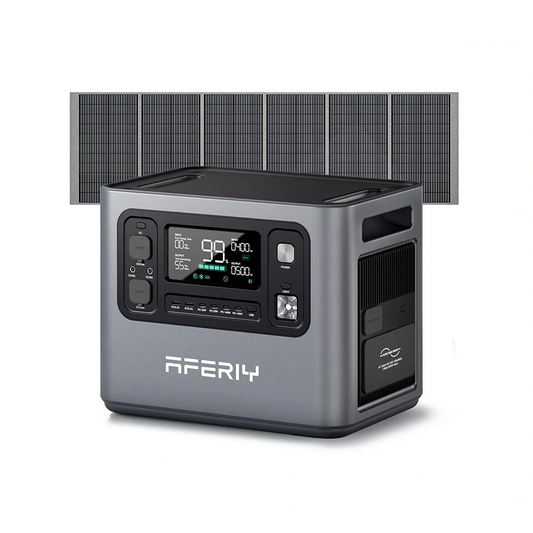
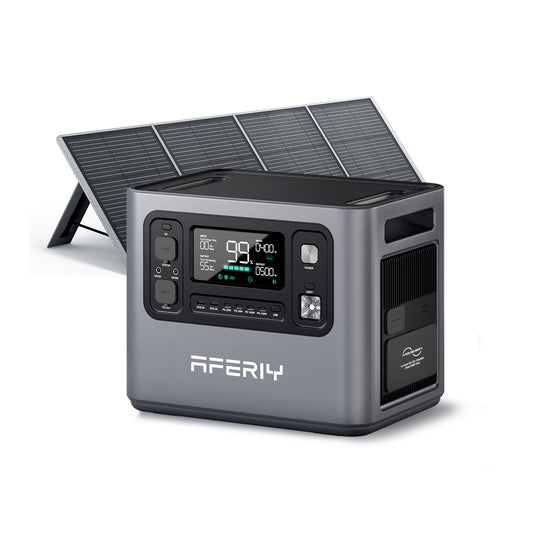
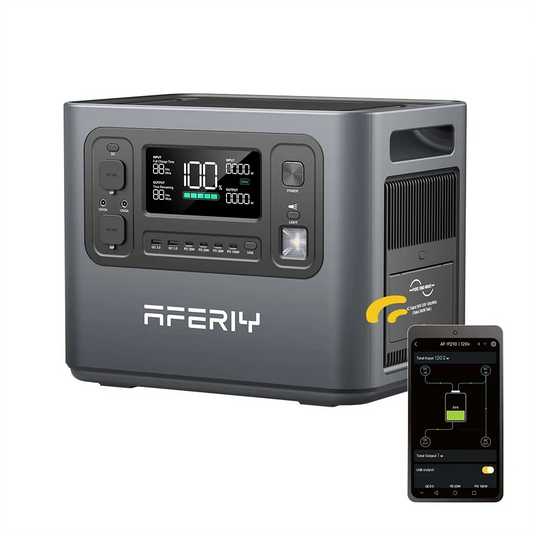
For users who mainly need reliable backup for essential devices, outdoor activities, or occasional power interruptions, the AFERIY P180 Pro Portable Power Station provides a practical balance between portability and backup capability. It is suitable for scenarios such as camping trips, RV travel, and short‑term home backup, where users need dependable power without installing a permanent energy storage system.

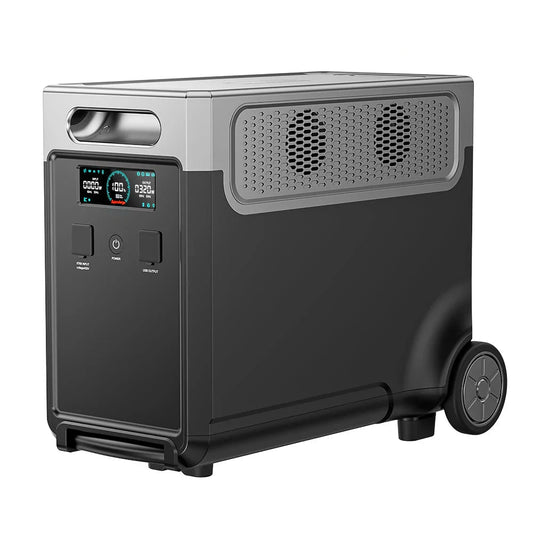
For homeowners who need more backup flexibility, such as running larger appliances during extended outages or reducing reliance on the grid while off‑grid, a higher‑capacity system like the AFERIY P300 Portable Power Station can better match those needs. It is designed for users who require more stored energy and stronger output capability, making it suitable for longer backup periods, RV living, and more demanding power situations.

The best battery storage choice is ultimately based on real electricity usage rather than simply choosing the largest available capacity. Understanding your essential loads, expected runtime, and typical usage scenarios will help determine the most suitable backup power solution.
FAQs
What is a megawatt used for?
A megawatt is mainly used to describe the capacity of large energy systems, including solar farms, power plants, and industrial facilities.
What is a megawatt used to measure?
A megawatt is used to measure power capacity in large energy systems. While household appliances are usually measured in watts or kilowatts, utility‑scale projects often use megawatts because they produce much higher levels of electrical output.
Is 1 megawatt enough to power a city?
A single megawatt can provide a significant amount of electricity, but whether it can power a city depends on the city’s population, energy consumption, infrastructure, and time of use. Larger cities typically require much more than 1 MW of continuous power.
Conclusion
A megawatt represents a much larger scale of electrical power than most household users encounter every day. Knowing that 1 megawatt equals 1,000,000 watts helps explain how large solar projects, power plants, and energy storage systems are measured.
For homeowners, watts and watt‑hours are usually more practical measurements when evaluating backup power solutions. Understanding the difference between power output and stored energy can help users choose a system that matches their actual electricity needs.
 Free shipping from US local warehouse