











Solar Panel Series Vs Parallel: Key Differences and Which Is Better for Your Setup
Selecting the appropriate wiring technique is more crucial than it seems to many individuals. In the case of Solar Panel Series Vs Parallel, the actual dilemma is easy to understand: do you need more voltage or do you need more current? The answer influences the rate at which it will be charged, its use in any of your power stations, and the performance of the system in fluctuating weather. Each of these options is explained thoroughly in the following sections of this guide, which also provides the ideal applications of each setup and enables you to create reliable solutions to your problems.
What Are Series and Parallel Connections in Solar Panels?
It is better to learn what each of the connections is before making the comparison of Solar Panel Series Vs Parallel.
With a series setting, you get coupled with the positive terminal of one solar panel to the negative terminal of the next panel. The voltage accumulates, and the current remains constant. This is effective in longer cable lines, since with increased voltage, the distance covered will work more efficiently.
In a parallel configuration, the positives get connected to each other and the negatives to other negatives. The current is cumulative, the voltage is constant. It is preferred in cases where you need constant charging or where your power station has a low maximum input voltage.

How to Connect Solar Panels in Series
It is easy to connect in series, link the panels end to end, so the voltage increases. Increasing volatility can make MPPT charge controllers more effective, particularly during average sunlight conditions.
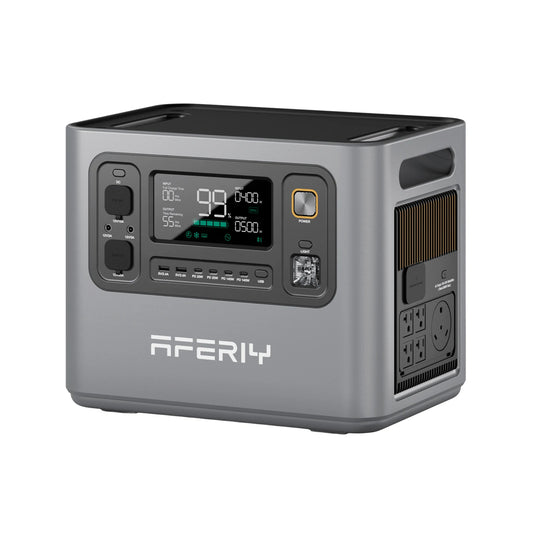
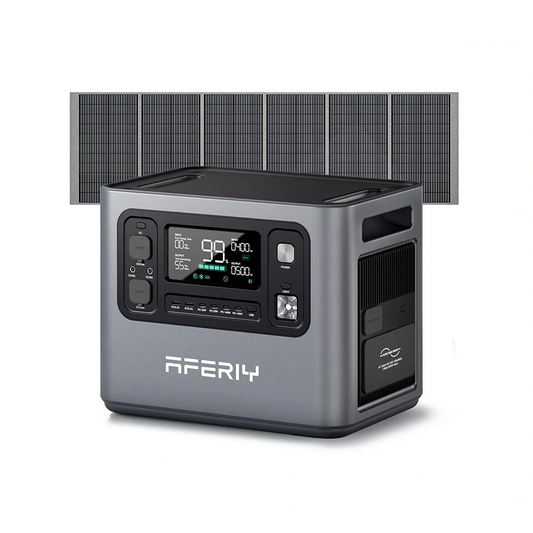
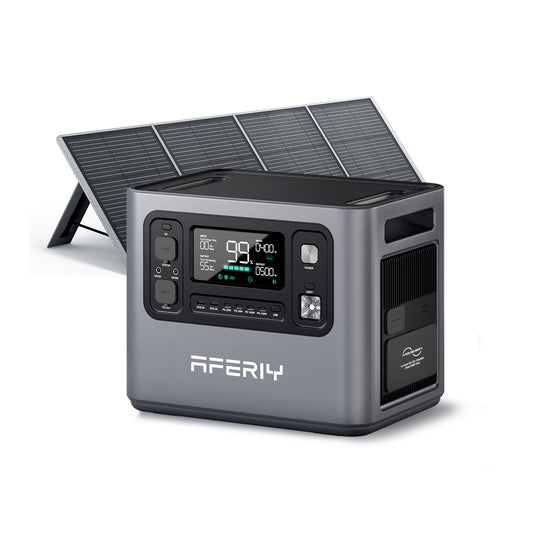
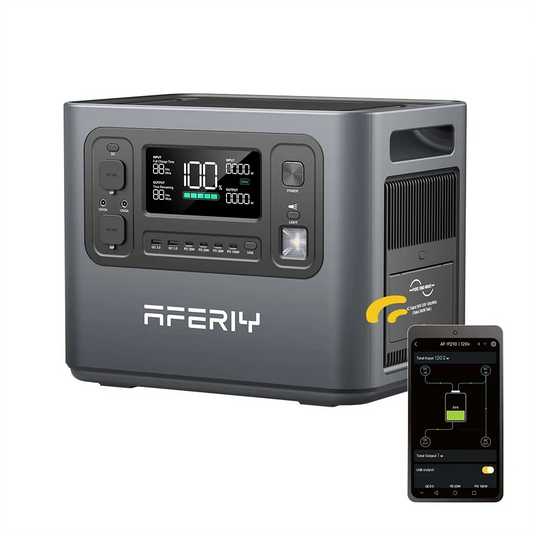
In case you require high-voltage design, the AFERIY P280 2800W Solar Generator Kit is compatible with series-connected panels and can accept high solar power.It provides expandable storage, faster AC charging, and a long-life LiFePO4 battery. For those investing in long-term power security, the durability of these internal components largely determines how many years a solar generator will last, often providing over a decade of reliable service when used as a backup at home or on heavy-duty outback rides.
How to Connect Solar Panels in Parallel
Parallel wiring is all conditioned to maintain low voltage and increase current. The advantage is that charging remains constant even when one of the panels is partially obscured, since the remaining panels will still provide power.
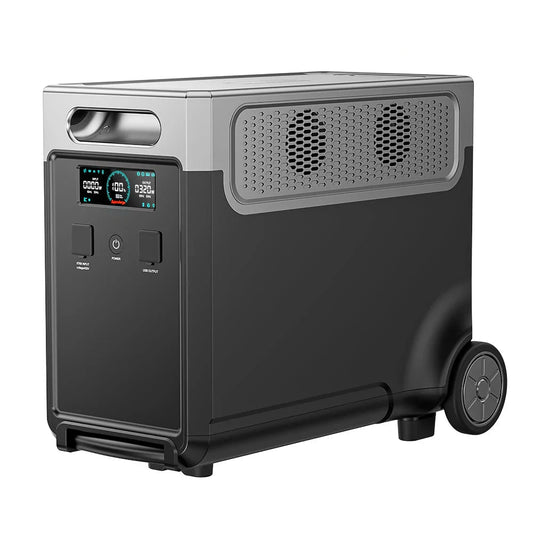
The AFERIY P310 3600W Solar Generator Kit is particularly popular when used with parallel solar systems, offering a high-power capacity of 3840Wh and a robust 3600W pure sine wave output. This high capacity is essential for high-demand scenarios, as it helps users estimate exactly how long a 3000-watt solar generator will run when powering essential appliances like RV air conditioners or off-grid cabin tools during peak demand.
Key Differences Between Series and Parallel Connections
Series and parallel connections handle wiring in distinct ways. In a series, voltage rises while current stays constant; this setup cuts power loss across long cable runs. Yet shading on just one panel drags down the entire chain's output.
Parallel connections, by contrast, maintain voltage and boost current. They deliver more consistent performance under patchy sunlight.
Each panel in parallel operates on its own; shade affects only the impacted one. Series suits high-voltage solar systems best. Parallel proves safer where voltage limits remain low.

Key Factors to Consider When Choosing the Right Configuration for Your System
Before choosing series or parallel wiring, keep these points in mind.
-
Voltage and current limits: Check your solar generator's specs—stay within safe input ranges.
-
Shading patterns: Heavy or variable shade often favors parallel setups.
-
Cable length: Long runs cut losses with series' higher voltage.
-
Charge controller type: MPPT controllers manage elevated voltages better than PWM ones.
-
Fast charging or better stability: Series wiring enables your setup to be charged faster, while greater stability points to parallel. Pick what fits your needs.
When Should You Use Series or Parallel for Different Setups?
Various cases will present different wiring requirements. The Series delivers the best performance on high voltages and a high-power station, plus the need to have effective power in weaker sun rays, and this is when the Series is preferred. Parallel should be used in mixed shade applications, in RV roofs where the exposure is uneven, or in any application where low voltage is required.
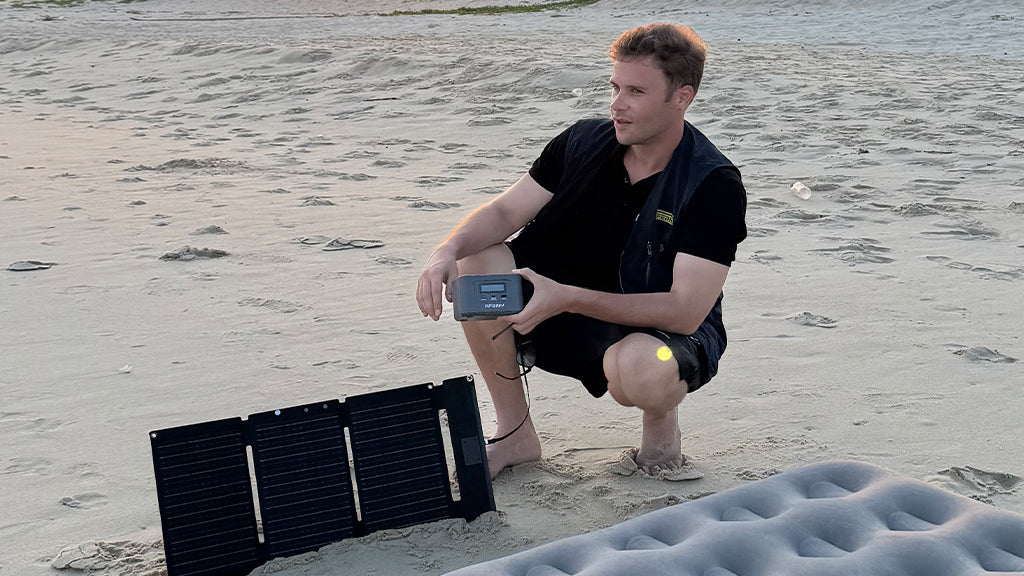
The AFERIY AF-S400A1 400W Portable Solar Panel has both series and parallel connections. The foldable design, 23% efficiency monocrystalline cells, and the long-lasting ETFE coating make it a formidable one in terms of camping, RV, and backup power. Adding to its convenience, it’s equipped with multiple direct output ports (USB-A, USB-C PD3.0, and DC), allowing you to fast-charge devices directly from the sun.
Troubleshooting Common Issues in Series and Parallel Systems
When your system is not functioning properly, it’s often very easy to troubleshoot. When wired in series, any damaged or shaded panel may cause the rest of the output to be pulled to a lower level, and thus every panel should be checked, looking for debris or shadows. With parallel systems, mismatched wiring, or loose connectors may restrict the current flow. Also, observe polarity of check, MC4 connectors, cable lengths, and whether your charge controller is being fed with proper voltage or power or not.
FAQ
How to Install Solar Panels?
Position the panels in a way that they are exposed to good sunlight throughout the day. Install them in place, wire them together or in parallel as you want, depending on your requirements, and hook them to your charge controller and solar panel generator. Before connecting, check the voltage and current limits.
How Much Are Solar Panels?
There are different prices based on the type of cell, wattage, and build quality. Portable panels typically range from budget 100W panels to higher-end 400W panels with ETFE coatings.
How Does Solar Work?
Solar panels convert sunlight into DC electricity. This power is controlled by a charge controller, which delivers it to a battery or solar generator, which in turn supplies your devices.
How Do Series and Parallel Connections Affect My Battery Charging?
The Series wiring elevates voltage, which is essential in the achievement of optimum efficiency in MPPT controllers. Parallel wiring multiplies the amount of current and, therefore, charging becomes more stable even in uneven sunlight. Each of them has the same final objective, only in varying intensities.
Conclusion
Knowing the differences between Solar Panel Series Vs Parallel will help you develop a setup that will work well within your operating environment. The higher voltage of series wiring allows longer, more efficient runs and higher MPPT charging, whereas parallel wiring maintains consistent voltage and can tolerate shade. The correct setup and quality items, such as the AFERIY P280, AFERIY P310, and AF-S400A1, can bring you a system that suits your home backup and power interests, outdoor power output, or off-grid solution. Solar panels supply the safest and most efficient power when you match your wiring to your generator and your environment.
 Free shipping from US local warehouse